
Sen. Bernie Sanders (I-Vt.) called for the Trump administration to rescind sanctions against the Iranian government, to help the country deal with the coronavirus.
Sanders tweeted, “Iran is facing a catastrophic toll from the coronavirus pandemic. U.S. sanctions should not be contributing to this humanitarian disaster. As a caring nation, we must lift any sanctions hurting Iran’s ability to address this crisis, including financial sanctions.”
Iran is facing a catastrophic toll from the coronavirus pandemic. U.S. sanctions should not be contributing to this humanitarian disaster.
As a caring nation, we must lift any sanctions hurting Iran’s ability to address this crisis, including financial sanctions. https://t.co/OBjff1nsxz
— Bernie Sanders (@SenSanders) March 18, 2020
Former Deputy National Security Adviser Ben Rhodes, who served in the Obama administration, similarly tweeted, “It is a moral abomination that the United States is continuing to enforce sanctions on Iran while its people die because of a virus that threatens all humanity.”
It is a moral abomination that the United States is continuing to enforce sanctions on Iran while its people die because of a virus that threatens all humanity. https://t.co/slYxA3fzWa
— Ben Rhodes (@brhodes) March 18, 2020
Some on Twitter disagreed with Sanders and Rhodes.
Foundation of Defense Democracies senior adviser Richard Goldberg, who previously served on the National Security Council during the Trump administration, tweeted, “The Islamic Republic of Iran is a moral abomination. Actually it is a virus and many have died from it for decades. We need to counter the Islamic Republic virus in addition to the new coronavirus.”
The Islamic Republic of Iran is a moral abomination. Actually it is a virus and many have died from it for decades. We need to counter the Islamic Republic virus in addition to the new coronavirus. https://t.co/xAhA9SeqZt
— Richard Goldberg (@rich_goldberg) March 18, 2020
Pro-Israel activist Arsen Ostrovsky similarly tweeted, “Iran has consistently sought to circumvent sanctions & use JCPOA money to abuse human rights and sponsor global terror. Seriously, have you met a terrorist, dictatorial regime you did not like yet @BernieSanders?”
Iran has consistently sought to circumvent sanctions & use JCPOA money to abuse human rights and sponsor global terror.
Seriously, have you met a terrorist, dictatorial regime you did not like yet @BernieSanders?
— Arsen Ostrovsky (@Ostrov_A) March 18, 2020
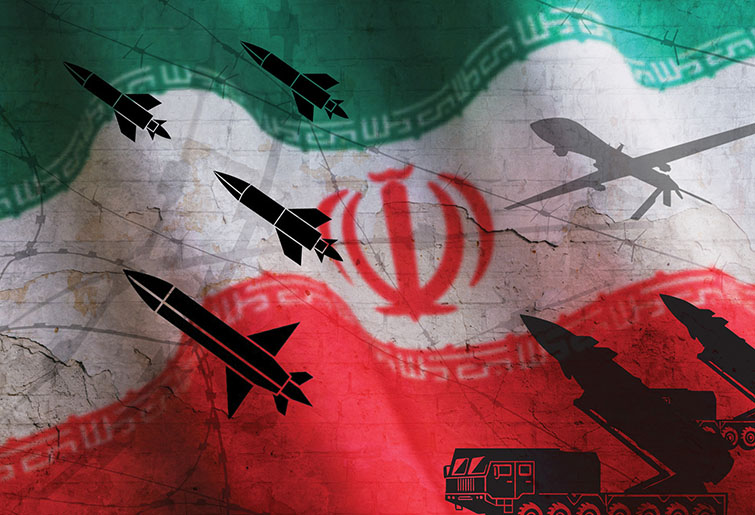
On March 17, Secretary of State Mike Pompeo announced further sanctions against nine entities and three individuals in Iran, arguing they “provide revenue to the regime that it may use to fund terror and other destabilizing activities, such as the recent rocket attacks on Iraqi and Coalition forces located at Camp Taji in Iraq. Our sanctions will deprive the regime of critical income from its petrochemical industry and further Iran’s economic and diplomatic isolation.”
The rocket attacks, which occurred March 11, resulted in two Americans and one Brit dead. In response, the U.S. launched strikes against Kataib Hezbollah the next day, the Iranian-back Shia militia group believed to be behind the attacks.
Iran’s foreign minister, Javad Zarif, argued in a March 18 video message that the Trump administration’s sanctions have hindered Iran’s ability to fight the coronavirus. “The economic siege imposed on us impedes all legitimate trade and deprives us from our own resources — the ones necessary to address the needs of our people, including their health and livelihoods,” Zarif said. “Even amid this pandemic, the U.S. government has fully refused to lift its unlawful and collective punishment, making it virtually impossible for us to even buy medicine and medical equipment.”
A U.S. official told Reuters the Trump administration doesn’t think Iran can “be trusted to channel whatever money it would gain from the easing of pressure toward humanitarian activity. The likelihood is the elites will steal it and/or funnel it toward malign activity.”
There have been at least 1,135 coronavirus deaths in Iran, although the World Health Organization believes the actual death toll is five times higher than that, according to Foreign Policy. Iran’s vice president as well as several other government officials and members of parliaments have tested positive for the virus.