Hanukkah celebrations in the German city of Mülheim have been canceled over safety issues.
According to German media, a Hanukkah event at Mülheim’s city hall was nixed at the Central Council of Jews because the building was not considered to be secure enough and a safer location couldn’t be found in such a short period of time.
“We feel grief, because Hanukkah is a festival of joy. We have canceled all outdoor events,” local Jewish community leader Alexander Drehmann told the Bild Zeitung newspaper. “We are going to our community hall with secured entrance checkpoint, instead of being at the municipal theater. There were warnings, even from the non-Jewish sources, which I cannot name.”
Drehmann added, “It is a bad feeling. Surely one of the lowest points in our post-war history.”
Over the weekend, protests erupted in front of the United States embassy in Berlin in response to President Trump declaring that Jerusalem is the capital of Israel. The protests featured Arabic chants of “Death of the Jews!” and “Jews, remember Khaybar, the army of Muhammad is coming again,” a reference to the tale of the Prophet Muhammad conquering the Jewish populace in the oasis of Khaybar. Israeli flags were also torched at the protests.
German government spokesperson Steffen Seibert condemned the anti-Semitic protests.
“One has to be ashamed when hatred of Jews is put on display so openly on the streets of German cities,” said Seibert.
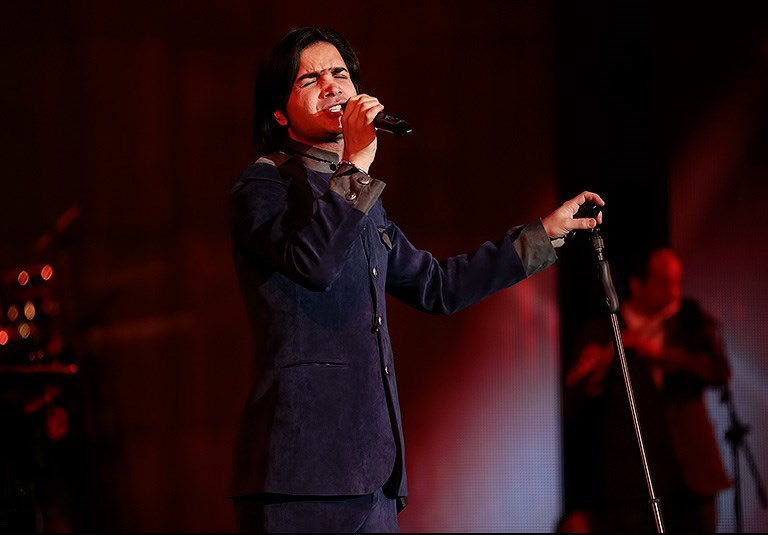
A letter from Sinai Temple is calling for the boycott of an anti-Semitic Persian singer’s concert on Saturday at the Microsoft Theater.
In a letter that was posted to Facebook, the temple wrote that “[Mohsen] Yeganeh is anti-Semitic in his lyrics, as well as his behavior/actions.” They also linked to a song of his that “depicts Israel as a child-killing nation” and “calls for the destruction of Israel and burns the Israeli flag.”
The full letter can be read below:
A petition has also been issued, which has received 3,370 signatures so far.
IKAR holds a musical, high-energy kabbalat Shabbat service, followed by a communal meal. Your favorite foods of the Festival of Lights are served. Vegetarian options available. 6:15 p.m. (scotch and services), 7:45 p.m. (dinner). $12. Shalhevet High School, 910 S. Fairfax Ave., Los Angeles. (323) 634-1870. ikar-la.org.
HANUKKAH BLUES SHABBAT AND CELEBRATION
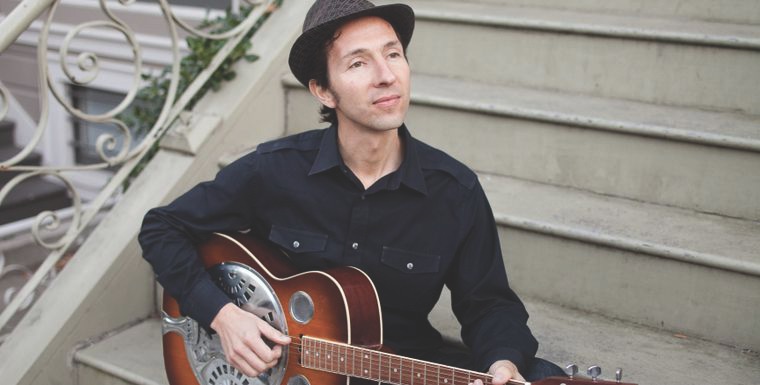
Saul Kaye
Jewish blues artist Saul Kaye visits from San Francisco to perform at Temple Emanuel of Beverly Hills’ Hanukkah bash. 6:15 p.m. Free. Temple Emanuel of Beverly Hills, 8844 Burton Way, Beverly Hills. (310) 288-3737. Tebh.org.
CHANUKAHPALOOZA
Temple Judea holds a service and dinner with special holiday treats by the Temple Judea Brotherhood and Women of Temple Judea. A pop-up choir of adults and children performs. The event also features art projects, special musical guests and more. 6:15 p.m. (service), 7:30 p.m. (dinner). $15 (adults), $10 (kids 6-13), $4 (5 and younger). Temple Judea, 5429 Lindley Ave., Tarzana. (818)758-3800. templejudea.com.
COMMUNITY SHABBAT DINNER
Guest scholars Rabbi Irving “Yitz” Greenberg, author and founder of the National Jewish Center for Learning and Leadership, and his wife, Blu, a pioneer in Orthodox feminism, visit a community Shabbat dinner. The event is in recognition of the yahrzeit of Rabbi Harold Schulweis. 6 p.m. dinner, 7:30 p.m. dessert and speakers. $42 dinner; registration required. Dessert and speakers are free and open to the community. Valley Beth Shalom, 15739 Ventura Blvd., Encino. (818) 530-4009. vbs.org/scholar-dinner.
SHABBAT HANUKKAH ZIMRAH
University Synagogue holds a soulful and spiritual experience of music, connection and community. Flutist Peter Gordon, percussionist Ava Nahas and oud player Dimitris Mahlis participate. 7:30 p.m. Free. University Synagogue, 11960 Sunset Blvd., Los Angeles. (310) 472-1255. unisyn.org.
“NEW YORK WATER”
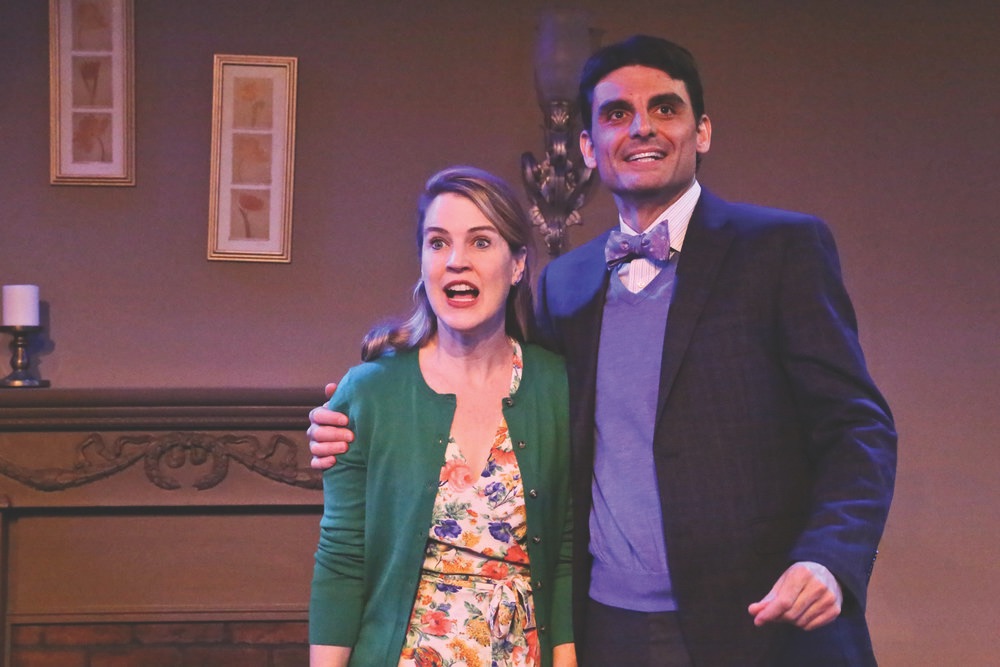
Bridget Flanery and Ross Benjamin in “New York Water”
It’s your last chance to see this comedy about Linda and Albert, who have a love-hate relationship with the Big Apple. This screwball romance, which spans years and locales, is written by Sam Borbrick and directed by Howard Teichman. 8 p.m. Friday and Saturday; 3 p.m. Sunday. Through Dec. 17. Tickets start at $40. Pico Playhouse, 10508 W. Pico Blvd., Los Angeles. (323) 821-2449. wcjt.org.
“AZIMUTH”
Director Mike Burstyn
Yiddish actor Mike Burstyn’s directorial debut begins a weeklong Oscar-qualifying run at the Laemmle in Encino. The war film, shot on location in Israel, is set during the last hours of the Six-Day War in an abandoned U.N. post in the Sinai. An Israeli soldier and an Egyptian soldier come to realize that in order to survive, they have to help each other. The film is based on a story Burstyn received after the war. Israeli actor Yiftach Klein and Egyptian actor Sammy Sheik, whose real-life fathers fought each other in the actual Six-Day War, co-star. Through Dec. 21. 3:15 p.m., 7:40 p.m. (Q-and-A sessions with Burstyn follow the 7:40 p.m. screenings), 10 p.m. $13 (general), $10 (seniors, children). Laemmle Town Center 5, 17200 Ventura Blvd., Encino. (310) 478-3836. laemmle.com.
SAT DEC 16
A SHABBAT HANUKKAH CELEBRATION
Join Beverly Hills Jewish Community (BHJC) for a program featuring the Chanukah Choral Spectacular, with Levi Coleman and the BHJC A Cappella Choir. Maestro Lior Himelstein conducts. The event includes dreidel games, latkes and glaze-your-own-doughnut activities for kids. Kiddush lunch follows. 9:30 a.m. (Shabbat services), 10:30 a.m. (cantorial performance). Free (RSVP at info@beverlyhillsjc.org). Beverly Hills Hotel, 9641 Sunset Blvd., Beverly Hills. (310) 276-4246. beverlyhillsjc.org.
DID JEW KNOW? HANUKKAH PUB TRIVIA
American Jewish University’s night of Jewy and not-so-Jewy pub trivia also features complimentary drinks and Hanukkah eats. 7 p.m. $15. Busby’s East, 5364 Wilshire Blvd., Los Angeles. infinitelight.la/event/did-jew-know-hanukkah-pub-trivia.
THE KLEZMATICS
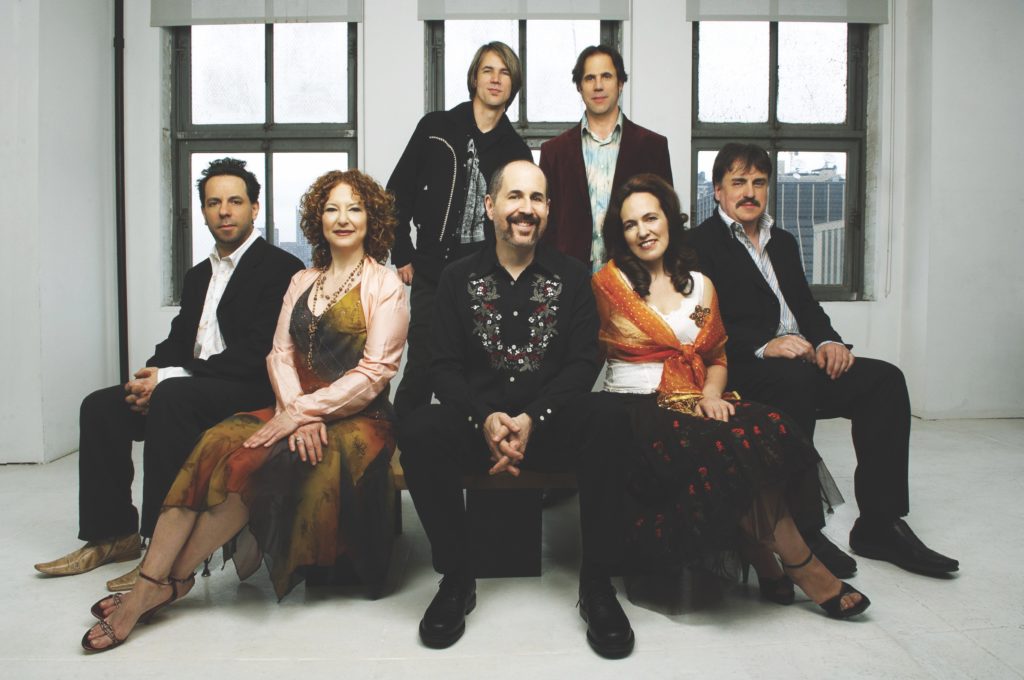
The Klezmatics.
Renowned klezmer band the Klezmatics perform a “Happy Joyous Hanukkah” concert at the Valley Performing Arts Center. The evening is a celebration of Yiddish culture at a time of year when candles and family warm the dark nights. The event embraces audiences of all cultures and backgrounds. 8 p.m. $33-$68. Valley Performing Arts Center, 18111 Nordhoff St., Northridge. (818) 677-8800. valleyperformingartscenter.org.
NISSIM BLACK
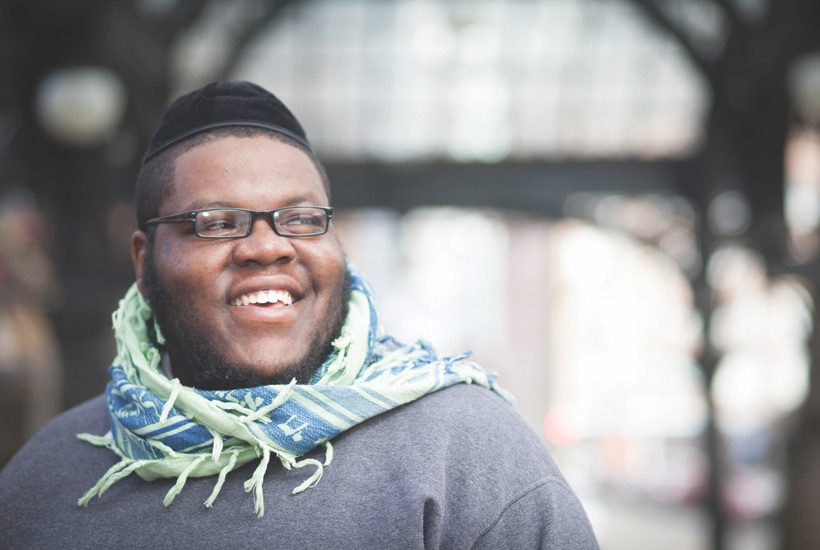
American rap star Nissim Black, born Damian Jamohl Black in Seattle, released two albums before retiring in 2011 to focus on his conversion to Orthodox Judaism. He returned in 2012 under his Hebrew name, Nissim, and began writing from a more religious perspective. This is his first performance in Los Angeles. With opening musical act Erez and comedian Tehran. For ages 18-36. 8:30 p.m. $40 in advance, $50 at the door. Nessah Synagogue, 142 S. Rexford Drive, Beverly Hills. (310) 273-2400. nessah.org.
SUN DEC 17
LEADERS DISCUSS GUN VIOLENCE
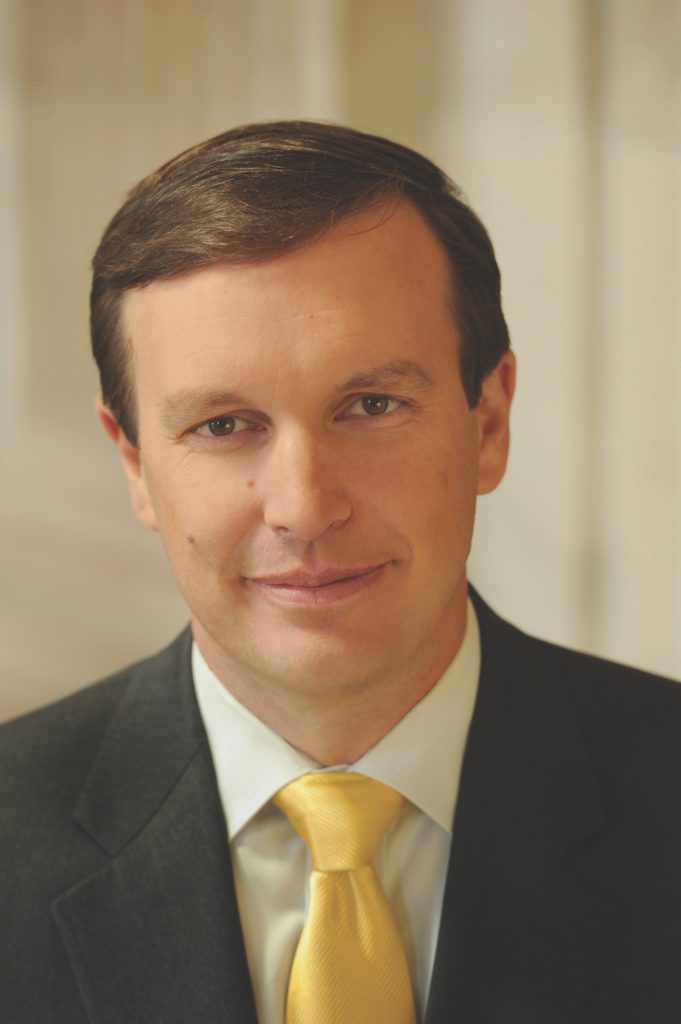
Chris Murphy.
Before becoming a United States senator, Chris Murphy served as the congressman representing Newtown, Conn., where 20 children and six educators were murdered at Sandy Hook Elementary School in 2012. Having seen the devastating effects of gun violence up close, Murphy emerged from that tragedy as one of Washington’s most outspoken gun violence prevention advocates. Murphy joins Los Angeles City Attorney Mike Feuer, who has been at the forefront of gun control legislation for more than 20 years, in a discussion. Sponsored by Writers Bloc. Noon. Tickets start at $25. Temple Emanuel of Beverly Hills, 8844 Burton Way, Beverly Hills. writersblocpresents.com.
“EDEN ACCORDING TO EVE”
“Eden According to Eve” is a funny, irreverent show about love, loss and the joys of life, featuring Shelly Goldstein, Monica Piper, Lisa Robins, Judith Scarpone and Robert Trebor. Directed by Susan Morgenstern. No one under age 16 admitted. 2 and 5 p.m. $40, includes dessert buffet and Q-and-A. The Braid, 2519 Colorado Ave., No. 102, Santa Monica. (310) 315-1400. Brown Paper Tickets, (800) 838-3006. jewishwomenstheatre.org.
INBAL ABERGIL BOOK LAUNCH
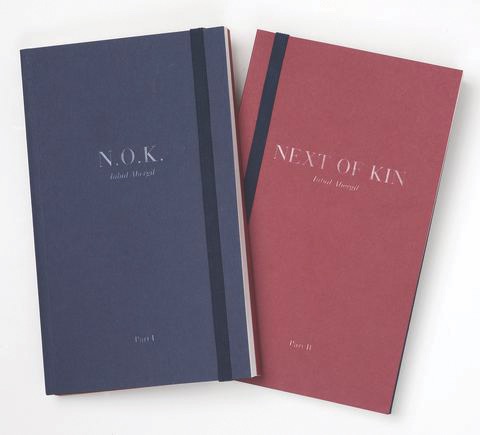
From 2014-17, Inbal Abergil traveled across the United States to photograph and interview 18 American families that lost loved ones in wars spanning from World War II to Vietnam to the ongoing conflicts in Afghanistan and Iraq. Abergil, an artist and educator originally from Jerusalem, launches a two-volume book of photographs from that experience called “N.O.K. — Next of Kin,” featuring images that examine the way American families memorialize relatives killed in military conflict, with commentary written by contributors. She holds a master’s in fine arts from Columbia University, and her work has been exhibited internationally in museum and gallery exhibitions. $10 (admission), $45 (book). RSVP recommended at arts@aju.edu. 5 p.m. American Jewish University, 15600 Mulholland Drive, Los Angeles. (310) 440-1246. wcce.aju.edu.
TUE DEC 19
“THE MESHUGA NUTCRACKER!”
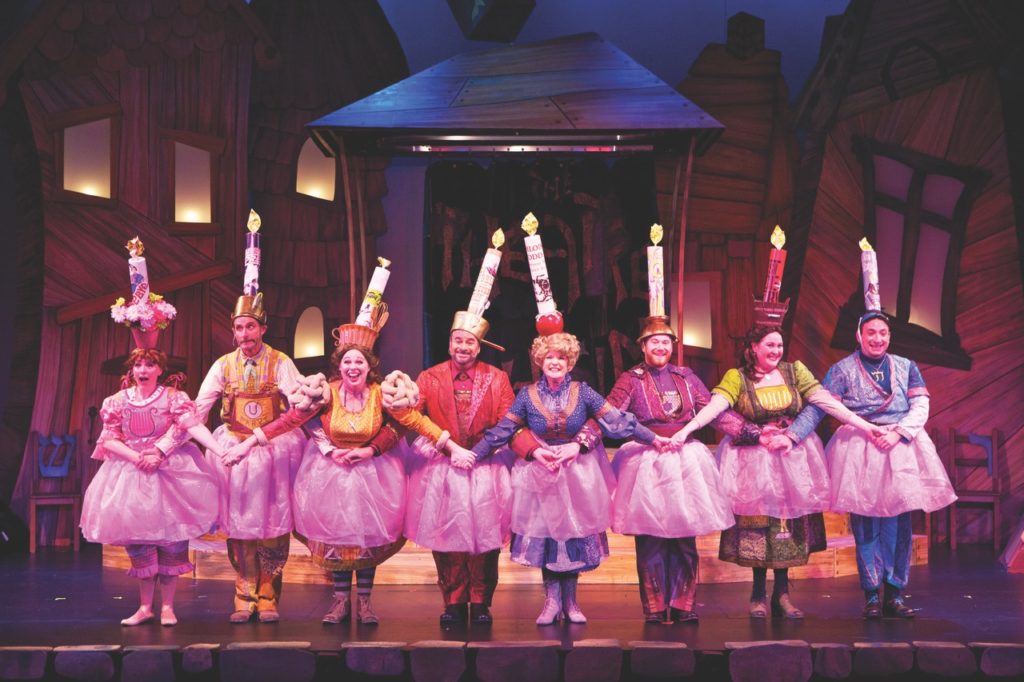
“The Meshuga Nutcracker”
Don’t miss a nationwide cinema presentation of the Hanukkah musical, featuring the silly sensibilities of the folklore of Chelm, a Klezmer-influenced orchestration of Tchaikovsky’s “The Nutcracker Suite” and original lyrics that celebrate the Festival of Lights. Over the course of the film, the Chelmniks, residents of a fictional town of fools, tell eight stories, including the triumphant victory of the Maccabees, accounts of perseverance during the Holocaust and the celebration of the first Hanukkah in the new State of Israel. Dancing dreidels, singing sufganiyot and guest stars are thrown in for good measure. 7 p.m. $16 (adults), $13 (children, seniors). Ahrya Fine Arts, 8556 Wilshire Blvd., Beverly Hills; Playhouse 7, 673 E. Colorado Blvd., Pasadena; Town Center 5, 17200 Ventura Blvd., Encino. (310) 478-3836. laemmle.com.
WED DEC 20
L.A. CLIPPERS JEWISH HERITAGE NIGHT
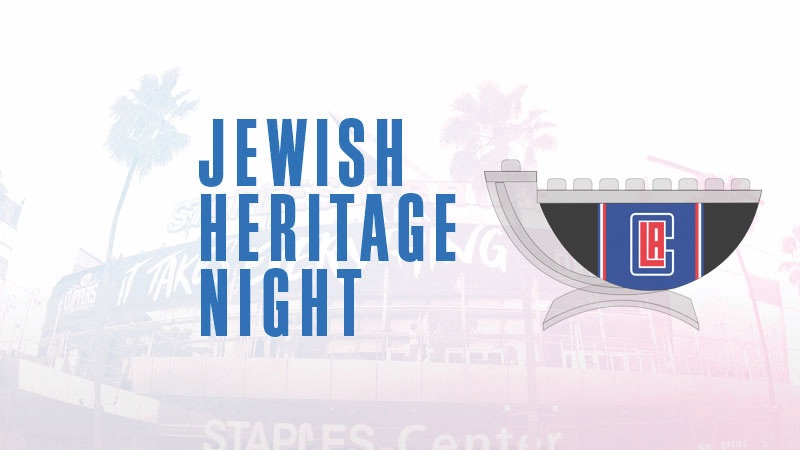
Celebrate the last night of Hanukkah with NBA action at Staples Center as the Los Angeles Clippers square off against the Phoenix Suns. The Clippers have been struggling this season, so maybe the miracle of the Festival of Lights is just what the team needs to turn things around. A pregame ceremony features a candle lighting and blessings in front of a 10-foot menorah. Attendees receive a complimentary Clippers menorah. 7:30 p.m. From $16. Staples Center, 1111 S. Figueroa St., Los Angeles. nba.com/clippers/promotions/specialevents.
THU DEC 21
SYRIAN TORAH CASE DEDICATION
At Sinai Temple, Drs. Nooshin and Afshine Emrani present the 19th-century artifact Syrian Torah case to the Westwood Conservative congregation. Sinai Temple Max Webb Senior Rabbi David Wolpe delivers commemorative remarks, following evening minyan. 6:15-7 p.m. Free. Sinai Temple, 10400 Wilshire Blvd., Los Angeles. (310) 474-1518. sinaitemple.org.
DAVID BROZA AND FRIENDS
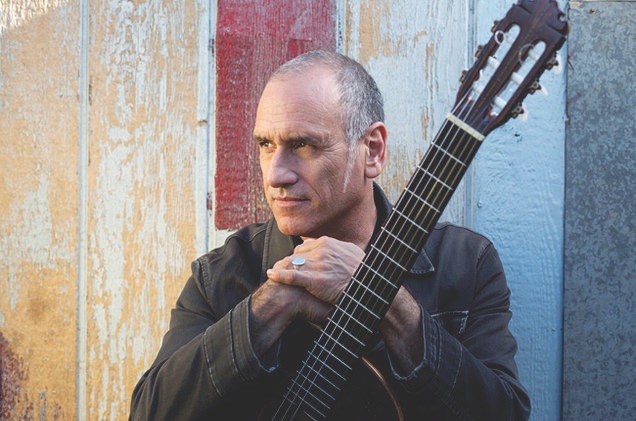
David Broza
Israeli singer and guitarist David Broza and a new set of all-star musicians perform eclectic world music offerings combining Middle Eastern influences with sounds meant to please all ages and backgrounds. Joining Broza are Ali Paris (qanun), Jonathan Levy (guitar), Yuval Lion (drums), Uri Kleinman (bass) and Tali Rubinstein (recorder). 7:30 p.m. $65-$115. The Broad Stage, 1310 11th St., Santa Monica. (310) 434-3200. thebroadstage.org/davidbroza.
Some may assume that because I create so many floral arrangements that I prefer big, complicated designs. But the reality is I have better things to do — like practicing my ukulele or dressing my pups in crazy costumes — so I like expending the least amount of effort possible when arranging flowers.
You can’t get much easier than this bud vase arrangement inspired by the candles of a menorah. Nine bud vases hold nine flowers in a row, with eight at one level and the middle one higher than the others. What a perfect centerpiece this would make for a Hanukkah celebration, or as an elegant decoration for a fireplace mantel.
Lest you think this could get pricey with nine vases, I picked up the ones in this example at a 99 Cents Only Store for a buck each. If you’re having guests over for Hanukkah, you can even give away the individual flowers in their vases as favors at the end of the night. Then you can say, “This bud’s for you.”
What you’ll need:
9 bud vases
9 individual flower stems
1.
1. Gather nine bud vases. They can be identical, as in my example, or you can mix and match what you have around the house. You also can get creative by upcycling soda or perfume bottles. Try to select vases with narrow openings so that the stems stay upright rather than tilt.
2.
2. Flowers like tulips, calla lilies or roses work well for this arrangement because the buds look like flames. Remove any leaves from the stems. Cut eight stems to the same length and one that is a few inches longer. Place the stems in the vases, lining them up with the taller flower in the middle.
Jonathan Fong is the author of “Walls That Wow,” “Flowers That Wow” and “Parties That Wow,” and host of “Style With a Smile” on YouTube. You can see more of his do-it-yourself projects at jonathanfongstyle.com.
Stuart Barth died Nov. 23 at 79. Survived by wife Amy; daughter Ava Povraznik; son Mark Povraznik. Mount Sinai
Donald Beckerman died Nov. 12 at 80. Survived by wife Cecilia; daughter Mindy (Burt) Guralnik; son Jonathan. Mount Sinai
Sandra Blum died Nov. 22 at 87. Survived by stepdaughters Virginia, Bonnie Burman. Hillside
Milton M. Cooper died Nov. 23, at 91. Survived by wife Rosita; sons Harold Lester, Richard Lloyd (Leslie); 2 grandchildren. Mount Sinai
Lee Cooperman died Nov. 18 at 87. Survived by brother Ronald. Hillside
Danny Desmond died Nov. 12 at 97. Survived by nephews Steven (Deborah) Hendlin, Richard (Jane Bening) Hendlin, Timothy Hendlin. Mount Sinai
Mary Drucker died Nov. 23 at 90. Survived by sons Terry, Michael (Deborah), Mark (Dyanne), Richard (Dianna); sister Audrey Meltzer; 6 grandchildren; 1 great-grandchild. Hillside
Mark Friedman died Nov. 26 at 72. Survived by wife Leslie; daughter Ellie Friedman-Sacks; son Danny (Kristin); sister Janis (Greg) Marcus; 5 grandchildren. Hillside
Harvey Goldberg died Nov. 22 at 84. Survived by wife Joyce; daughters Judith, Karyn Goldberg-Pfeifer; sons Ronald, Martin. Mount Sinai
Rosemary Goodman died Nov. 11 at 68. Survived by daughter Jennifer (Adam) Goodman-Frankel; 2 grandchildren; brother Robert Scott. Hillside
Emily Greenstein died Nov. 23 at 14. Survived by mother Pamela; father Jay; brother Jeremy; grandmother Tamara; grandfather Marvin. Hillside
Michael Fred Hecht died Nov. 15 at 61. Survived by daughter Lillian Wunsch; sisters Susan, Lauren Kaushansky. Mount Sinai
Paula Hines died Nov. 23 at 91. Survived by cousin Corinne Karr. Mount Sinai
Eleanor Hirschorn died Nov. 17 at 86. Survived by daughters Caron Post, Cindy Post; 3 grandchildren; brother Robert Wieder. Mount Sinai
Max Hirt died Nov. 19 at 92. Survived by wife Rhoda; daughter Tina (Yassa). Hillside
Lester Hoffman died Nov. 19 at 96. Survived by 2 grandchildren. Mount Sinai
Barbara Joseph died Nov. 21 at 86. Survived by sons Andrew (Margaret), Robert (Linda). Mount Sinai
Arlene Joan Kane died Nov. 18 at 85. Survived by husband Sidney; sons Harry (Laura), Paul (Suzette), Brad; 3 grandchildren; brothers Martin Zauss, Barry (Kathy) Zauss. Mount Sinai
Philip Koff died Nov. 20 at 95. Survived by daughters Sharon (Fred) Klein, Anne Abramson Teri Goldstein; sons Howard (Marcia), Martin. Mount Sinai
Ronald Markowitz died Nov. 21 at 82. Survived by wife Evlynn; daughters Lisa (Ron) Derderian, Tracy (Greg) Forester, Kim (Cooper) Hanning, Teri Markowitz, Carri Bennett; son Gary (Candy); 8 grandchildren; brothers Larry, Joel. Hillside
Huguette Najdar died Nov. 22 at 90. Survived by daughters Etty (Claude) Arnall, Rachel (Theodore) Fainberg; son Rico (Joann); 5 grandchildren; 10 great-grandchildren. Mount Sinai
Sanford Pessell died Nov. 12 at 85. Survived by wife Beverly; daughter Laura; son Steven (Rochelle); 2 grandchildren. Mount Sinai
Herman Rassp died Nov. 11 at 88. Survived by wife Beverly; sons Robert (Michelle), Greg (Denise); 3 grandchildren. Mount Sinai
Lev Raysh died Nov. 12 at 91. Survived by sons Dimitry (Svetlana), Vitaliy (Tatyana); 4 grandchildren; 3 great-grandchildren. Mount Sinai
Bernard Rothman died Nov. 15 at 91. Survived by wife Beatrice; daughter Karrie (Charles) Mikulus; son Douglas (Rosina); 6 grandchildren; 5 great-grandchildren; brother Ronald. Mount Sinai
Marla Seff died Nov. 23 at 73. Survived by husband Richard; sons Randall (Tamar), Jon (Amy); 4 grandchildren. Hillside
Judith Shapiro died Nov. 11 at 79. Survived by daughter Susan (Michael) Moss; sons Howard Shapiro, Kenneth Salkow-Shapiro; 4 grandchildren; brother Alan Salkow (Sandy). Mount Sinai
Rhea Jean Shapiro-Vande Sande died Nov. 21 at 83. Survived by husband Jerry Vande Sande; daughter Linda Shapiro; son Greg Davis; 3 grandchildren. Mount Sinai
Helene Stelnick died Nov. 25 at 85. Survived by daughter Karen (Kenneth) Greenberg; son Jeffrey (Nancy); 4 grandchildren; 5 great-grandchildren. Mount Sinai
David Sugarman died Nov. 11 at 85. Survived by daughter Karen; son Donald; 2 grandchildren. Mount Sinai
Allieh Tabibzadeh died Nov. 18 at 96. Survived by daughter Mona; sons Bruce Houman, Kamrooz; 8 grandchildren; 7 great-grandchildren. Mount Sinai
Moshe “Mike” Talmor died Nov. 19 at 87. Survived by daughter Orly; 2 grandchildren. Mount Sinai
Lila Lee Weisbly died Nov. 14 at 90. Survived by daughter Kathi Starr; son Neal (Natalie); 4 grandchildren; 2 great-grandchildren. Mount Sinai
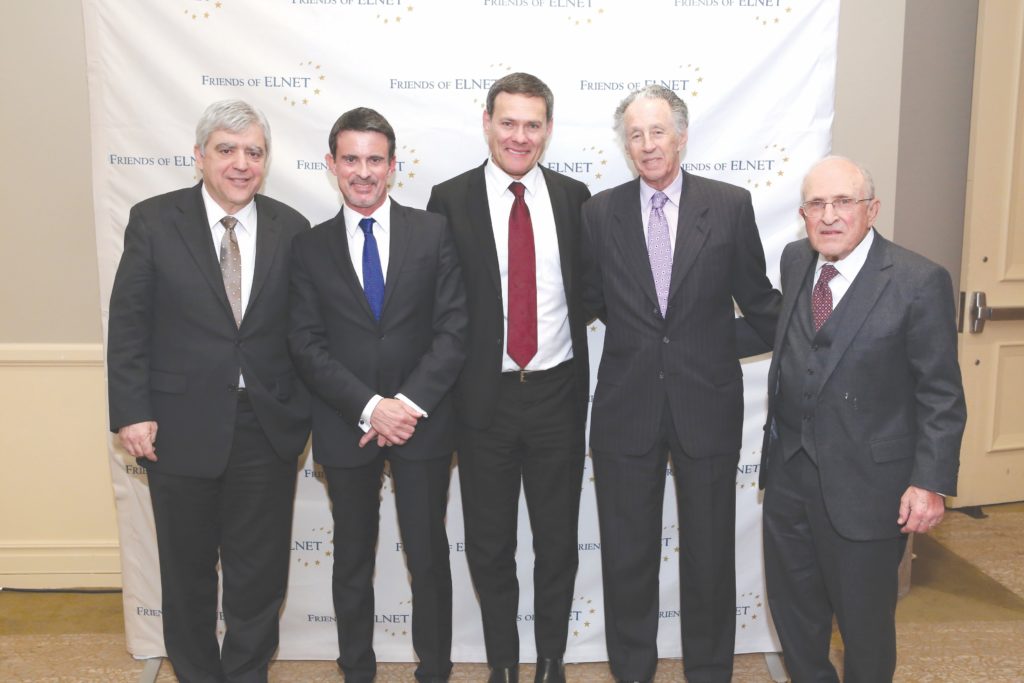
Friends of ELNET: European Leadership Network (FELNET), which supports the work of ELNET, an Israel advocacy organization devoted to improving the perception of Israel in Europe, raised more than $800,000 at its Dec. 7 gala at the Beverly Hilton hotel.
The event featured a discussion between former French Prime Minister Manuel Valls and David Siegel, chief executive officer of ELNET-Israel, with Jewish Journal Editor-in-Chief David Suissa moderating. Before the discussion, Valls delivered remarks about, among other things, anti-Semitism in France.
The approximately 200 attendees included Larry Hochberg, co-founder and chairman of FELNET; Ken Ruby, the organization’s vice chairman; Jonathan Boyer, West Coast director of FELNET; and philanthropists Stanley Black,Naty Saidoff and Annette Shapiro.
The event had been planned to take place at the Skirball Cultural Center but was moved to the Hilton because of last week’s Skirball Fire.
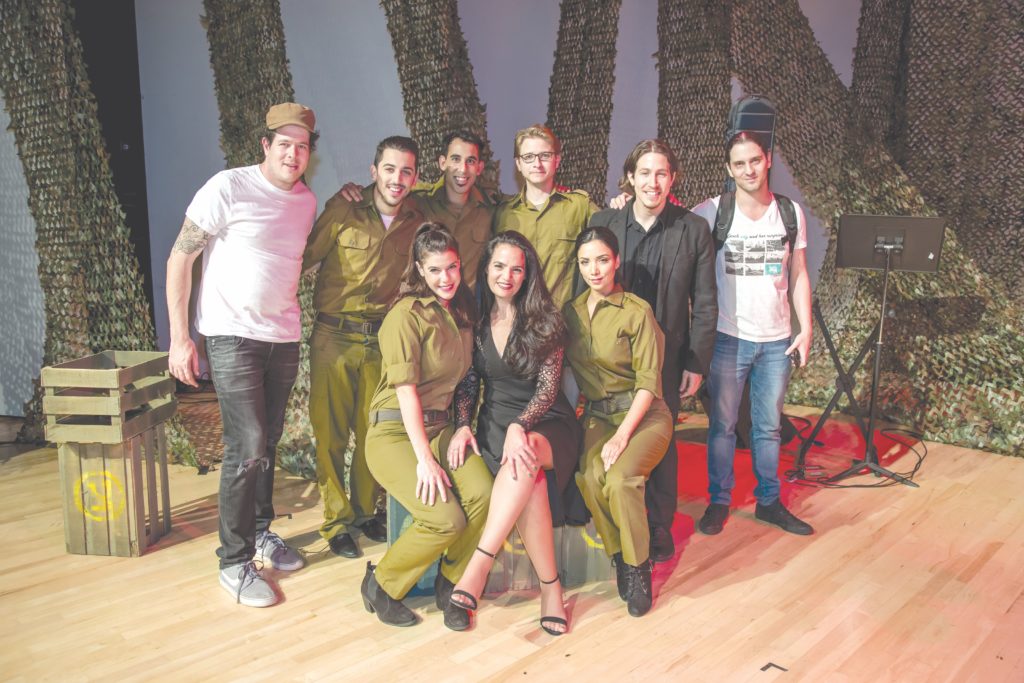
From left, top row: Adam Peri, Gal Hayon, Itay Shimoni, Ronen Gordon, Hush Paz and Kfir Melamed and (from left, bottom row), Noa Goren Zahavi, Gilat Rapaport and Liron Sela participated in the Base Band concert at American Jewish University. Photo by Linda Kasian
Base Band, a local musical group of Israeli musicians and singers, performed Israeli army band songs before a sold-out crowd at American Jewish University’s Gindi Auditorium. The Nov. 29 concert commemorated the Nov. 29, 1947, adoption of the U.N. Partition Plan for Palestine.
“This show is meant not only for the Israeli community but for the Jewish-American communities who are familiar with the IDF [Israel Defense Forces] but are unfamiliar with the Israeli bands,” said Israeli musician Itay Shimoni, who formed the group with local Israeli singer Gilat Rapaport. “We want to bring them and their children closer to Israel through the songs of our country and give them a glimpse of the Israeli army culture life.”
Israeli army bands were popular in the 1960s and 1970s. Band members performed in military bases all over Israel in order to lift the morale of personnel. Sometimes they performed during lulls in the battle, when troops would regroup at the base. Their songs became part of the Israeli culture and some of Israel’s leading singers made their debut as singers in those groups.
Base Band was formed after Shimoni, who arrived in Los Angeles a couple of years ago, contacted Rapaport with the idea. The latter, who performed in such a band in the 1990s, immediately decided to join Shimoni in the project. The two managed to find young Israeli singers, including Gal Hayon,Liron Sela and Noa Goren Zahavi, each of whom immigrated in recent months to the United States.
— Ayala Or-El, Contributing Writer
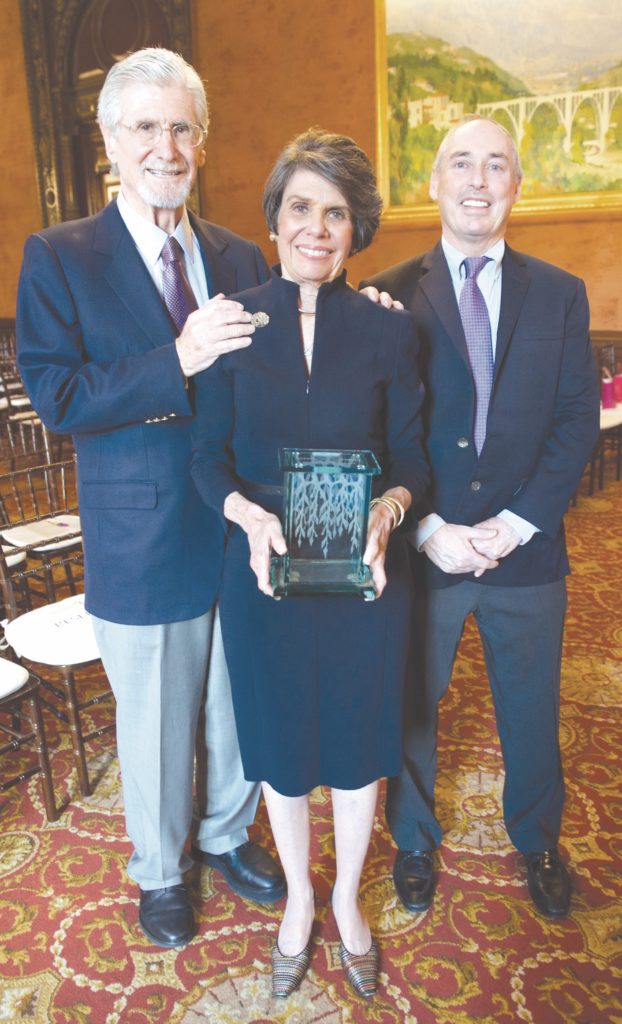
AJC honoree Marlene Grossman and her husband, Marshall (left), with Dan Schnur, the director of the Los Angeles region of the American Jewish Committee. Photo by Howard Pasamanick Photography
American Jewish Committee (AJC) Los Angeles honored Marlene Grossman, an environmental advocate, urban planning expert and community organizer, with the Ira E. Yellin Community Leadership Award on Dec. 3 at the Jonathan Club in downtown Los Angeles. Her children, Leslie Bronson and Rodger Grossman, presented her with the award.
The Yellin Award, named in memory of former AJC regional president Ira E. Yellin, recognizes the accomplishments of outstanding civic, business and community leaders who have improved the quality of life in Los Angeles.
The keynote speaker was Erwin Chemerinsky, a nationally recognized constitutional lawyer and dean of the UC Berkeley Law School. He discussed protecting free speech on college campuses, combating hate crimes and how young attorneys can make a positive difference.
Yellin’s daughter, Jessica Yellin, a former chief White House correspondent for CNN, served as master of ceremonies.
AJC regional board members Marshall Grossman, the honoree’s husband, Marian Mann,Reeve Chudd,Phyllis and Bert Massing, Cathy and Len Unger and Adele Yellin, Ira’s widow, served as dinner chairs. Also in attendance were Dan Schnur, regional director of AJC; Los Angeles City Attorney Mike Feuer; and City Councilwoman Nury Martinez.
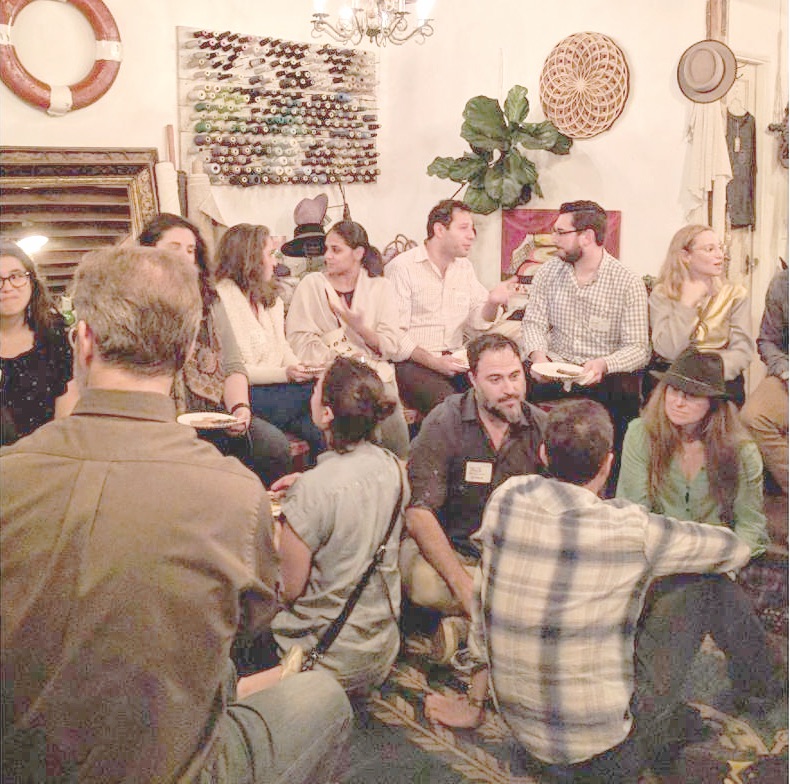
About 40 people attended the inaugural Arq West Coast event in Venice. Photo by Danya Shults
The inaugural Arq West COAST event was held on Nov. 7at the Late Sunday Afternoon store in Venice. About 40 people attended the event organized by the lifestyle brand. Arq is designed to connect Jews and non-Jews to Jewish life and culture in a way that feels relevant and modern.
Founder Danya Shults, a public relations and marketing consultant, considers herself “Jew-ish,” noting on the Arq website that she read “ ‘Macbeth’ in Hebrew at Jewish day school, made out with a Jewfroed counselor in the red gazebo at a Jewish summer camp, and sang Shabbat songs around the piano every week with her Zionist mother, yarmulke-wearing father and siblings.”
The roots for Arq came about when Shults created “Pop-Up Shabbat,” potluck dinners for people in New York. Last year, Shults expanded the concept to include personal meet-ups that included community gatherings, retreats, couples’ salons, along with a website and a weekly newsletter called the “Ish.”
Shults and her husband moved to Los Angeles several months ago and launched Arq locally. Shults told the Journal that Arq is “less about specific age or background. We aim to be inclusive for people seeking something that is accessible.”
In that spirit, the event began with participants discussing with a partner questions such as: When have you fallen and gotten up again? Who helped you? What’s a cause that riles you up or that you have been an advocate for? What’s something that you need help with right now?
Chaplain Dina Kuperstock then spoke about the story of Noah’s ark and God’s promise to never destroy the world again, and she asked everyone to take part in a meditation session focusing on the notion that everyone has the power to find light and a spark in the darkest of times.
Shults said Arq’s events are a way for people not only to connect but to also come together during difficult times. “The political situation has been really tough,” she said. “There’s been violence and natural disasters. I don’t want to be a downer, but these things are in everyone’s Facebook feeds.”
To that end, she said, Arq’s mission to help people connect “is one of the key antidotes to the stress and anxiety and panic and fear that comes from all of this.”
— Kelly Hartog, Contributing Writer
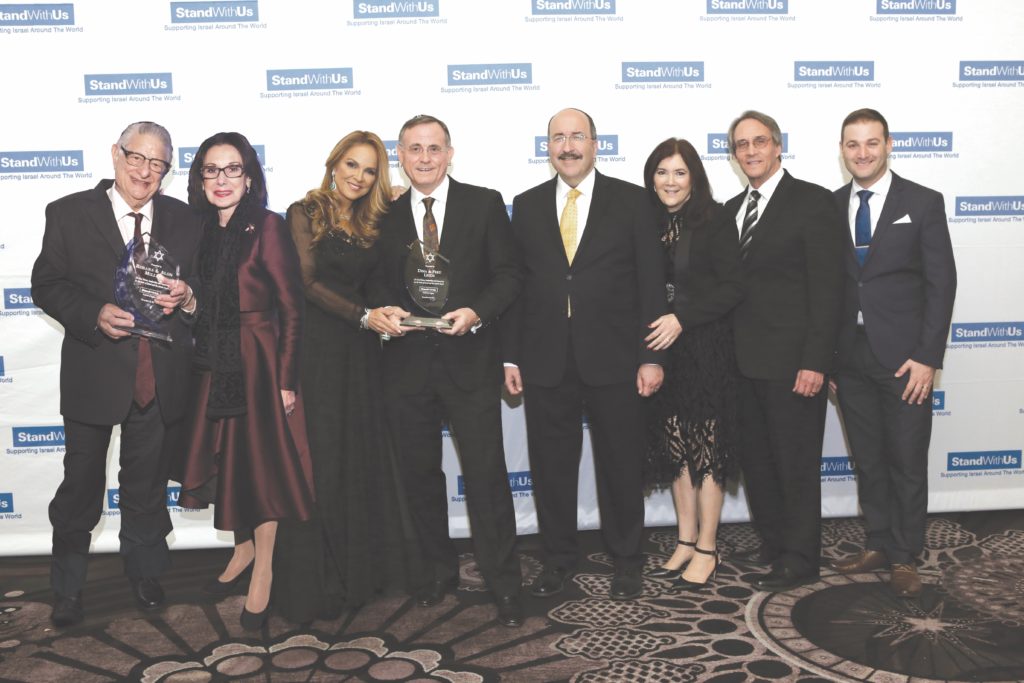
From left: StandWithUs Festival of Lights honorees Alon and Rosana Miller and Dina and Fred and Leeds; keynote speaker Dore Gold, former Israeli ambassador to the United Nations; Roz and Jerry Rothstein, CEO and COO of StandWithUs; and Michael Dickson, executive director StandWithUs-Israel, at the Beverly Hilton. Photo by Jonah Light Photography
The StandWithUs (SWU) Festival of Lights gala dinner, which was held on Dec. 10 at the Beverly Hilton, raised more than $3 million for the pro-Israel education organization.
The evening program honored Dina and Fred Leeds and Rosana and Alon Miller.
It also recognized Kfir Itzhaki, 28, with the Guardian of Israel Award, and Yahya Mahamid, 20, with the Star of David Award.
In November 2015, Itzhaki stopped a stabbing rampage by a 19-year-old terrorist from Hebron, who attacked an 80-year-old woman and a 35-year-old man. Ithaki chased the attacker and held him down until police arrived. A specialist in the Krav Maga fighting system, Ithaki told the 1,000 people at the gala that he knew he was risking his life but didn’t hesitate.
“I was raised by the Torah value that says, ‘Thou shall not stand idly by the blood of thy neighbor.’ I don’t think it’s only your right but your duty to stop a terrorist from hurting other people.”
Mahamid, meanwhile, is an Israeli-Arab Zionist and SWU educator who has been touring the United Kingdom, Canada and the United States, speaking at campuses, synagogues and high schools. Born in Umm El-Fahm, Mahamid said he was indoctrinated from childhood to hate Israel and Jews, but that things changed after he got a job as a busboy in a Tel Aviv hotel and found that Israelis were nice to him.
When three Jewish boys were kidnapped and later murdered in the West Bank, Mahamid posted their photos on Facebook. He said his friends and community didn’t take it well. “I started receiving death threats, but it didn’t stop me,” he said during his speech. “We must stand against hate and always show our love and support to the State of Israel.”
Mahamid plans to join the Israel Defense Forces upon his return to Israel, although Israeli Arabs are not required to join the army.
Roz Rothstein, chief executive officer and co-founder of SWU, discussed the work the organization has done for the past 16 years.
“SWU was created to fight against anti-Semitism and educate people around the world of all ages and faiths about Israel,” she said. “Based on what we are seeing today, it was timely and visionary that we began the organization, that we did not wait for someone else to do the work we do.”
Former Israeli ambassador to the United Nations Dore Gold, the keynote speaker, praised President Donald Trump’s recent recognition of Jerusalem as the capital of Israel.
“As far as I’m concerned, it’s a national holiday for the Jewish people,” he said.
Comedian Elon Gold was the master of ceremonies.
Debbie and Naty Saidoff and Ellie and Bruce Lederman underwrote the event.
“When Jacob saw that there were food rations to be had in Egypt, he said to his sons, ‘Why do you keep looking at one another? Now I hear,’ he went on, ‘that there are rations to be had in Egypt. Go down and procure rations for us there, that we may live and not die.’ So 10 of Joseph’s brothers went down to get grain rations in Egypt.”
Bruce Powell Head of School, de Toledo High School
When Jacob asks, “Why do you keep looking at one another,” I actually laughed out loud, wondering how many times I looked at someone else to act.
How many times in our community have we asked for volunteers, and the same 36 righteous souls keep appearing, while others stand silent? How many times have I stood silent when our leaders have reached out to me for help? How many of us recognize that “silence” is a powerful, often negative response? How many of us look to others to shoulder the responsibilities of leadership? And how many of us step up to lead?
Jacob goes on to say, “I hear there are rations to be had in Egypt.” Indeed, the deToldeo High School board and I are constantly looking for “rations” (read: donations for tuition assistance so that no family is turned away from a Jewish education). Here again, when we are asked to give “rations,” how many of us look to the “other” to make a gift, or do we look the other way? And how many of us write the check, or serve the poor, or provide for the person standing at the end of a freeway off-ramp?
In this Hanukkah season, a time of “dedication,” may we, indeed, dedicate ourselves to fulfilling the Jewish notion of prayer, l’hitpalel, to judge oneself. May we not look to the “other”; rather, may we truly “see” the “other,” and ensure that we all “go down and procure rations” together as a community so that “we may live and not die.”
Rabbi Mimi Weisel Hasidah
There’s an apparent problem: a famine. There’s an apparent solution: Go down to Egypt, where there is food, and bring some back.
But it can’t be that straightforward. Jacob’s sons didn’t come up with this idea on their own; Jacob saw what his sons didn’t. He had visionary insight.
In addition, the sons’ reaction is not one of readily acknowledging the obvious. Why do they simply look at one another? Was this an unusual scenario for them all to be gathered together with their father addressing them, apparently giving them some sort of charge? Were they simply curious about what he would say to them? (After all, we see their reaction before his words to them.) Were they wondering about the wisdom of their father’s request? Were they wondering about the soundness of their elderly father’s mind? Would his idea be realistic? Could it be achieved?
Or were they simply afraid? Afraid of the risks? Afraid of taking the initiative?
They ultimately follow their father’s directive, and go. They go together as a group of 10 — the Jewish holy minyan, which implies the group is accompanied by Divine spirit.
What does it take for us to heed the visionary’s insight, to step forward to care for others? When do we look away from seeing only ourselves and instead look outward to see the needs of others? When do we look to the guidance of others to know how to help?
It is noteworthy that the text uses the verb “he [Jacob] said” not just once but twice in the course of the two verses. (The second is translated here as “he went on.”) Whenever a biblical figure speaks twice without the interlocutor responding in between, we infer that the first speech elicited only a tense and awkward silence. Jacob’s question as to why his sons are sitting and doing nothing when it’s patently obvious that they need to repair to Egypt and its food stocks immediately is met with no response by his sons. Why? What are the brothers thinking and afraid to say?
Joseph’s brothers have exactly one association with Egypt: It was the destination of the Ishmaelite traders to whom they had sold their brother Joseph years earlier. Whenever they contemplated traveling to Egypt for food, they were instantly paralyzed by the fear of encountering there a poor, miserable slave, threadbare and enduring hard labor, who looked uncannily familiar. When Jacob — still unaware of what had really happened to Joseph — called them out for their inaction in the face of the family’s hunger, they could not utter a syllable in response. The horror of even possibly having to confront the living consequences of their inexplicable act seemed worse than dying by famine.
After Jacob’s second request, the brothers do go. But “Benjamin the brother of Joseph, Jacob did not send, lest an accident befall him.” This was a family haunted by stories and secrets of the past.
Rabbi Michelle Missaghieh
Temple Israel of Hollywood
When we don’t have enough food, not only do our bodies break down, but we can’t focus on accomplishing the basic aspects of our lives: learning in school, working at a job and being kind when interacting with others. Within these three verses, the Hebrew word for “food rations,” shever, appears four times. Shever comes from the three letter Hebrew root, “to break” or “to fracture.” It’s as if the Torah is warning us: When there’s no food, we break.
In the United States today, 1 in 8 people don’t have enough food, which is equivalent to 42.2 million people, including 13.1 million children and 5.7 million seniors. In California, 13.5 percent of households are food insecure, meaning they lack access to enough food for an active, healthy life.
Marissa Higgins writes in her essay “I Grew Up With Food Insecurity,” “Research shows that children growing up in poverty consume more potato chips, candy, fries and soda than their wealthier counterparts … it’s not hard to understand the motivation behind these choices: when you’re poor … you want food that’s filling, flavorful and easy to eat. When I was hungry, I did not know how to prepare healthy proteins, like chicken or tofu. We didn’t have a blender or a juicer. But we did have a microwave for ready meals, and I did have two hands which could open a bag of chips in a matter of seconds.”
Jacob was able to direct and motivate his children to acquire food for his family so they wouldn’t break. Will we do the same for people who are food insecure today?
Rabbi Ken Chasen Leo Baeck Temple
In this week’s portion, Miketz, Joseph’s brothers are sent to Egypt by their father, Jacob, to procure food amid a famine. Significant time passes before the brothers — in next week’s portion, Vayigash — affect a tearful reunion with Joseph, as Judah speaks the unexpected soliloquy that inspires Joseph to reveal his identity.
Judah’s speech, therefore, seems simply to be the result of an inspired moment of conscience. However, our ancient rabbis teach that Judah’s words aren’t spoken from a sudden attack of integrity. They had been slowly growing inside all the brothers’ hearts from the very moment they had sold Joseph into Egypt.
In the Midrash Rabbah, we are reminded that Jacob instructs “his sons” to seek famine relief in Egypt (Genesis 42:1), while just two verses later (42:3), it is “Joseph’s brothers” who depart on the trip. Why the change from “Jacob’s sons” to “Joseph’s brothers”? The Midrash describes this as a hint at the brothers’ longtime unity over their regret at having sold Joseph into servitude. Every day, they had been saying to one another, “When will we go into Egypt to bring our brother back to his father?” When Jacob urges them to seek provisions in Egypt, they at last have their opportunity to set things right by bringing home Joseph.
So it is with our greatest misdeeds, as well. We don’t set things right through sudden epiphanies. Only a long walk down the road of teshuvah — self-understanding, remorse and determination to act — possesses the power to heal.
If parents want children to believe in the Jewish religion, it must be made fun. The games, treats and gifts are all part of the holiday. They see Santa everywhere and fun and gifts for all the Christian children, so if they don’t get a celebration, they will end up leaving the religion.
Dani Lester
Happy Hanukkah to all. Light up the darkness and rejoice.
Lauri Garber
‘Stronger Together’ (Dec. 8)
I am not Jewish but I wish so strongly that I had been in that hotel lobby that night celebrating Hanukkah. I am moved by the sense of community shared. Thank you for making this story available to me. It lifts my spirit.
Anne Kelly
‘The Light We Create’ (Dec. 8)
I loved this piece. It costs us nothing to be kind. Thank you for the gentle reminder.
Deidre Duke
Kindness as an everyday reminder of holy light. Beautiful essay, Karen Lehrman Bloch. Your best yet for the Journal.
Harold Henkel
Clash at Kotel Was Misrepresented
I was disappointed to read Jay Geller’s account of the Nov. 16 protest at the Kotel, which we attended together as governors of Hebrew Union College-Jewish Institute of Religion (“Are the Kotel Clashes Worth It?” Dec. 1).
Geller mischaracterized the event by alleging students were subjected to “physical violence” and that the protesters “risked bodily harm.” Yes, it was physical, and there was pushing, shoving, grabbing and an attempted theft (of a Torah scroll), but no one was hurt, no punches were thrown, and not once did I feel in any serious danger.
That’s in part because police arrived to protect us after a confrontation with ultra-Orthodox civilians. Thus the conflict was not, as alleged, between “our group and the police.” Geller is confusing the “police” with security guards employed by the Western Wall Heritage Foundation.
I do not recall the guards confronting students. Physical contact was limited to individuals holding Torah scrolls, and those were Reform movement leaders in Israel and the United States. (This is confirmed by video I recorded during this event.) While the planning of the protest may have been “unbeknownst to [Geller],” the rest of the board was advised in advance and that morning of the risks, and that it was entirely optional.
Matthew Louchheim via email
When Faced With Anti-Semitism, Take Action
Kylie Ora Lobell wrote a hair-raising description of an Uber ride with an anti-Semitic driver (“That Time My Uber Driver Was Anti-Semitic,” Dec. 8). She and her husband didn’t object to his hate-filled diatribe or reveal that they were Jewish. Lobell concluded: “Some part of me wishes I were fearless, that I would have spoken up from that backseat.” But she said she was “shocked” and scared that the driver would harm them.
My first encounter with anti-Semitism was shocking, too: I was one of only three Jewish children in an elementary school on the outskirts of Seattle in the ’50s. One afternoon as I was walking home with my best friend, Bonnie, she suddenly shoved me down to the ground and yelled, “My grandmother said you killed Christ!” When later I told my father, he explained the whole, “It was the Romans, not the Jews who killed Christ” thing, and said if anyone ever said something anti-Semitic around me, I should point out that I was Jewish and a good person, and that people shouldn’t say hateful and false things about Jews — or anyone.
If I had been in that Uber with Lobell, I would have said just that from the back seat — softly, not with any anger in my voice. Then I would have opened my Uber app and given that driver a “no-stars” rating, and checked the “the driver was unprofessional” box and explained why.
Sharon Boorstin via email
Reporter Too Quick to Judge Spiritual Seekers
Danielle Berrin’s column (“Spiritual, Not Religious,” Dec. 1) is rife with judgment — judgment about people and judgment about practice.
More than 20 years ago, I had the great good fortune to meet Rabbi Jonathan Omer-man, and to study with him. Of British descent, Rabbi Omer-man was brought to Los Angeles by Hillel to work with Jews who had joined cults — which was a serious issue at the time.
A brilliant scholar, mystic, teacher and pastoral guide, Rabbi Omer-man gained a following of hundreds of Jews. Many had been in cults, or practiced Hinduism or Buddhism or, like me, were drawn to his particular spiritual teaching. Bottom line: He illuminated Jewish theology, text and practice to help so many rediscover and enhance their Judaism and Jewish practice.
One of the core principles that I observed in his leadership was his nonjudgment. He gave everyone the space to explore and evolve as Jews, and as human beings searching for God.
Unfortunately, judgment is woven into our psyches, pretty much from birth. Judgment is born of fear, with the singular purpose of creating separation. The last thing we Jews need right now is more separation.
Evelyn Baran via email
Portrait of the Holy Land
I am a 15-year-old freshman at YULA Boys High School. I totally agree with “Israel Loved the Sinai That Is Now a Killing Field” (Dec. 1) because this is the same way I feel. When tourists visit the Holy Land, they don’t want to see a killing field. The author writes: “For some time, and especially now, the view from the Israeli side has been somber and painful.” This hurts me to know that all the Jews — especially the people who live in Israel — have to live in a time surrounded by such darkness.
Adam Kirschenbaum via email
Why a Couple Made Aliyah
It’s been four months since Lida and I made aliyah to Jerusalem from Los Angeles. People ask either, “How is your aliyah going?” or “Why did you move to Israel?” I now have a new answer.
While riding the crowded No. 78 Jerusalem bus this morning, a partially sighted woman with a white and red cane exited the bus. She waited to cross the street. The bus driver asked a 12-year-old boy to help her. The boy got off the bus and helped the woman to cross the street. The bus driver waited for the boy to return to the bus.
Hanukkah sameach.
Pesach Nisenbaum and Lida Baker, Jerusalem
Muslim Wants to Dispel Distortions About Rohingya
I have been and am a regular and faithful reader of the Jewish Journal for more than a decade.
In the Dec. 8 issue, a Richard Friedman from Culver City wrote a letter commenting on Stephen D. Smith’s story, and then goes on talking about how Muslims have killed “80 million non-Muslims” in the past millennium, etc. (“Plight of the Rohingya Has Many Facets.”) He then lumps Nazis and Muslims in the same breath and, to top it off, he then cites a scholar named Andrew Bostom from Brown University as a history scholar and his subsequent writing as the historical truth.
I, Usman Madha, a native of Burma/Myanmar, present resident of 40-plus years in Culver City, a practicing non-Jihadist, pluralistic Muslim, would like to extend Mr. Friedman an open invitation to share (my treat) a kosher-halal meal where we can discuss and dispel the wrong information he has about the Rohingya situation (historical and present) in my old country, in particular, and Muslims, in general.
Furthermore, Mr. Friedman also can read “Judaism and Islam as Synergistic Monotheisms: A Reform Rabbi’s Reflections on the Profound Connectedness Between Islam and Judaism” by Rabbi Allen Maller. He can order it from Amazon and MoreBooks. If he would like, I will gladly purchase this book for Mr. Friedman as a Hanukkah gift.
Rabbi Avi Navah will never forget his first day on the job as a chaplain at Providence Tarzana Medical Center, when he had to comfort a woman whose husband was rushed to the hospital after suffering a massive heart attack and died.
“It was very tough” he said. “She was in shock because it was so unexpected. He was in his early 70s. I held her hand and simply sat with her. Sometimes, there is no need to say anything — just to be there and offer comfort.”
It was quite a change from the work he had been doing for most of his career as a businessman who imported furniture from Indonesia and Bali. But at age 50, Navah decided he needed more spirituality in his life.
“It was after we had returned to the States from Israel, where I worked for an American company,” said Navah, who immigrated to the United States from Israel in 1972 and returned there for two years in 2000. “Rabbi Daniel Bouskila is a very good friend of mine, and we used to meet and talk about spirituality and religion. One day, he told me that he was teaching Talmud at the Academy of Jewish Religion and maybe I’d be interested in joining the class. At first, I sat there as a guest but soon after decided to enroll as a full-time rabbinical student.”
Navah meets with Jewish, Christian and Muslim patients alike. The role he plays for Jewish patients, though, is special.
Navah, now 67, had what some would call a spiritual awakening. He met in class people like him — doctors, teachers, people from all walks of life who had a passion for Torah studies. Navah continued running his business while he was studying at rabbinical school for the first two years, but then realized he didn’t care about the business anymore and wanted to devote himself fully to his rabbinical studies.
Navah did his internship at Temple Ner Maarav in Encino, where he served for six months, and then served as the rabbi at Kadima Day School in West Hills. The decision to become a chaplain came after his son, who was in nursing school, took a class in hospice care and learned about the role of a chaplain at the hospital.
“Research had shown the importance of spirituality and faith for the healing process of patients, and many hospitals employ chaplains,” said Navah, who joined a yearlong class in clinical pastoral education through UCLA.
“I was the only rabbi in the program. The rest were pastors and priests,” he said.
Seven years ago, he joined the Tarzana hospital as its only rabbi chaplain. Since his first day, Navah has comforted and supported many families during the most difficult of times in their lives.
“At the beginning, it was hard,” he said. “I carried it back home with me. I had the need to share with others my difficult experiences [working with terminally ill patients], but with time, it became easier.”
As part of his work, Navah meets with Jewish, Christian and Muslim patients alike. The role he plays for Jewish patients, though, is special.
“I have a list of all the Jewish patients in the hospital, so each Friday, I visit them and offer Shabbat candles and kosher challah along with a healing blessing,” he said.
On Rosh Hashanah, Navah takes his shofar and blows it in patients’ rooms, to the delight of nurses and doctors alike. On Sukkot, he visits them with the etrog and lulav.
This Hanukkah, Navah will light the large electric menorah in the lobby of the hospital on each night of the holiday. He also will visit each Jewish patient and offer them a small electric hanukkiah.
The work with patients — of all religions and of different backgrounds — who are facing severe health problems, even death, has taught Navah the power of faith, prayer and compassion, no matter what one’s religion is.
TNT’s “Major Crimes” is about to air its milestone 100th episode. The series has been a rating juggernaut since the beginning, despite some initial trepidation. After all, it derived from the popular “The Closer” with nearly the same cast, minus popular star Kyra Sedgwick. In her place: two time Academy Award nominee Mary McDonnell.
Fans embraced the new series and its star, proving their loyal support week after week as “Major Crimes” garnered ratings previously reserved for network television. Alongside the show’s procedural element, deeper stories emerged as characters’ backstory–and relationships–developed. In fact, the relationship between McDonnell’s Sharon Raydor and Tony Denison’s Andy Flynn recently culminated in a long-anticipated wedding.
Part of the appeal of “Major Crimes” may be that fans see themselves on screen. The show reflects real life in diversity of gender, ethnicity and maturity.
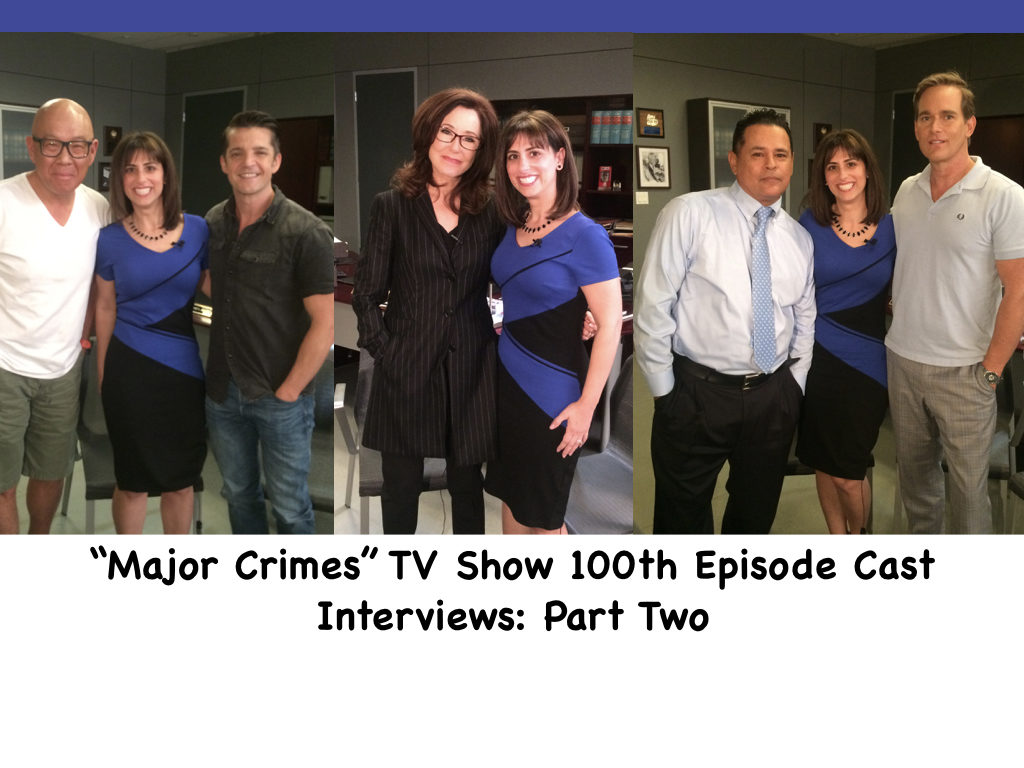
I sat down with eleven of the series’ stars to discuss the 100th episode, their roles on the show and some behind-the-scenes trivia:
Part One (in order of groupings): Kearran Giovanni and Daniel di Tomasso, GW Bailey and Jessica Meraz, and Tony Denison and Leonard Roberts —
Part Two (in order of groupings): Phillip Keene and Raymond Cruz, Michael Paul Chan and Jonathan Del Arco and Mary McDonnell —
The 100th episode of “Major Crimes” will air on Tuesday, December 19th.
–>Keep in touch with the author on Twitter and Instagram @realZoeHewitt. Looking for the direct links? Click here for Part One, and here for Part Two.