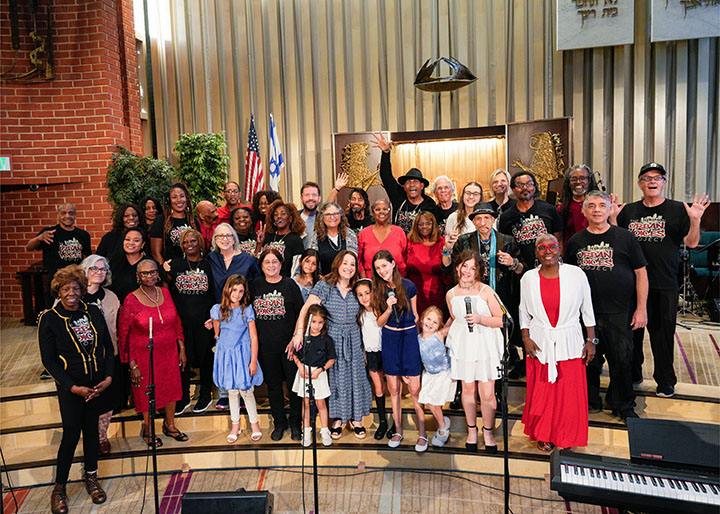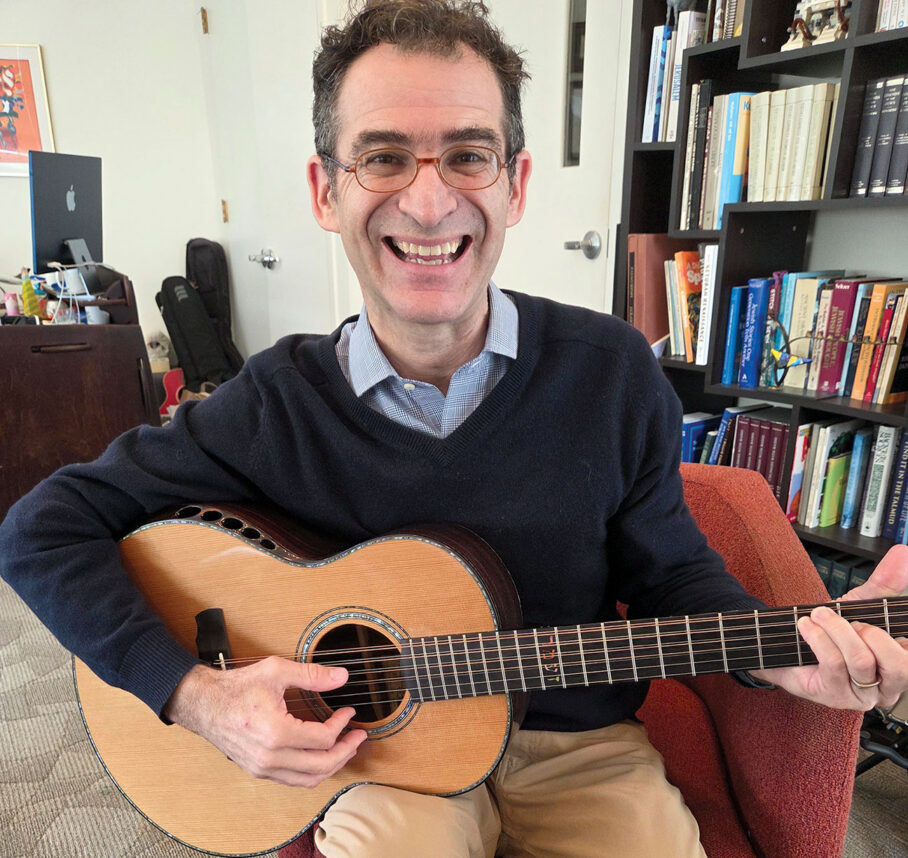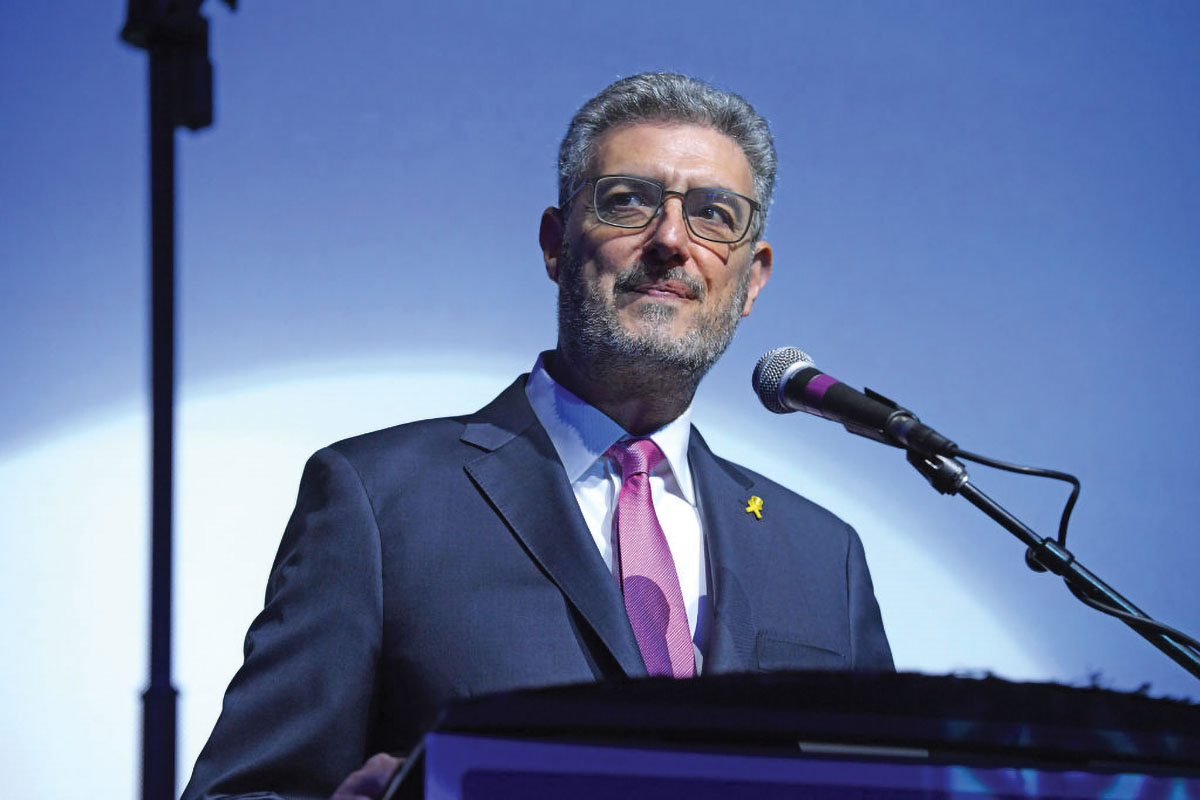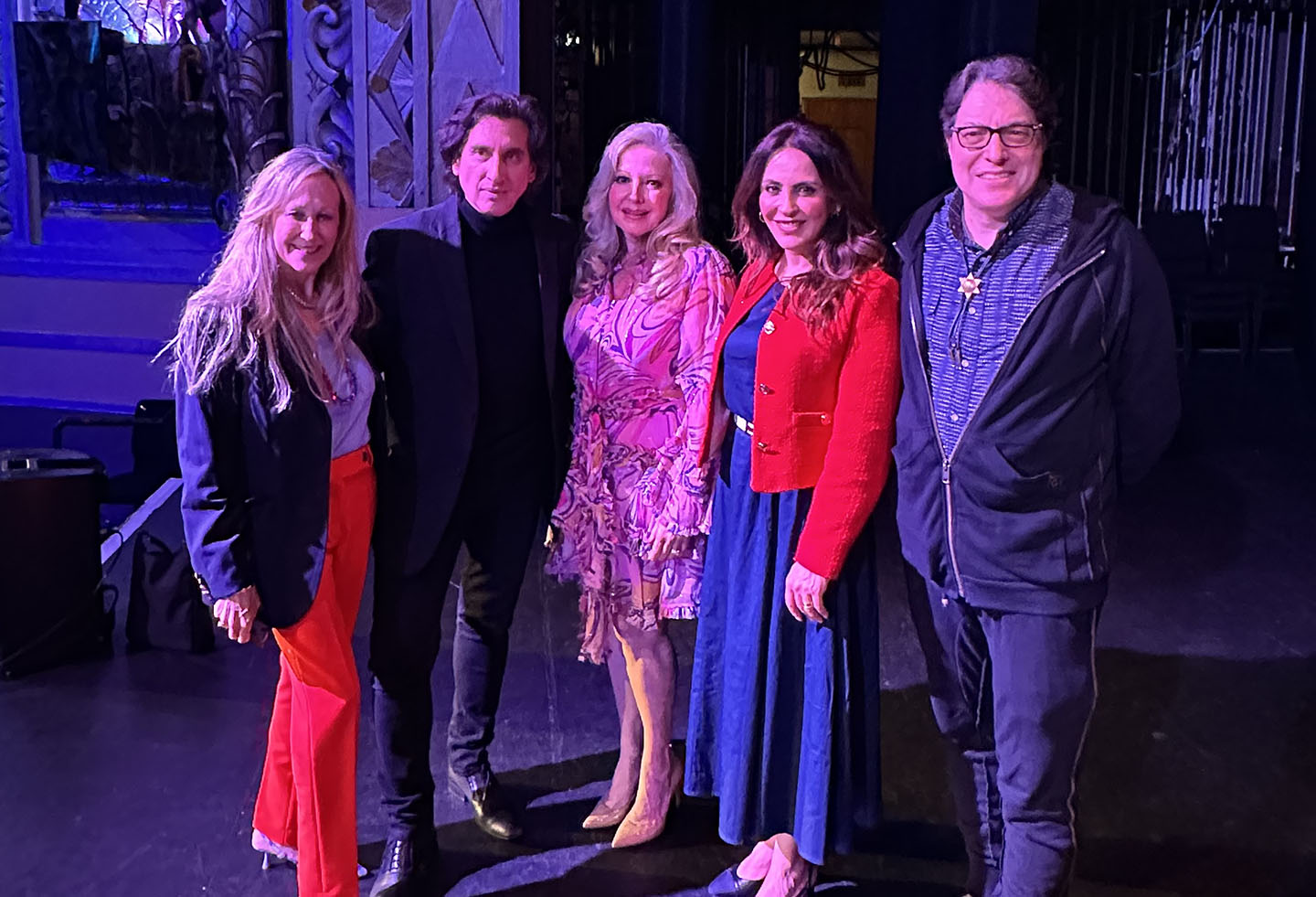
The Los Angeles Jewish Film Festival, in partnership with Temple of the Arts and the Saban Theatre, hosted a special Memorial Day event that drew over 800. Acclaimed artist Hershey Felder performed his ‘Great American Songbook Sing-Along’ in a one-night-only appearance.
Felder knows his audience well and selected songs they grew up with — timeless classics like “Summertime” from “Porgy and Bess,” “Moon River” from “Breakfast at Tiffany’s” and “What a Wonderful World” which was first recorded in 1967 by Louis Armstrong.
The audience, many in their 70s and 80s, sang along, often from memory, even when the lyrics weren’t projected on the big screen. The music transported them back in time to an era when melodies carried a magical, heartfelt charm.
Between songs, Felder shared stories behind the music and its composers — most of them Jewish — whose work remains beloved and instantly recognizable nearly a century after they were written.
He performed the music of some of the greatest American composers, including Irving Berlin, Leonard Bernstein, Stephen Sondheim and George and Ira Gershwin. Felder had a particularly special connection to George Gershwin, whom he portrayed in his acclaimed one-man show “George Gershwin Alone,” which he has performed over 3,000 times. The Gershwin heirs granted Felder access to the Gershwin Collection at the Library of Congress, allowing him to authentically capture Gershwin’s life and music.
Felder recounted how he was inspired to create his earlier show “Sing! A Musical Journey” after hearing a remarkable story from Holocaust survivor Helmuth Spryczer. As a 12-year-old in Auschwitz, Spryczer was forced to whistle “Rhapsody in Blue” for Nazi guards — he credits his familiarity with the piece, learned from records played by his parents in Berlin, with helping him survive.
Although the Gershwin estate initially hesitated to associate Gershwin’s music with the Holocaust, this powerful story became the emotional catalyst that ultimately gained their trust — leading to full permission for Felder’s portrayal of Gershwin on stage.
Felder is a great story teller and he loves collecting stories about his favorite composers and how they came up with their unforgettable songs or music compositions.
One such story was about Irving Berlin, who was born in Russia and immigrated to the United States in 1893. His family fled brutal pogroms and antisemitism, arriving in New York City when Berlin was about five years old. The family, struggling financially, settled on the Lower East Side. Berlin once complained to his mother about how difficult their lives were in the new country. In response, his mother told him how lucky they were to live in America and said, “God bless America.”
Years later, those words became the emotional foundation for “God Bless America.” He originally wrote the song in 1918 while serving in the U.S. Army during World War I, but shelved it. He later revised it in 1938, as the world once again stood on the brink of war and it became the stirring patriotic anthem we know today.
Felder also prepared a special surprise to for the audience after telling them about his childhood crush.
“We were watching ‘The Sound of Music’ and I fell-in-love with the youngest Von Trapp children, Gretl. I immediately announced that I’m going to marry her,” Felder, who was a young boy at the time, said. Many years later, he received a text from a fan who wanted to meet him in Venice where he was staying.
The fan arrived to Venice with her husband but got completely lost in the canals. She called Felder who quickly went out to meet her and was surprised to discover it was Gretl Von Trapp — only grown up now. Actress Kym Karath and her husband became good friends with Felder.
Karath, now 66 years old, then came on stage to the delight of the audience. She joined Felder and the crowd in singing “Edelweiss,” one of the musical’s most beloved songs.
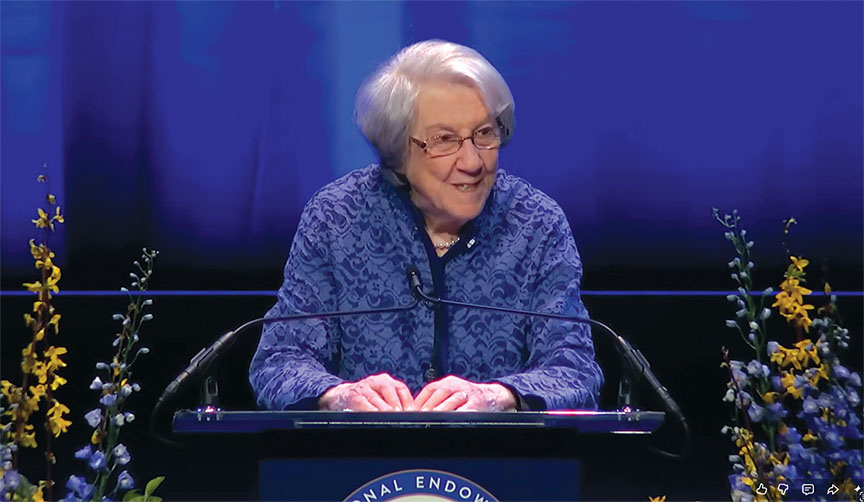
Felder, who resides in Florence, Italy, with his wife, Kim Campbell, former Prime Minister of Canada, told the audience that he recently suggested the idea of hosting a special screening to celebrate the 60th anniversary of “The Sound of Music.” After sharing the concept with Karath, she reached out to her fellow “Von Trapp” siblings, who quickly agreed to participate. Several of the original cast members are expected to attend, including Angela Cartwright (Brigitta), Debbie Turner (Marta), Nicholas Hammond (Friedrich), and Duane Chase (Kurt). The screening will be followed by a conversation with the former child actors.
The event is set to take place on July 5 at the historic Teatro Niccolini in Florence.
At the end of the enchanting evening, filled with stories and song, Felder shared his most personal story of all. His mother, Eva Surek Felder, was diagnosed with breast cancer in 1976.
“When they told her she had only six months to live, she said, ‘Over my dead body I won’t be at my son’s Bar Mitzvah,’” Felder recalled. True to her word, she lived to see him turn 13. “Right after, she began to decline. For the next eight months, until she passed, I was by her side. I played for her, we talked, we watched movies,” he said.
“She died on March 12, 1982 — six years to the day after her mastectomy,” Felder continued. “Just before she passed, she said, ‘Son, I know you want to be a musician and play for an audience, but when you do, from time to time, sing with them — and I’ll be there.’”
Felder’s voice cracked and his eyes filled with tears as he began to play the song his mother sang to him before she died:
Somewhere over the rainbow
Way up high
There’s a land that I heard of
Once in a lullaby…