The new Academy Museum of Motion Pictures is presenting a six-week program, “Emigres and Exiles in the Studio System,” spotlighting the Jewish immigrants—many of whom came from Vienna—who built the film industry in the early 20th century.
The series kicked off with a two-day symposium, “Vienna in Hollywood: The Influence and Impact of Austrians on the Hollywood Film Industry, 1920s-2020s,” that featured panel discussions by scholars, filmmakers, writers and composers from the United States and Austria.
“In the early 20th century, the nascent film industry in Hollywood was largely built by Jewish immigrants from Eastern and Central Europe, including many Austrians from regions of the former Austro-Hungarian Empire,” a statement from the museum said. “In the 1920s, Austrian artists including actor-director Erich von Stroheim and composer Max Steiner came to the U.S. seeking better opportunities in the American film industry.”
As Nazism spread in Europe in the 1930s and 1940s, many immigrants from Austria and around Europe settled in L.A. Among those immigrants who would soon create a major impact on the film industry were Billy Wilder, Hedy Lamarr, Peter Lorre, Paul Henreid, Sam Spiegel and Vicki Baum.
The two-month-old Academy Museum sees the series as part of their mission to focus on all facets of the film industry, concentrating on the classical era of Hollywood.
“We’re deeply committed to telling the stories of the Jewish founders of Hollywood, of our film industry.” – Bill Kramer
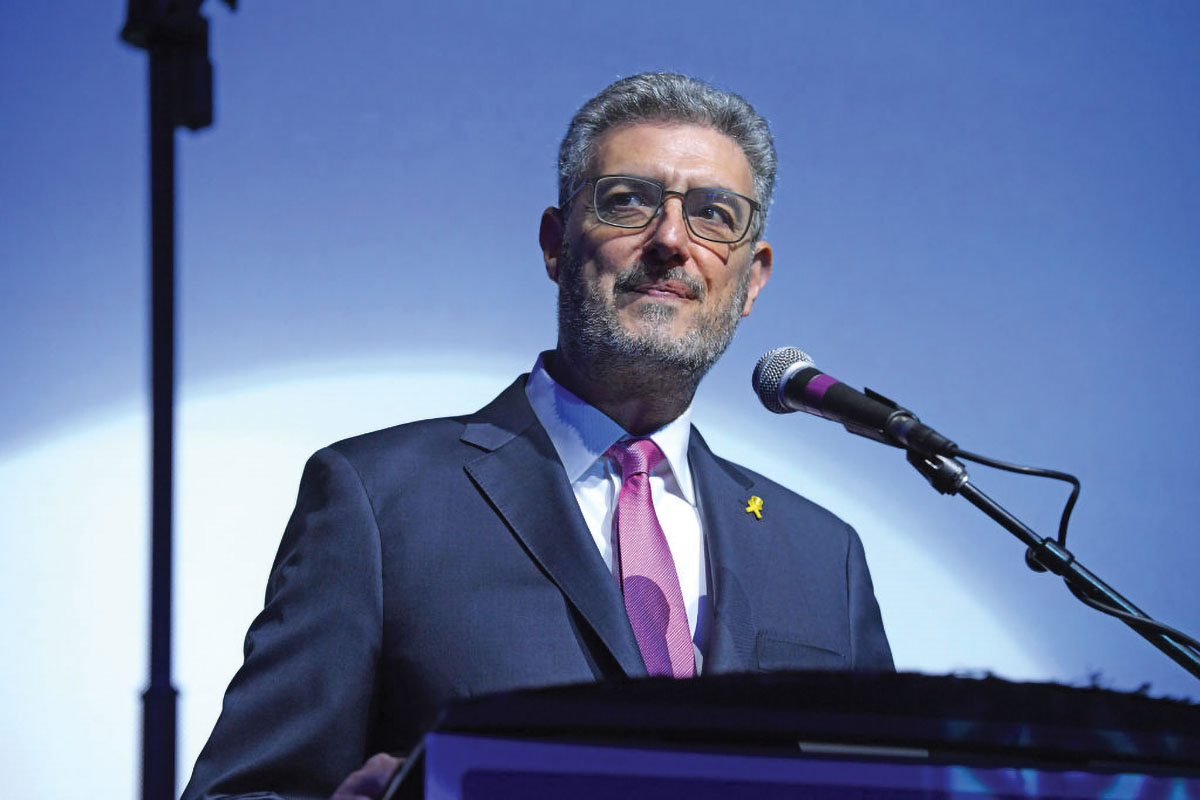
“We made a commitment to have one [exhibit] always focused on classical-era Hollywood founders,” said Bill Kramer, director and president of the museum. “We constantly want people coming back, and we’re deeply committed to telling the stories of the Jewish founders of Hollywood, of our film industry.”
What Kramer finds especially interesting about the museum’s collection is “that there is a depth of connection between classical era Hollywood [and] pre-cinema leading up to the Lumiere Brothers, all the way up to present day international cinema, adding, “everything is linked together in terms of legacy, craft areas, executives, how films are built and distributed and stories we tell.”
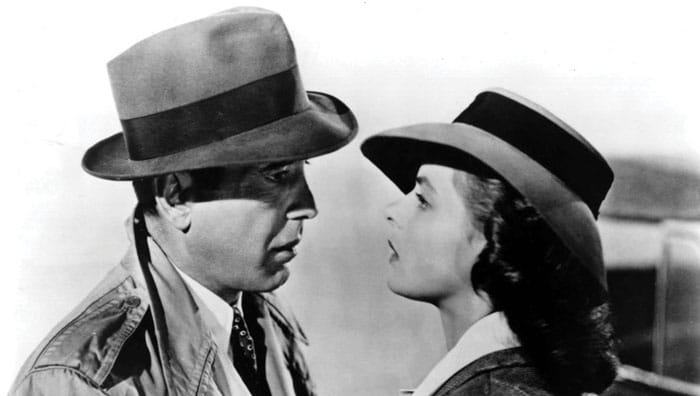
The “Vienna in Hollywood” symposium will be followed by a film series showcasing Austria’s “Emigres and Exiles in the Studio System.” The opening night selection was “Casablanca,” directed by Budapest-born Michael Curtiz with the score composed by the Austrian-born Max Steiner.
Tickets for the films are no more than $10 and moviegoers get to view them in the museum’s new, state-of-the-art Ted Mann Theater.
Additional films to be screened in the series include “A Midsummer Night’s Dream” (directed by Austrian Max Reinhardt), “Dishonored” (directed by Austrian Josef von Sternberg) and “Sunset Blvd.” (directed by Austrian Billy Wilder).
The museum’s plan is that every few months it will take a deep dive into a different aspect of film history. There is a wealth of material to draw from; the museum has access to the over 13 million film artifacts the Academy has been collecting since the late 1920s.
“I hope that we are introducing visitors to different films, eras, genres and artists that they haven’t heard of before,” Kramer said. “I think we’re doing it in a way that feels exciting, inviting and accessible.”
More information on screenings can be found on the Academy Museum’s website, AcademyMuseum.org.