Over the gallery doors in Congress hang 23 portraits, known as the lawgivers. The 11 profiles of these lawgivers in the eastern half of the chamber face left, and the other 11 in the western half face right. In the center of the wall is a portrait of Moses, who is looking straight on at Congress. And if you were to cross the street to go to the Supreme Court, you’d see Moses holding the tablets and looking down at all the judges.
“The architects of the American capitol buildings chose wisely,” writes author Ronen Shoval, reflecting on Moses in Congress and the Supreme Court. “Moses’ thought continues to inspire people to this day. Unlike the leaders of Egypt, he did not perpetuate his memory through buildings, but through insights. His ideas remain relevant and inspiring.”
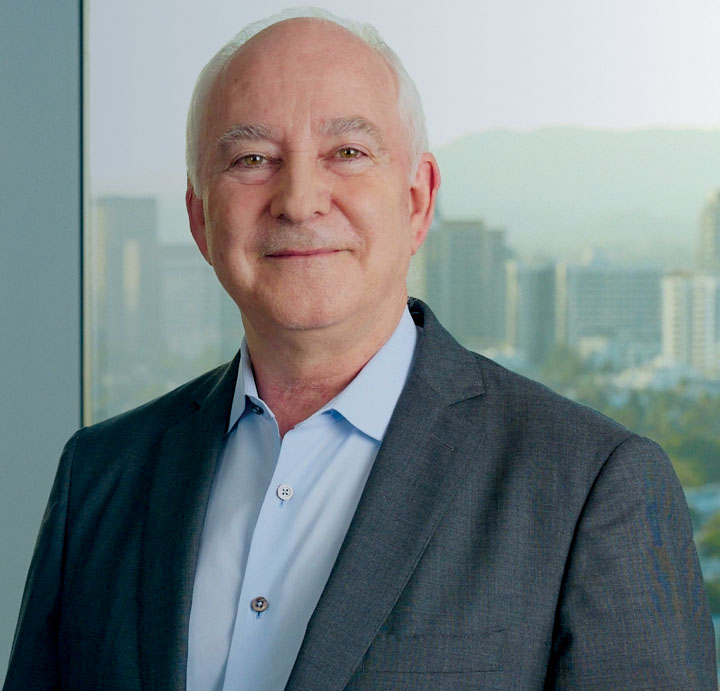
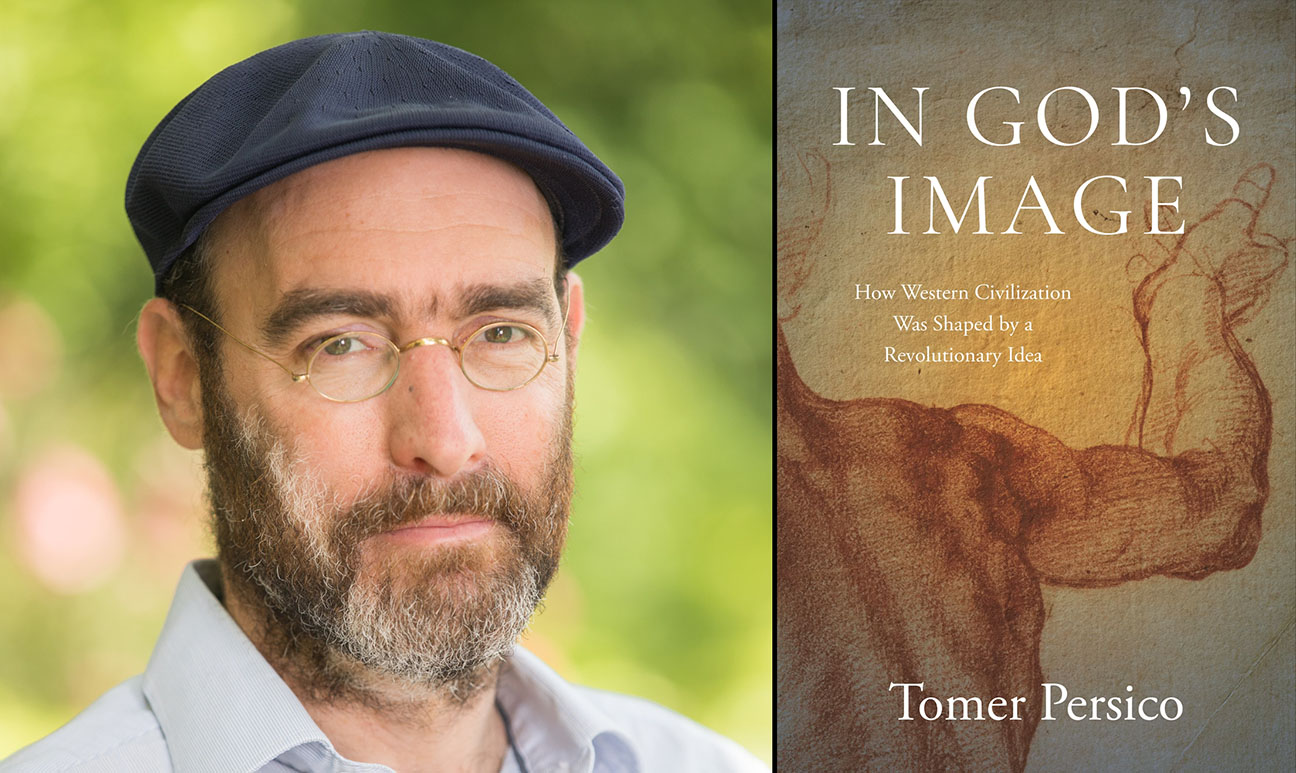
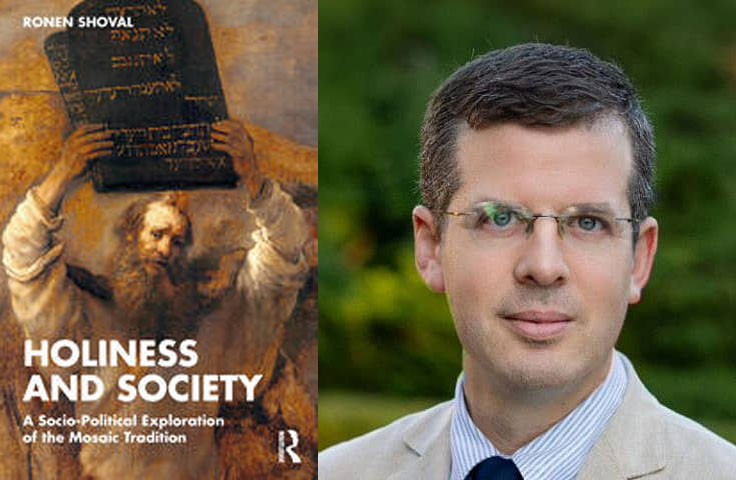
In his new book “Holiness and Society: A Socio-Political Exploration of the Mosaic Tradition,” Shoval, an Israeli philosopher and dean of the Argaman Institute for Advanced Studies, examines holiness as a distinct political category. It influences institutions, ethics, justice and even the use of force. He argues, “from the first appearance of the Israelites as a people, and indeed even beforehand, it had a political mission.”
When it comes to Moses and his influence on the U.S., Shoval told the Journal, “He was offering us the concept of the city on the hill. He gave us tools for how to model our society.”
The professor, who founded Im Tirtzu, the largest Zionist movement in Israel, was inspired to write his new book, which Routledge Press published, after studying for his PhD. He found two gaps in his education: When studying the Bible at universities, you don’t really study the Bible – instead, you learn how to analyze the philology of the Bible. There was also a gap he saw when he started examining the classical works of philosophers like William James.
“There was a major gap between the way they understood holiness, and what I understood about my Jewish education on holiness,” Shoval said. “The concept of holiness had not been developed. It’s just being presented in a Christian way, but not in an Old Testament way.”
For example, the author found that while James believed an individual can become holy, how this concept is presented in the Five Books of Moses is completely different. It’s collective.
Shoval said, “When God speaks to all the children of Israel, he says, ‘You should be holy, for I, the Lord your God, is Holy.’ It’s not for you as an individual. It’s for you as a community.”
The Bible argues that for one to be an individual, they must be part of a context.
“I am part of the context of my family, my congregation, my state and my language,” said Shoval, who lives in Jerusalem. “I’m an individual only because I am part of a context.”
He feels that especially in Israel, which is a very collective society. For example, in the U.S., where he lived for two years and taught at Princeton University, he saw that people wanted guns to protect themselves from the state. But in Israel, you get a weapon from the state to help the police and ensure law and order is upheld.
“The rule of the state is to make sure the collective survives, and the individual has freedom,” Shoval said. “You need freedom as a society. It isn’t one against the other. It’s one that creates the other.”
Shoval’s philosophy illustrates that the Ten Commandments serve as the constitution of the Torah, forming the bedrock of all subsequent laws and regulations found within it. “If a society follows the 10 Commandments,” he explained, “they become a holy nation. They take on more duties, and this makes them a light unto the nations. Other nations could look at this nation that runs according to the law of God as an example.”
While no society has ever been perfect, in this generation, the author has seen a fundamental shift from Judeo-Christian values to woke, another political ideology.
“It’s challenging the Western order,” Shoval said. “The people who are woke think the basic order should be changed.”
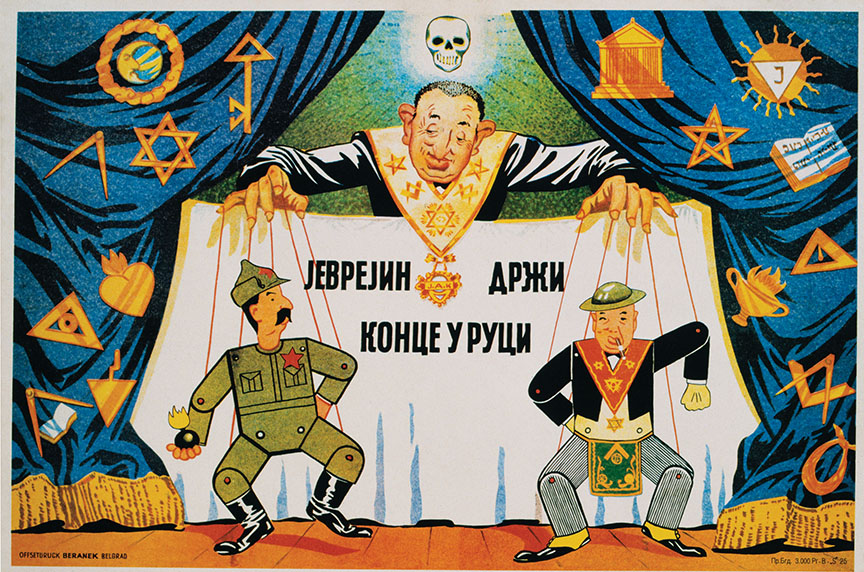
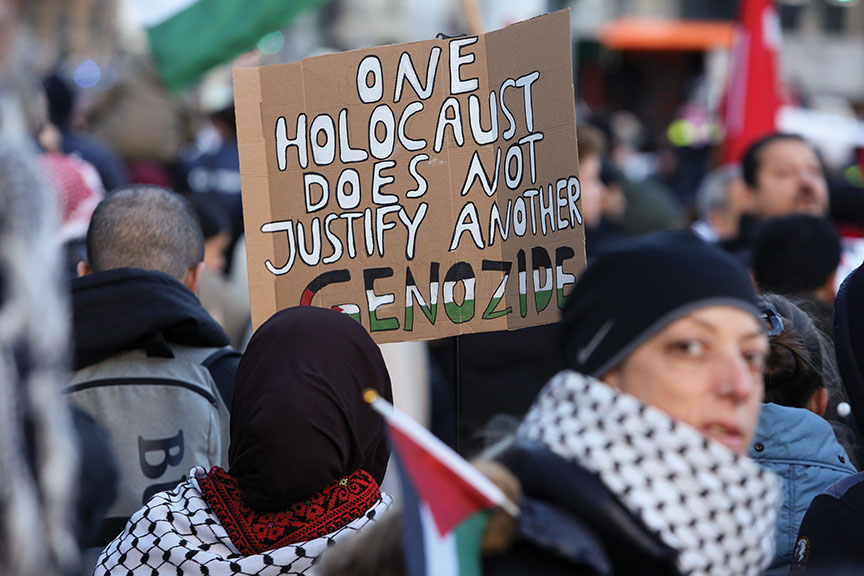
This has been concerning to Shoval, who’s now working on a book about the woke ideology – he has personal experience with it, after all. When he was a professor at Princeton, he faced backlash; there was a coordinated far-left campaign to cancel his course, and he was labeled as a far-right founder of an ultranationalist Israeli group. He saw firsthand what was happening at the Ivy League, where diverse thought was not welcome. And since Oct. 7, he’s been horrified by the hate towards Jews at universities in the U.S. and around the world.
“We thought there wasn’t antisemitism in Western civilization anymore, but now we see it’s a deep problem,” he said. “We are not surprised about radical Islam. We are concerned about the behaviors of other countries.”
What the proud Israeli and Jew has learned in this post-Oct. 7 world is not to give up hope, no matter what challenges his country and the Jewish people face.
“We have to value our achievements,” he said. “We have to understand that our very existence is being challenged, and it’s not about what we do. It’s about something very dark. We have to stick to our values and to our heritage. We can’t, for one second, take our life, our freedom and our existence for granted.”