fbpx

What BDS Overlooked: Sponsors of terrorism within the University of California Endowment

On February 8th, the University of California Student Association Congress voted to divest holdings in the UC endowment from specific companies operating with or within Israel.
[additional-authors]
February 11, 2015

On February 8th, the University of California Student Association Congress voted to divest holdings in the UC endowment from specific companies operating with or within Israel. The association also called for divestment from holdings in the governments of the United States, Mexico, Russia, and Brazil (among others). The legislation was brought forth by members of a global initiative to dismantle the state of Israel called ‘Boycott Divestment Sanctions’ (BDS).

Pro-Israel students from campuses across the state showed up to express their concerns regarding the legislation, their main assertion being that the legislation adopts a one-sided narrative that distorts the realities of the Israeli-Palestinian conflict. A central argument for BDS proponents asserts that these pieces of legislation restore neutrality within the endowment, and that the endowment holds no investments profiting from or otherwise involved in terrorism against the state of Israel (Palestinian or other). Of course, the illegal nature of funding terrorist organizations makes it a significantly more rare occurrence than businesses operating within the limits of the law by working with the state of Israel. Even so, upon analysis of the UC General Endowment Pool (GEP) the following holdings were discovered (the following is by no means an exhaustive list of investments involved in terrorism against the State of Israel).

The GEP currently has over $500,000 invested in HSBC Holdings. HSBC has previously been found guilty by U.S. courts of laundering millions of dollars for Hezbollah fronts, an anti-Israel and anti-Western terrorist organization. One might recall Hezbollah’s own manifesto, which states: “our struggle will end only when this entity [Israel] is obliterated. Or the former leader of Hezbollah stating that “The Palestinian National Charter will live on as long as there is a knife in a Palestinian woman's hand with which she stabs… as long as there are suicide bombers in Jerusalem and Tel Aviv. HSBC affiliates also processed $19.4 Billion in undisclosed transactions with Iran, which the U.S. State Department classified as the largest state sponsor of terrorism in 2012.

The GEP currently has over $250,000 invested in the Royal Bank of Scotland Group, which is currently facing renewed lawsuits regarding its fundraising for Interpal. The United States Treasury Departments prohibits permanent residents from doing business with Interpal, based on allegations that the organization funds Hamas terrorism activities.

Additionally, though the legislation presented at the UCSA meeting called for divestment from multiple countries with questionable human rights track records, it failed to address any human rights violations committed by these countries towards the state of Israel. The resolution delved into the various transgressions of each country, but failed to include the state sponsorship of terrorism towards the state of Israel each country engaged in. Since reinvestment is permitted only once the listed transgressions have been remedied, the unmentioned activities will be free to continue. For example, Turkey has been known to be a major financial supporter of the terrorist organization Hamas, with estimates of financial assistance at a few hundred million dollars. The legislation presented at the UCSA meeting failed to address any of these actions.
           
This information comes in stark contrast to popular BDS arguments, which have for years used the guise of neutrality to push legislation at UC campuses. If BDS proponents truly aim to restore financial neutrality towards the Palestinian-Israeli conflict, shouldn’t amendments additionally divesting from businesses and countries supporting terrorism against the State of Israel be included in all divestment legislation?


Guy Singer studies Psychology & Middle East Studies at the University of California, Santa Barbara.


Did you enjoy this article?
You'll love our roundtable.

Editor's Picks

Latest Articles

Chametz Is More than Crumbs in the Corners of our Homes

Chametz is also something that gathers in the corners of our being, the spiritual chametz that, like the physical particles we gather the night before Passover, can infect, wither, influence and sabotage us as we engage with others.

Alpine Flavors—a Crunchy Granola Recipe

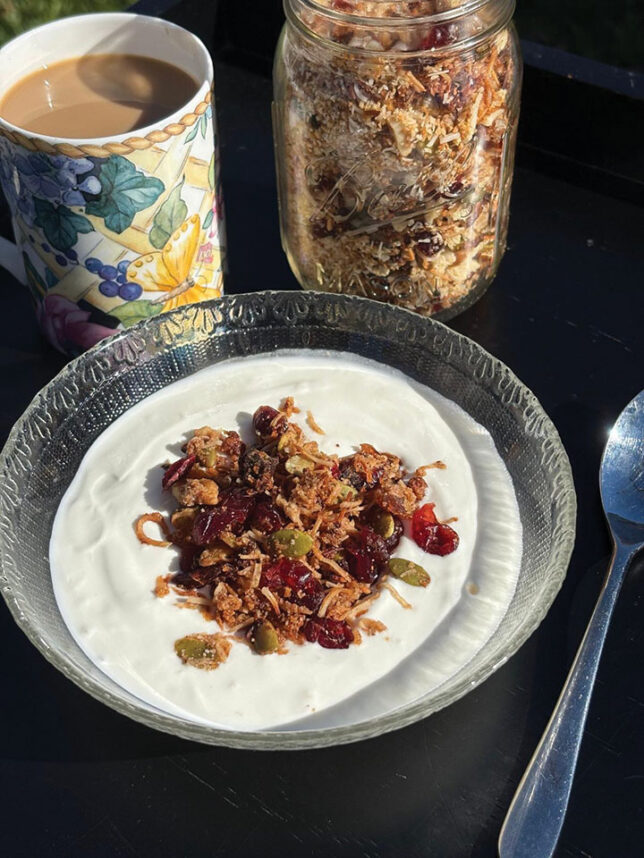
Every Passover, I prepare a truly delicious gluten-free granola. I use lots of nuts and seeds (pistachios, walnuts, almonds and pumpkin seeds) and dried fruits (apricots, dates and cranberries).

Pesach Reflections

How does the Exodus story, Judaism’s foundational narrative of freedom, speak to the present? We asked local leaders, including rabbis, educators and podcasters, to weigh in.

Rosner’s Domain | Be Skeptical of Skeptics, Too

Whoever risks a decisive or semi-decisive prediction of the campaign’s end (and there is a long list of such figures on the Israeli side as well as the American side) is not demonstrating wisdom but rather a lack of seriousness.

When We Can No Longer Agree on Who Is Pharaoh

The Seder asks us to remain present to the tension between competing fears and obligations. It does not require choosing one lesson over the other, but rather, it creates space for us to articulate our concerns and listen to the fears and hopes that shape others’ views.

Pesach at War. Leaving Fast, Leaving Slow.

Freedom, it would seem, is erratic; it happens in fits and starts, three steps forward and two steps back. Freedom is a leap into the unknown, driven by a dream. We will figure it out in time.

Making Our Impossible Possible

The holiday of Passover reminds us that we can break from our self-imposed reality and redeem ourselves to achieve the greatness we know we possess.

More news and opinions than at a Shabbat dinner, right in your inbox.