Quantcast

Search our Archives!


Advertisement


Woman Writes

January 29, 2013 | 5:42 pm RSS

A True Role Model: My Interview with Sandra Fluke

Posted by Maya Paley

Photo

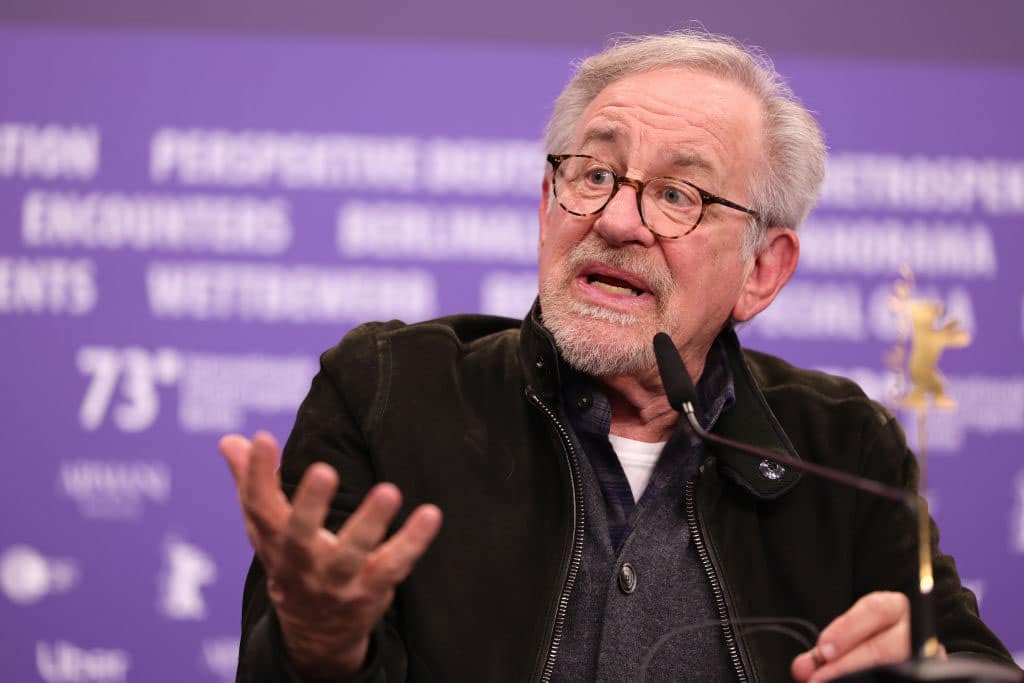
Sandra Fluke at NCJW/LA 1/22/13

Remember Sandra, the former Georgetown law student who spoke in front of a Democratic congressional panel on women’s health and reproductive rights back in February, 2012 only to be publicly attacked on national radio by none other than Rush Limbaugh?

I’m not going to go into the details of that incident, but I admit that I’m ironically happy that Rush made such a stink about Sandra because it brought her and all of the issues she advocates for to the forefront of our national media. And after meeting Sandra last week, I couldn’t be more pleased with the woman behind the name.

On January 22, 2013, Sandra spoke on a panel at NCJW/LA with Michele Kort of Ms. Magazine, Serena Josel of Planned Parenthood LA, Reina Martinez of Hollywood NOW, and Dr. Arthur Fleisher, long-time abortion provider. The panel, “Abortion Under Siege,” commemorated the 40 year anniversary of Roe v. Wade by highlighting where we are in the reproductive justice movement today.

Sandra is sincere, intelligent, and capable and she just gets it. I was honored that Sandra took the time to sit down with me and answer some questions. Here is the interview:

Maya: Some reproductive rights advocates have been dialoguing about the use of the word “abortion” as opposed to “women’s health” or “access to healthcare” or the use of “pro-abortion” versus “pro-choice.” What do you think about such discussions on lingo within the movement?

Sandra: There are real opportunities for commonality when we talk about the values that underlie these efforts. When we talk about things like allowing women to make decisions for their own healthcare, which I think some people feel is a euphemism for abortion, a way of avoiding saying it. But I think that’s an overly simplistic criticism. I think when we talk about allowing women to make those decisions and to control those decisions, what we’re appealing to is the values behind these types of rights. It’s a way of finding common ground with those who have more concerns about abortion, for example, in their own personal life, but can respect other women making their own decisions.  I don’t think that it’s a bad thing to use that kind of language as a way to talk on a grander scale and to find commonality and allow people to be part of the conversation who might be turned off otherwise. It’s really situational and about context. It’s the same as when we speak about…rather than say “gay marriage” we say “allowing people to marry the person they love.” That’s not about being afraid to say the word “gay.” That’s about why we believe that this is a right that everyone should have. I think that it accomplishes something to use that kind of language.

Maya: How do you personally define the word feminism?

Sandra: I think it can be defined in a lot of different ways. And it's hard to have one all-encompassing definition. I believe it was Rebecca West who had that great quote; something to the effect of “I get called a feminist when expressing views that differentiate me from a doormat.”

Side note (here’s the quote): “I myself have never been able to find out precisely what feminism is:  I only know that people call me a feminist whenever I express sentiments that differentiate me from a doormat.”--Rebecca West (1913)

Sandra: For me, what my feminism is about is my broader social justice agenda and that is both the reproductive justice aspects of everyone being able to control when and if they have children, free of violence and discrimination, but it’s also about ensuring that there’s racial equality in these types of questions and that LGBT folks have equal rights with their straight brothers and sisters. So for me feminism is about all of us having full access and being full persons in our society regardless of gender and identity.

Maya: Do you identify as a feminist yourself?

Sandra: Absolutely.

Maya: Growing up did you plan on becoming a women’s rights activist?

Sandra: No, I grew up in a conservative area and there were some limitations that seemed unjust to me and sometimes I felt the things I was seeing weren’t right, but I did not have a construct for explaining why or the language to use to oppose them. It was really when I went to college that I discovered the rich feminist history that we have and the rich social justice history as well and formed the language and way of understanding the types of oppression and how these practices fit together and formed a repressive framework. A lot of people experience this big eye-opening awakening moment in college, but it was really about accessing those tools and beginning to understand why everything went wrong and how to explain it and how to fight it. Law school was another step in that path of having another set of tools to be able to fight these social justice battles and to advance social justice.

Maya: Do you want to practice law?

Sandra: I have always intended that my career as a lawyer would be public interest focused and that it would contain both litigation and legislation and advocacy and perhaps go back and forth or try to use both of the strategies. That is why I went to law school. We know from the history of social justice movements that we need both and that different tools are best at different times and that there are roles that need to be played by people other than lawyers. I think at the moment that I am focusing on the legislative advocacy and the public policy advocacy and less on the litigation for this particular time, but I imagine that my career will probably include all of the above strategies.

Maya: If you think back to how Roe v. Wade happened forty years ago, many think that things have regressed since then. What is the ideal situation forty years from now?

Sandra: I would love to see economic positioning mattering less in our ability to access reproductive healthcare, but all types of healthcare. I would like to stop seeing racial disparities that are frequently connected to the economic circumstances across these lines. Certainly, we need to find a cure for breast cancer and for some many other reproductively related diseases. On a global scale there are specific policies that must be changed to be able to offer better life outcomes to our sisters around the world. But the most significant thing would be to find a unity around supporting women's health and to make it and all of our health a priority.  To get to that point would be forty years well spent because we have to fight the political battles. We have to fight the restrictions on our healthcare that can’t go unnoted, but having women’s health become a divisive issue, an issue that is used for political gain rather than one that we can make progress on in our legislatures, is not a sacrifice that we can make. It’s a balance that we have to have between fighting to protect each other and to protect each other’s health, but also making sure that women’s health doesn’t become so divisive and polarized that we’re paralyzed and can’t make further progress.

Maya: What would you tell young women who refuse to call themselves “feminists” or who say that they might agree with feminism, but don’t want to call themselves “feminists” or those who are not involved in any way and think everything’s fine? What would you say to them?

Sandra: On the thinking everything’s fine and not being involved questions, I’ve found frequently over my campaigning efforts and work that the fastest way to demonstrate to someone how not fine a situation is is to get into the details. Show them the number of bills. Show them the chart that says these are the anti-women’s health laws that we’ve seen over the last few decades and this is 2013. And show them what’s really happening from a quantitative point of view to describe what the impact of these bills would be. To talk about bills that would criminalize aspects of in-vitro fertilization and make certain forms of birth control illegal. I know Supreme Court precedent is not readily accessible to everyone, but to say look at the votes, look at the count, this [Roe v. Wade] was five to four. This is hanging by a thread. This is real. And to get into those details so that people really understand this isn’t rhetoric and hype for electoral outcomes or any other purpose—this is something that’s really happening and that we have to be aware of and active on, informed and engaged and involved. So I think that’s one step.

I would certainly defend the label and define the label for anyone, but the label’s not the point. The struggles are the point. The values underscoring it are the point and that’s a much more important fight. You don’t want to lose the label. I’ll talk to them about that for a few minutes, but then let’s talk about the work we can do together because that’s more important.

Maya: Are you in dialogue at all with the people who were attacking you in public media, like Rush Limbaugh?

Sandra: We’ve never had contact other than what you’ve seen in the media and that’s okay with me. I don’t desire personal contact with those figures. My biggest concern in that area is just the rampant misinformation that’s put out guised as news and that’s a big concern for our democracy overall. My reputation aside, when there are absolute lies about what policies we’re talking about and what their consequences are, it’s difficult for people to make informed choices when they’re being potentially misled. So that’s my biggest concern in that area.

Maya: How did you deal with it on a personal level?

Sandra: On a personal level I made it not so personal. I said you know what, I’m being individually attacked, but it’s important for me to recognize that these people know little to nothing about me and so this isn’t really about me. In fact, this is about all women. This is about women who speak out on reproductive healthcare. This is about any community that stands up and demands its human rights, its access to healthcare and challenges and entrenched power structure, and this is about silencing those types of voices in our civil conversation and in our political conversation. So this is much less about me being personally insulted, but about closing the door to that community and those conversations and that is far more dangerous.  That’s what I wanted to focus on fighting.

I thank Sandra Fluke, Serena Josel, Dr. Arthur Fleisher, Michele Kort, and Reina Martinez for their years and dedication to advocacy for reproductive justice, women’s rights, and equality. You can watch last week’s incredibly informative panel by clicking here.


The Jewish Journal believes that great community depends on great conversation. So, jewishjournal.com provides a forum for insightful voices across the political and religious spectrum. Bloggers are not employees of The Jewish Journal, and their opinions are their own. Our entire blog policy is here. Please alert us to any violations of our policy by clicking here. (editor@jewishjournal.com). If you'd like to join our blogging community, email us. (webmaster@jewishjournal.com).

January 22, 2013 | 11:20 am

Californians Play a Key Role in the Reproductive Rights Movement

Posted by Maya Paley

by Maya Paley of NCJW/LA and Serena Josel of Planned Parenthood LA:

In 2012, Arizona passed legislation prohibiting the state from contracting with abortion providing organizations except in cases of rape, incest, or life endangerment. Meanwhile, the California state legislators were the first to approve a state exchange program under the federal government’s Affordable Care Act that expands access to abortion and healthcare for low-income women. When it comes to securing women's rights and being a model for the rest of the nation, California has much to be proud of.

Californians play an important role when it comes to the reproductive rights agenda: we expand the parameters of conversation and put new policy ideas on the map. On the upcoming anniversary of Roe v. Wade, Californian women and men should remind themselves of California’s legacy of setting an example by creating more change within our state and by increasing pressure on others and on the federal government to support comprehensive women’s health policies and programs.

We should be proud of our successes:  the Reproductive Privacy Act was passed in 2002, ensuring a woman’s right to abortion in CA even if Roe v. Wade is overturned in the future. California provides funding so that teenagers can obtain contraception and get tested for sexually transmitted infections. They can even obtain emergency contraception without parental consent through California’s Family Planning, Access, Care, and Treatment program (Family PACT). In 1999, California became one of only 11 states at the time that required private insurance companies to cover contraception. Family PACT was started as early as 1997, providing either free or very low-cost health services to low-income women. Family PACT does not cover abortion or prenatal care, but it does cover gynecological preventive care, birth control, the “morning-after pill,” STI testing, and infertility treatment.

While we take pride in these accomplishments, we mustn’t become complacent. California still has one of the highest rates of women without health insurance at over 21%, which is above the country’s average of 19%. There is more work to be done and we might start with asking why so many women in California are uninsured and what we can do about it.

It is also our duty to utilize our strategic positioning as the progressive and visionary state to continue pressuring other states and the federal government to protect the Roe v. Wade ruling. States such as, Arizona, Texas Virginia, Michigan, Missouri, and many others continue to introduce and pass prohibitions on women’s health. The Guttmacher Institute has documented that in 2011, 24 states enacted 92 provisions restricting access to abortion including arbitrary waiting periods, scripted counseling, and ultrasound requirements. 26 US States stress abstinence in sex education, ignoring what really works in STI and pregnancy prevention today.

Nationally, several anti-women’s health bills have already been introduced by Congress members in 2013. There’s the Sanctity of Human Life Act, defining life as beginning at fertilization and promoting a ban on abortion without exception. There are two Title X defunding bills aiming to bar Planned Parenthood from its participation in federal health programs. Michele Bachman has introduced a bill to repeal the Affordable Care Act, which provides breast cancer screenings, pap tests, and other preventive care to women with no additional co-pay. And Steve King has introduced another bill to repeal the Affordable Care Act.

While none of these bills have much support within Congress, they reflect how serious and how determined some elected officials are when it comes to preventing women from accessing proper, preventive, and necessary healthcare. They represent the ongoing goal to undermine the Supreme Court decision made 40 years ago, on January 22, 1973, which stated that a woman has a right to privacy, and therefore a right to decide what is right for her when it comes to her body and her health.  Every year since 1976, Congress has passed a ban called the "Hyde Amendment" which withholds coverage of abortion for women in most federal health plans.

Beyond making phone calls, writing emails, and sending petitions, we in California have a duty to continue our legacy of being on the frontlines of progress for women’s health. We are the visionaries, creating common sense programs that have led to the largest reduction in teen pregnancy in the last decade, emergency contraceptives in the emergency room, and the guaranteed right to choose in our state constitution. Whenever we expand access and healthcare to women in California, we are effectively pressuring the rest of the country to follow suit. In honor of Roe v. Wade, we encourage California to renew its dedication to women’s health, access to abortion, and the right to choose.

Maya Paley is the Director of Community Engagement and Special Programs at NCJW/LA. Serena Josel is the Public Affairs Director of Planned Parenthood Los Angeles. Join NJCW/LA and Planned Parenthood for a panel featuring Sandra Fluke, Serena Josel, Dr. Arthur Fleisher, and Reina Martinez and Moderated by Michele Kort of Ms. Magazine: “Abortion Under Siege: Discussing Today’s Challenges on the Anniversary of Roe v. Wade.” Event takes place on Tuesday, January 22, 2013 from 11:30-1:30 pm at NCJW/LA Council House (543 N. Fairfax Ave., Los Angeles). Event is free to the public.

0 CommentsLeave your comment

January 10, 2013 | 5:52 pm

Why Teaching Abstinence is Not the Way

Posted by Maya Paley

Photo

The Guttmacher Institute’s analysis of state policy changes affecting reproductive rights shows that 26 states currently “stress abstinence in sex education.”  In Tennessee, a new 2012 provision calls for the exclusive teaching of abstinence. This means that lessons on ways to practice safer sex are largely excluded from the curriculum. In Wisconsin, a recent change “removed requirements that information provided in sex education classes be medically accurate and that it include education on contraception.” In other words, Wisconsin teachers are now permitted to teach sex education without concern about whether or not what they’re teaching is evidence-based. And they can now talk about sex without having to bring up condoms.

Does anyone disagree with me when I say this backlash against comprehensive sexuality education (CSE) is a serious problem?

The only positive change in 2012 as noted by the Institute was that Oregon added a provision mandating that sex education include information on teen dating violence, an important and often overlooked issue in the classroom.

In reading through the FAQ page of the National Abstinence Education Association’s (NAEA) website, I noticed that one statistic was repeated throughout. The NAEA aims to establish credibility for its abstinence-only position based on a study conducted by the U.S. Department of Health and Human Services that was published in February, 2009. The study, NAEA states, shows that “70% parents and more than 60% teens believe that sex should be reserved for marriage,” claiming that “abstinence-centered education is the only sex education approach that provides youth skills to reach this goal.” Who cares? This is not reality.

When I looked up the study myself, what I found much more notable than the statistics the NAEA published was how it was noted that the study’s research and analysis does not “constitute an evaluation of the influence of abstinence or sex education on adolescents.” NAEA is making this argument for an abstinence-only approach in the classroom and their evidence is that parents think it’s a good idea, rather than providing evidence that teaching abstinence actually reduces the amount of unwanted pregnancies or sexually transmitted infections among adolescents.


In high school my friends and I were peer educators with Peer Education Program/LA. We would visit schools, shelters, and teen groups to teach teens HIV prevention. We always made it clear that the safest strategy is abstinence, but we were realistic in our approach. Teens are sexually active and many are going to be sexually active regardless of whether or not we shove abstinence down their throats. The most important tool I learned from PEP/LA when I received their training (which instantly convinced me to start volunteering for them) was that they were realistic about teenagers and their expectations of them. We were taught how to use condoms, other forms of contraception, and what HIV/AIDS is. This is comprehensive sex education.

Planned Parenthood has posted some studies on their website providing evidence that abstinence-only sexuality programs don’t work and that comprehensive sexuality education does. One of the studies they quote states that “88 percent of students who pledged virginity in middle school and high school still engage in premarital sex. The students who break this pledge are less likely to use contraception at first intercourse, and they have similar rates of sexually transmitted infections as non-pledgers. (Bearman and Brueckner, 2001; Walters, 2005).” And on CSE, Planned Parenthood notes that “students in comprehensive sexuality education classes do not engage in sexual activity more often or earlier, but do use contraception and practice safer sex more consistently when they become sexually active (Guttmacher Institute, 2002; Jemmott et al., 1998; Kirby, 1999; Kirby, 2000; NARAL, 1998; Shafii et al., 2007).”

As far as I can tell, a strict abstinence-only approach is detrimental to the health and well-being of many adolescents in our country.

I know many of my readers are health practitioners, teachers, and parents. Have you had any experiences that have convinced you that either approach is better than the other? I would love to hear your thoughts on this issue.

4 CommentsLeave your comment


About this Blog

Blog Home
About the Blogger(s)
Contact

RSS


Blog Archive


Newspaper

Serving a community of 600,000, The Jewish Journal of Greater Los Angeles is the largest Jewish weekly outside New York City. Our award-winning paper reaches over 150,000 educated, involved and affluent readers each week. Subscribe here.

© Copyright 2013 Tribe Media Corp.
All rights reserved. JewishJournal.com is hosted by Nexcess.net. Homepage design by Koret Communications.
Widgets by Mijits. Site construction by Hop Studios.

counter fake hit page