Quantcast

Search our Archives!


Advertisement


The Non-Prophet

May 16, 2012 | 3:01 pm RSS

L.A. rabbi, running for U.S. Senate, draws fire for anti-Islamic comments

Posted by Jonah Lowenfeld

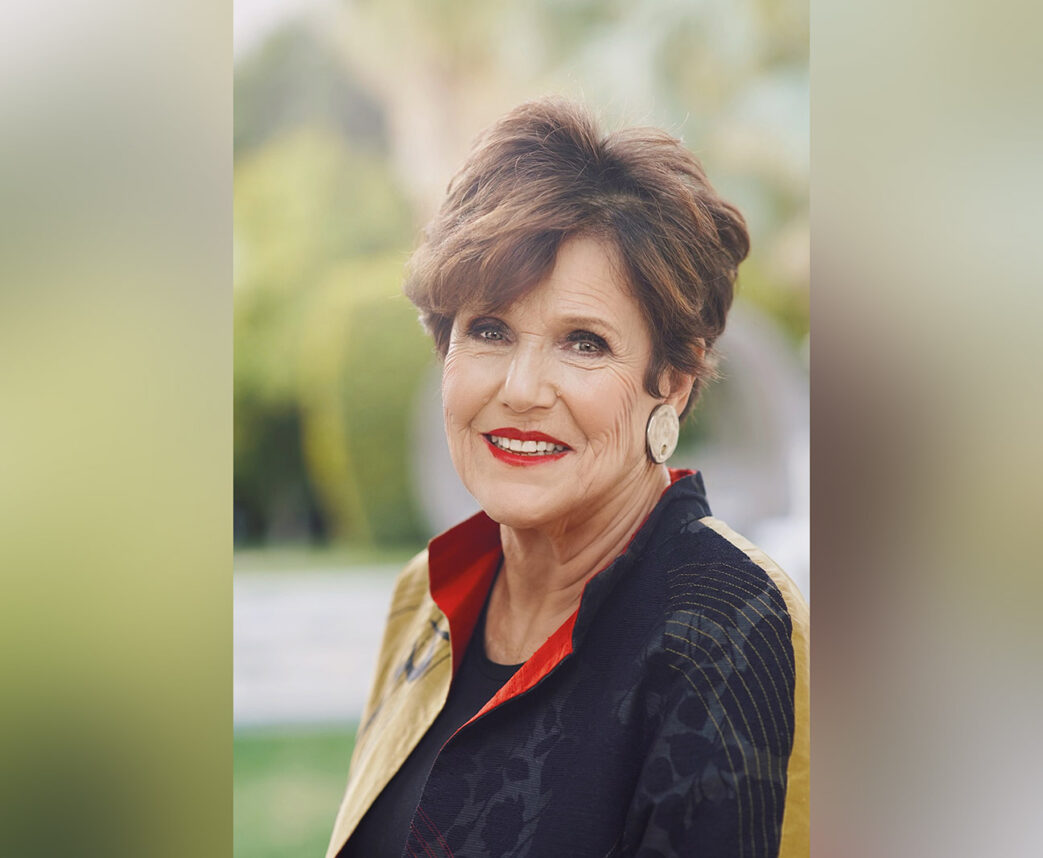
Photo

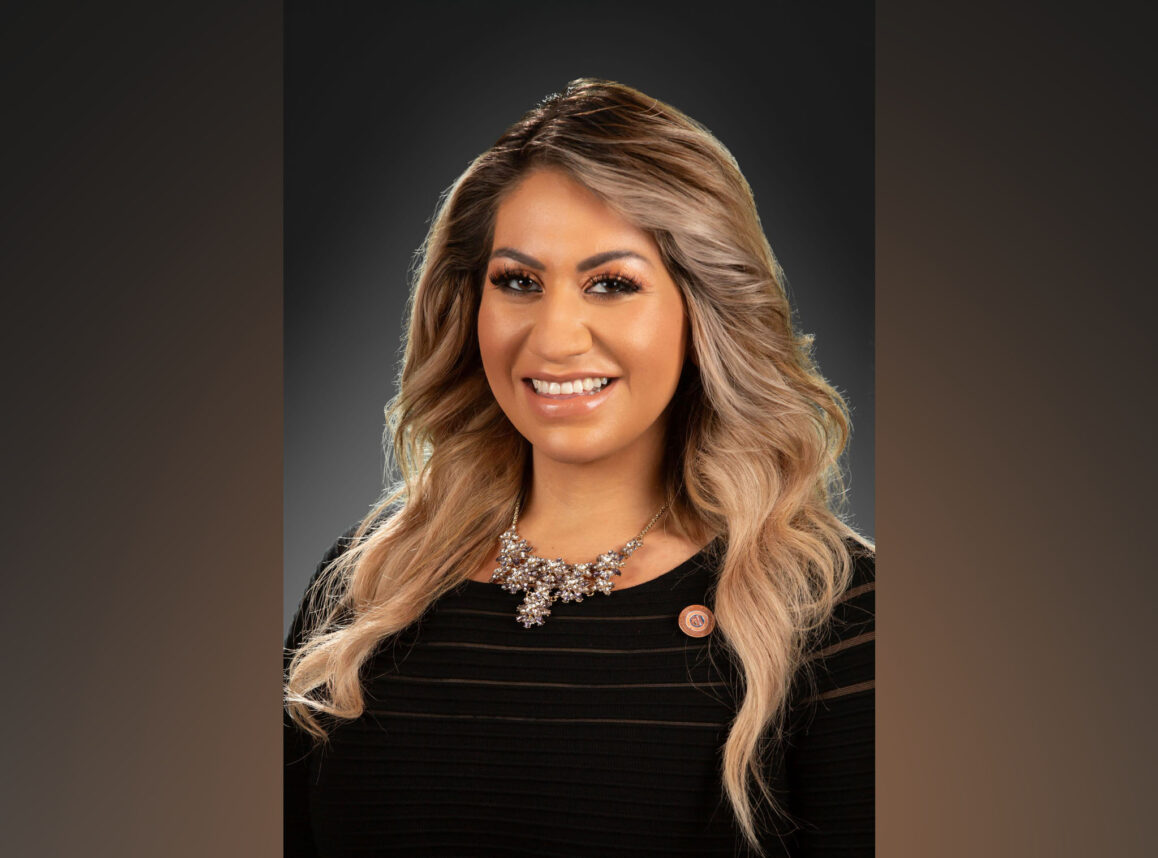
Rabbi Nachum Shifren, Republican Candidate for US Senate (www.rabbiforsenate.com)

A rabbi based in Southern California who is running for U.S. Senate has come under fire for anti-Islamic comments that were captured on video.

In the video, Rabbi Nachum Shifren, who is known as the “Surfing Rabbi,” was seen telling a cheering audience in San Mateo, “I am an Islamophobe, and everything we need to know about Islam we learned on 9-11.”

Responding to a call from an interfaith coalition led by the California branch of the Council on American-Islamic Relations (CAIR-CA), Republican leaders have since disavowed Shifren’s candidacy.

“Anyone who espouses hatred, we don’t have room for them in our party,” San Mateo County Republican Party Chairman Chuck McDougald told the Forward.

A spokesman for the California Republican Party also disavowed Shifren’s candidacy, the Forward reported.

In his bid for Senate, Shifren is one of more than 20 candidates, including 14 Republicans, attempting to unseat incumbent U.S. Senator Dianne Feinstein. The California Republican Party endorsed Elizabeth Emken, but under California’s new “top two” system of elections, the two highest vote-getters in the open primary on June 5 will advance to the general election in November.

Shifren does not appear to be mounting much of a campaign. According to the Federal Election Commission website, Shifren’s campaign has not yet declared any financial activity.

Shifren has run for public office at least twice before. He ran for California State Senate in a special election in 2009 and again in 2010.

In support of one or both of those bids, Shifren claimed to have received endorsements from well-known Republican elected officials, including two sitting congressmen and three members of the California State Senate.

On a still-active page of the website from his 2010 campaign for State Senate, Shifren claimed endorsements from Rep. Tom McClintock, Rep. Dana Rohrbacher, State Sen. Dennis Hollingsworth, State Sen. Bob Huff, State Sen. Tony Strickland, Assemblyman Chuck Devore and Los Angeles County Supervisor Mike Antonovitch.

Other sections of Shifren’s earlier campaign website include language similar to the remarks seen on the recent video.

In a 2009 post, Shifren urged voters to “declare a war to the death on ‘multiculturalism,’” describing it as “nothing but propaganda and inculcating our youth to hate America, while yielding to the forces of Islam and radical activists whose target is middle class America and it’s [sic] values.”

CAIR-CA, Jewish Voice for Peace, Progressive Christians Uniting and Interfaith Communities United for Justice and Peace released a joint statement condemning Shifren’s comments.

“There should be no place for hate speech of any kind in our nation’s political discourse,” the statement read. “Whenever one faith or ethnicity is targeted by hate, it is our duty as Americans to challenge that hatred and to instead promote mutual understanding and tolerance.”

Jason Aula, director of communications for Shifren’s campaign, rejected the idea that the candidate’s comments constituted hate speech.

“He’s entitled to say what he wants to say,” Aula said.


The Jewish Journal believes that great community depends on great conversation. So, jewishjournal.com provides a forum for insightful voices across the political and religious spectrum. Bloggers are not employees of The Jewish Journal, and their opinions are their own. Our entire blog policy is here. Please alert us to any violations of our policy by clicking here. (editor@jewishjournal.com). If you'd like to join our blogging community, email us. (webmaster@jewishjournal.com).

May 16, 2012 | 12:29 am

UCLA’s ‘one state or two’ debate

Posted by Jonah Lowenfeld

Photo

Hussein Ibish, right, and Reza Aslan, left, debated at UCLA on May 15 whether a two-state solution to the Israeli-Palestinian conflict was still possible. UCLA History professor James Gelvin, center, acted as moderator. Photo by Jonah Lowenfeld

For anyone who missed the debate on May 15 at UCLA between Reza Aslan and Hussein Ibish over whether the Israeli-Palestinian conflict should be resolved by creating a Palestinian state alongside the Jewish one or by creating a single bi-national state, here’s the basic report of what went down.

As expected, Aslan argued that the two-state solution is “dead and buried,” and that everyone (the Israelis, the Palestinians, the Americans and other international bodies) should instead start investing resources and energy to create a single bi-national state with “soft borders.”

Ibish, meanwhile, rejected the idea that the window to create two states for two peoples has closed, and instead held out hope for the possibility that such a conflict-ending resolution could be reached in the region.

While they disagreed about what final resolution to aim for, a careful listener would have realized that Aslan and Ibish agreed on almost everything else about the conflict.

Both scholars assigned blame for the failure of the peace process to many parties, but set the lion’s share of the blame at Israel’s feet. Both Ibish and Aslan saw the Israeli policy of settlement expansion as the primary reason for the failure of the peace process to progress in the nearly 20 years since the Oslo Accords were signed. Both acknowledged that, while most Israelis and most Palestinians (and most Americans, for that matter) want to see a two-state solution achieved, the likelihood of it being achieved anytime soon is very slim.

As one student in the audience put it afterward, “They’re on the same page, but they have different views.”

But confronted with the question of how the parties should proceed in resolving this seemingly intractable conflict, the two Muslim scholars parted ways.

“I’m advocating the one-state solution for one simple reason: there is no other solution,” said Aslan, calling the prospect of two states for two peoples “a sham” and “a charade.”

Pointing to the 600,000 Israelis who are currently living beyond the so-called green line that divides pre-1967 Israel from the territories it conquered during the war that year, Aslan argued, in no uncertain terms, that the infrastructure of the Israeli occupation of the West Bank had simply crowded out any possible space for a second state.

“There will never be a Palestinian state,” he said. “Ever. That is the truth.”

Ibish disagreed. “The majority of Israelis are, rather strongly, in favor of two state solution; the majority of Palestinians are in favor of a two-state solution,” he said. “So it’s a question of political will.”

With that political will, Ibish said he believed that the Israelis would dismantle West Bank settlements in order to achieve peace, and cited the examples of Gaza and the Northern West Bank as evidence of their willingness to do so.

“Walls go up and walls come down,” Ibish said.

Throughout the debate, Ibish sounded both hopeful and pragmatic when compared with Aslan, and never more so than when Aslan described the bloody process by which he believed a single, bi-national state could actually come about.

“If you want me to be honest with you,” Aslan said, “I think that what we are going to see is a process through which the demographic balance [between the Jordan River and the Mediterranean Sea] tips into apartheid, ethnic cleansing, until finally you have international mediation that leads to confederacy.”

“If,” Ibish responded, “I wanted to exercise a radical dystopian imaginative leap of that kind, if I wanted to be Hieronymus Bosch of Israel and the Palestinians, sure, I can arrive at your conclusion after all this horror. Well I’m not willing to go there.”

“Even if it turns out you were right,” he continued, “I would be proud to stand here and tell you that I am not going to acquiesce to making that happen.”

Despite falling during the week of mid-terms, about 80 people, most of them students, came to UCLA’s Humanities Building to hear from Aslan and Ibish.

“I think settlements can be overturned and stopped,” Ajwang Rading, a second year political science major, said after the debate. He is taking a course about the Middle East this term, and found Ibish’s argument the more convincing of the two. “It’s hard, but I’m a believer in that option. There is hope that it is possible.”

Benjamin Wu, a second-year student at UCLA studying economics and political science, also recoiled from the one-state solution. “Even though it’s probably more realistic, I thought it was too cynical,” he said. “Whereas Dr. Ibish, I thought he was much more optimistic. At least he was proposing a solution to the problem.”

Tuesday night’s debate was part of the Olive Tree Initiative’s Month of Ideas, and a second panel of Jewish participants will address the same topic on May 29. For more information, go to http://otiatucla.com/month-of-ideas/.

4 CommentsLeave your comment

May 14, 2012 | 1:32 pm

One state or two? UCLA student group to host a two-night conversation

Posted by Jonah Lowenfeld

Photo

Looking at the central program of the Olive Tree Initiative (OTI) at UCLA’s “Month of Ideas,” a two-night event called “Perspectives on Partition: A 1-state vs. 2-state debate,” it seems pretty clear that the only people who are invited to speak about whether to partition the land between the Jordan River and the Mediterranean Sea in the polite setting of a student-sponsored event are those who support the idea of a two-state solution, at least in principle, even if they have declared that a one-state solution is, practically speaking, the only possible outcome in the region, given the current state of affairs.

Why the group decided to convene two separate panels, one with only Muslim panelists and one with only Jewish ones, is a question I haven’t yet had the chance to ask the organizers. But it seems clear that, as a result, there will likely be less internal disagreement at each of these two events than there would have been at a single panel with Jews and Muslims both participating.

But enough about what won’t happen.

On May 15, two Muslim speakers will address the subject. Reza Aslan, an associate professor of creative writing at UC Riverside who wrote “No God But God: The Origins, Evolution, and Future of Islam,” will almost certainly express some variant of his position that the two state solution is “dead and buried.” His co-conversationalist, Hussein Ibish, a senior fellow at the American Task Force on Palestine, can be expected to defend the idea of two states.  Professor James Gelvin of UCLA’s history department will moderate.

Two weeks later, the Jewish panel, whose positions are a bit more difficult to predict and could be harder to differentiate, will take the stage.

Director of the Nazarian Center for Israel Studies Dr. Arieh Saposnik, who in 2010 revoked the invitation of a speaker who tried to speak about the failure of the two-state solution (he said it was because the speech was not “academic”), last year addressed a breakfast hosted jointly by Americans for Peace Now and Meretz USA on “Arab Recognition of Israel’s Right to Exist.” Seems pretty safe to assume that he’s a supporter of the two-state solution, at least in principle.

UCLA Hillel Rabbi Chaim Seidler-Feller, back in 2003, taught a class designed to “give the students a perspective on the necessity of compromise and the need to reject violence as an option; in concrete terms, the pursuit of a two-state solution.” Has his position changed 180 degrees vis-a-vis a two-state solution in nine years? That seems unlikely, though it would be understandable if he’s become more pessimistic in the years since then. 

And Jewish Journal President David Suissa, who might be expected to take the most right-leaning stance in this conversation, has shown that he, too, supports the idea of a two-state solution. At a debate last year, he seemed to agree with J Street’s Jeremy Ben-Ami when it comes to what a Palestinian state should look like.

If all of these speakers believe that a two-state solution is a desirable ideal, how strongly will any of them argue that a single, binational democratic state is the only practicable resolution that could happen, given the current state of the Israeli-Palestinian problem?

I’ve seen Aslan take on challenging audiences before (including a prickly crowd at Sinai Temple last year), and I’d wager that he makes a strong push for the “one-state” solution at UCLA tomorrow night. Whether Suissa—who has said that he “isn’t holding his breath” waiting for a two-state solution to actually be achieved—will end up playing a similar role on the Jewish panel is something that will be interesting to watch for.

I’ll also be listening to see where the participants in these two dialogues stand in the broader context of the Israeli-Palestinian debate. And because Jews and Muslims won’t be sharing the same stage, doing that will involve assessing just how much disagreement there is at each event.

Voices on the anti-Muslim right, who believe that a two-state solution is just a temporary step on the way to a one-state solution that would mean the destruction of Israel, have said there’s no difference between Ibish and Aslan, dismissing both as “Jew-hating terror apologists.”

But what of the Jewish panel? If OTI had been looking for a professed Jewish one-stater, they could’ve asked someone from, for instance, the Zionist Organization of America to speak. Will there be a perceivable difference between the positions of Saposnik, Saidler-Feller and Suissa? Or will they simply be dismissed as “apologists” of another type?

Complete event details can be found here.

4 CommentsLeave your comment


About this Blog

Blog Home
About the Blogger(s)
Contact

RSS


Blog Archive


Newspaper

Serving a community of 600,000, The Jewish Journal of Greater Los Angeles is the largest Jewish weekly outside New York City. Our award-winning paper reaches over 150,000 educated, involved and affluent readers each week. Subscribe here.

© Copyright 2013 Tribe Media Corp.
All rights reserved. JewishJournal.com is hosted by Nexcess.net. Homepage design by Koret Communications.
Widgets by Mijits. Site construction by Hop Studios.

counter fake hit page