Arts
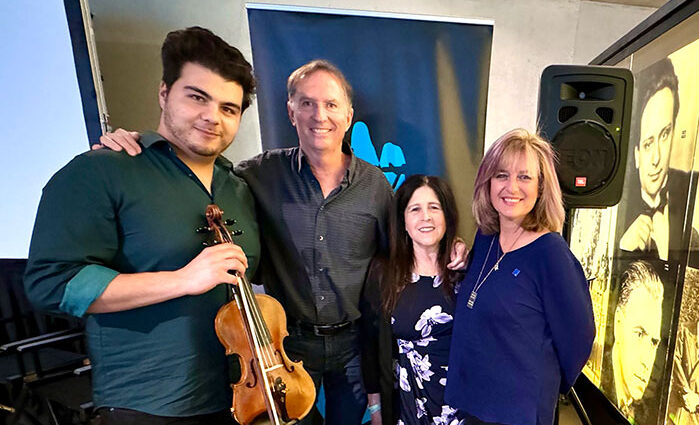
Deferred dream comes true for actress Nan Tepper
"I had been a student, wife, mother, news executive and caregiver, but I had always promised myself that one day I would be an actor."
August 23, 2007 | 7:04 am
Mark Lilla’s cover story for last Sunday’s New York Times Magazine is not the most thrilling essay I’ve read in the past month, but it is probably the most relevant to the world we are living in. Adapted from his to-be-published book “The Stillborn God,” Lilla addresses an important issue that underscores the limited effectiveness of “liberal" Islam:
What they mean is an Islam more adapted to the demands of modern life, kinder in its treatment of women and children, more tolerant of other faiths, more open to dissent. These are brave people who have often suffered for their efforts, in prison or exile, as did their predecessors in the 19th century, of which there were many. But now as then, their efforts have been swept away by deeper theological currents they cannot master and perhaps do not even understand. The history of Protestant and Jewish liberal theology reveals the problem: the more a biblical faith is trimmed to fit the demands of the moment, the fewer reasons it gives believers for holding on to that faith in troubled times, when self-appointed guardians of theological purity offer more radical hope.
The article details how the West got to where it is today, with its societies divided between the secular and the devout:
Liberal theology had begun in hope that the moral truths of biblical faith might be intellectually reconciled with, and not just accommodated to, the realities of modern political life. Yet the liberal deity turned out to be a stillborn God, unable to inspire genuine conviction among a younger generation seeking ultimate truth. For what did the new Protestantism offer the soul of one seeking union with his creator? It prescribed a catechism of moral commonplaces and historical optimism about bourgeois life, spiced with deep pessimism about the possibility of altering that life. It preached good citizenship and national pride, economic good sense and the proper length of a gentlemanâs beard. But it was too ashamed to proclaim the message found on every page of the Gospels: that you must change your life. And what did the new Judaism bring to a young Jew seeking a connection with the traditional faith of his people? It taught him to appreciate the ethical message at the core of all biblical faith and passed over in genteel silence the fearsome God of the prophets, his covenant with the Jewish people and the demanding laws he gave them. Above all, it taught a young Jew that his first obligation was to seek common ground with Christianity and find acceptance in the one nation, Germany, whose highest cultural ideals matched those of Judaism, properly understood. To the decisive questions â âWhy be a Christian?â and âWhy be a Jew?â â liberal theology offered no answer at all.
Such vapidness laid the foundation for modern religiosity among those in the West who want religion more intertwined with politics. Christopher Hitchens, one of The New Atheists, critiques the piece in a Slate article titled “Mark Lilla doesn’t give us enough credit for shaking off the God myth.”
Question. What is a bigger threat to Western-style democracy: religious extremism or extreme secularism?
Posted by Brad A. Greenberg in 2 Comments — Leave your comment
We welcome your feedback.
Your information will not be shared or sold without your consent. Get all the details.
academia america american jews anti-semitism atheism barack obama books capitalism catholicism christianity crime death entertainment europe evangelicals god holidays holocaust iran iraq islam israel jesus jihad john mccain judaism los angeles media middle east mormonism personal politics president bush president 08 science sexuality sports the law unusual war
Advertisement
August 2008
July 2008
June 2008
May 2008
April 2008
March 2008
February 2008
January 2008
December 2007
November 2007
October 2007
September 2007
August 2007
July 2007
June 2007
May 2007
April 2007
March 2007
Advertisements
"I had been a student, wife, mother, news executive and caregiver, but I had always promised myself that one day I would be an actor."
Most of the anti-Semitic mail I get these days doesn't concern Israel, Hollywood or even the threat of a nuclear war in the Middle East -- it's about meat.
The last official airlift of Ethiopian Jews was scheduled to land in Tel Aviv tonight, bringing to an end a state-organized campaign that began nearly 30 years ago and brought in some 120,000 immigrants from the east African nation
As recently as May, the only Jewish Republican in the House discounted suggestions that he would place on the ticket, giggling as he told JTA that such speculation was "ridiculous."
How to define what is "Jewish" provides endless fodder for debate in post-Holocaust, post-communist Europe. Is there, as the concept of allosemitism implies, a "certain Jewish something" that sets Jews apart?
This video, an open source release of Mercer County Community College in New Jersey, gives a good, factual overview of the meaning and tradition of the Jewish coming-of-age ritual, the Bar Mitzvah.
There's nothing like a heated, intelligent political debate to get Jews' social synapses firing. Jewish Journal staff writer, Brad Greenberg, a.k.a. The God Blogger, will be holding the reins of "The Young Jewish Vote," where Republican Jewish Coalition Director Larry Greenfield
Even though he was not at the Staples Center, the NBA's only Jewish player looked like he was on his home court in Jerusalem, where he led 25 Jewish and Arab children aged 10 to 14 in shooting, passing and ball-handling drills.
Parshat Devarim (Deuteronomy 1:1-3:22) Both the story of Bilaam and Targum Jonathan instruct us to see beyond the grand, deep, transformative moments of speech, and realize that each and every time we speak, we are taking advantage of a Divine gift.
Our Moroccan ancestors, the rabbi explained, were Torah romantics. They were so in love with Shabbat that they didn't want it to end
With only one congresscritter even willing to admit to some wierd, internally conflicted, church-going, murky nontheism/deism… wake me up when extreme secularism starts threatening America, will you please?
Will it be when our atheist president who ends every speech “and may no gods ever bless America”, when the money says “there are no gods to trust”, when every child doesn’t every day have to decide whether to swear to a god in our public schools or face ridicule? Will it be when no state law requires that all elected officials swear a belief in Christ? Will it be when millionaire pastors begin to pay taxes on their private jets, mansions and their cable-tv empires paid for by social security checks sent by little-old-ladies trying to get into heaven?
I’d say both extreme theocracy and extreme secularism are equal dangers. But right now, America’s standing in the middle of the sahara desert, and you’re warning us about freezing to death.
Not true, my anonymous friend. I personally am not concerned that America is drifting deep into a godless sea. But there has been a lot of bluster that we are slowly going the way of Europe, and that is why I posed the question.