Advertisement
View the most popular tags overall?
One winner has already been declared in the Iranian elections: The Internet, used by more than 23 million Iranians, or 34 percent of the population. But that figure alone cannot be used to determine which of the four candidates will win. At the very most, one can assume most Web users will vote for reformist candidates Mir-Hossein Mousavi or Mehdi Karroubi, rather than Mahmoud Ahmadinejad or Mohsen Rezeai.
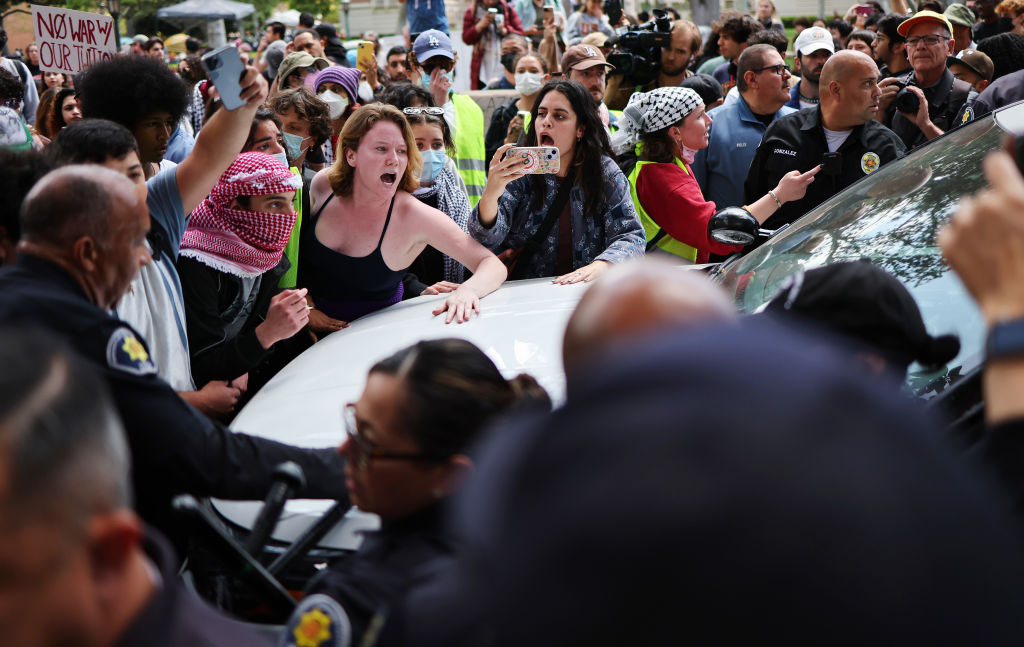
As I drove across Los Angeles on election night, I saw clusters of teens and kids in their 20s celebrating on random street corners, high-fiving drivers at red lights. They may not have marched on the Pentagon to end the war in Iraq, but they have given the nation a new president who has pledged to do just that. For the first time since the springtime of the baby boomers, they have become not just consumers to be marketed to, but a political force to be reckoned with.
For months there was constant talk about Obama's Jewish problem, a lingering fear -- with plenty of empirical evidence -- that an unusually high proportion of Democratic Jews were going to vote for McCain. But in the end it didn't bear out. An early exit poll from CNN concluded that Obama received 78 percent of the Jewish vote.
Barack Obama's Jewish backers argue that he will boost effortss to pressure Iran and advance Israeli-Palestinian negotiations. Detractors, on the other hand, have predicted that Obama could end up pressuring Israel and backing away from confrontation with Iran.
Two days after the terrorist group Hamas swept last week's Palestinian elections, Rabbi Steve Jacobs ended Shabbat services at Kol Tikvah in Woodland Hills with this striking comparison.
"Mr. Begin was a terrorist, Mr. Shamir was a terrorist, Mr. Sharon was a terrorist," Jacobs said to his Reform congregation. "History is replete with negotiations that took place with terrorists. Two days ago, Hamas didn't have to worry about paying civilians and creating an infrastructure."
Jacobs' branding of three Israeli prime ministers as onetime terrorists was jolting, even upsetting, to some in the audience. But Jacobs' point was clear: The Hamas victory did not necessarily spell doom to a negotiated peace between Israel and Palestinians.
After a string of embarrassing defeats in his own party, Prime Minister Ariel Sharon's victory in the election of key Likud officers raises the chances that he will be able to broaden his government and push through a promised withdrawal from the West Bank and Gaza Strip -- though it's still not certain.
Advertisements
Advertisements