Advertisement
View the most popular tags overall?
Egyptian President Mohamed Morsi signed into law a new constitution shaped by his Islamist allies, a bitterly contested document which he insists will help end political turmoil and allow him to focus on fixing the economy.
To mark the day Egypt regained control of the Sinai peninsula from Israel, a group of protesters pledged they would this week cover a memorial to Israelis killed in the war with an Egyptian flag bearing the words: "Sinai - the invaders' graveyard."
At least 28 people were killed in two bomb attacks in Syria's second city Aleppo on Friday while in besieged Homs, opposition neighbourhoods endured another day of bombardment by President Bashar al-Assad's troops.
Sprinting down a side street in downtown Cairo, the group of young men are outrun by a hissing tear gas canister careening through the air, slamming into the ground beside them. They quickly raise their arms to their mouths in a futile attempt to avoid inhaling the gas. But one of the group turns in the direction of his pursuers, staring at them defiantly as he breathes in the gas as a show of strength.
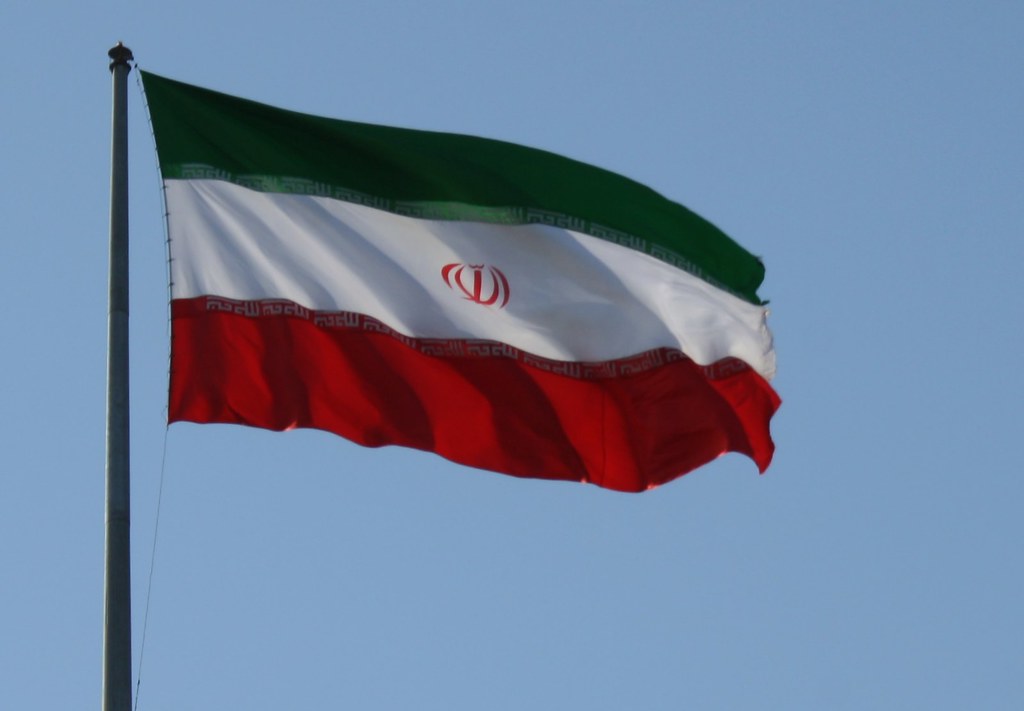
On Nov. 4, 1979, Islamist students and militants loyal to the Ayatollah Khomeini took over the American Embassy compound in Tehran and captured 52 Americans — a diplomatic crisis that lasted 444 days. Simon Sion Ebrahimi, a local Iranian Jewish author, remembers that day well. It was the same day employees at his accounting firm, which faced the American Embassy, took him hostage.
From the very beginning of the Occupy Wall Street movement, people wanted to know why. Why did a group of protesters calling themselves “the 99 percent” take up residence in Zuccotti Park in Lower Manhattan on Sept. 17?
Recent weeks have not blessed us with much good news.
Since Dec. 18, 2010, when the first rebellion in the Middle East erupted in Tunisia — causing a chain reaction called the Arab Spring — Israelis were following the unfolding events with perplexity.
He was the Arab world’s most quixotic leader.
I am reading the status updates, Tweets, interviews and articles.I read them and I DO believe what I read.
Syrian President Bashar Assad said Monday that a national dialogue would begin soon, promising parliamentary elections in August and a complete reform package by September, in a speech responding to three months of protests against his rule.
As revolution sweeps across the Middle East at a dizzying pace, cries for freedom, equality and an improved standard of living ring out, touching millions around the world and bringing hope to millions more. Finally their voices are being heard, progress is being made. Still, an important segment of the population goes unheard, as it cannot participate in high-profile protests or even voice its grievances and concerns.
On Sunday, I posted a blog about a video on YouTube that had captured the attention of the Libyan resistance movement and become the unofficial anthem of its youth.
“This,” I thought, “is what the surface of Mars must look like.”
Though Israel lives in a dangerous neighborhood, surrounded by countries whose leaders or people wish its destruction, over the years it had adjusted to the status quo, more or less figuring out how to get by while keeping an eye on gradual change.
The American Jewish Committee called on the United Nations General Assembly to suspend Libya’s membership in the U.N. Human Rights Council.
The Bahraini army seized control of key parts of capital Manama on Thursday and banned gatherings, after a riot police raid on a protest camp left at least three people dead, 231 wounded and 60 more missing.
Putting politics and Israel aside, the most impressive part of the events in Cairo was the fearlessness and courage of the protesting Egyptians. We asked Rabbi Jill Jacobs to offer perspective on placing life in harm’s way. What should we be prepared to die for?Tell us what you think at con- nect@jinsider.com.
Every July 23 for the past 58 years, Egypt, my country of birth, has celebrated its “July revolution” that overthrew King Farouk and ended the monarchy and British occupation once and for all. It was no revolution: It was a coup staged by young army officers. And so it has been with a series of “revolutions” around the Arab world in which a succession of military men went on to lead us in civilian clothes — some kept the olive drabs on — and rob generations of the real meaning of revolution. For years I looked at the Iranians with envy — not at the outcome of their 1979 revolution, but because it was a popular uprising, not a euphemism for a coup.
Like the collapse of the Soviet Union nearly two decades ago, the outcome of the post-election unrest in Iran could be of major strategic significance for the Middle East and for Israel.
In Los Angeles and New York and elsewhere in the West, families who had left Iran "for the summer," to"wait out the troubles" and "return in time for the kids to start school in September" realized there was no going back.
It's been 30 years since I left Iran, and I still know I'm going back some day, because I have to see that house again, to stand before the yard door and discover if it's indeed 12 feet high, or if I've imagined it so, to ring the doorbell and see if I can hear its chime echo up and down the street.
Thirty years have passed since the massive and violent demonstrations against the Shah of Iran that began in September 1978, and for many, the start of that country's bloody revolution might seem a faded memory. Yet I have carried those shattering events with me all of my life: I was born on in Tehran on Sept. 11, 1978, as chaos unfolded on the streets outside
With the passage of time, we realized that these people were from three factions within the firm, which included the Mojahedeen faction, the communist faction and there were the very fanatic pro-Khomeini faction
Iranian Jewish members of the "30 Years After" organization talk about becoming more active in Los Angeles, state and national politics; featuring Assemblyman Mike Feuer and L.A. DWP General Manager H. David Nahai.
While a student at Columbia School of Journalism, Rachel Boynton saw a film about the history of 20th century nonviolent conflict that included a segment on how American consultants had gone to Chile in 1990 to produce TV ads for a successful campaign to end Gen. Augusto Pinochet's long autocratic presidency.
Don't have time to shlep to a museum? Too tired to remember if the free museum day is the first or second Tuesday of the month?
Since the start of Israel's election campaign last October, the flamboyant leader of the secular-rights Shinui Party had been promising a secular revolution in Israel.
This week Yosef "Tommy" Lapid seemed to have a golden opportunity to fulfill his promises when Shinui -- which became Israel's third largest party after the Jan. 28 elections -- agreed to join Prime Minister Ariel Sharon's new Likud-led government.
At Jeff's Gourmet Kosher Sausage Factory on Pico Boulevard, high school boys crowd the place, sinking their teeth into chicken-cilantro sausages and Moroccan sausages with olives and preserved lemons. The hot dogs at Jeff's are a far cry from the skinny pink Hebrew National ones that most people think of when they think hot dog, and because of this, the franks sell well, even to high school boys who aren't natural gourmets.
Jeff Rohatiner, who started Jeff's Gourmet in 1999, and Alain Cohen and Evelyn Baron of Neshama Gourmet Kosher Foods, are at the vanguard of a kosher sausage revolution in Los Angeles. Both companies were founded by people dissatisfied with the state of kosher sausages and wanted to turn a normally low-cost food item into a high-end treat.
On a blazing hot Saturday in the hills of Calabasas, the streets are deserted, devoid of the usual clusters of children playing ball or teens on bikes and scooters within this gated community south of the 101 Freeway.
"I still write a lot from anger," playwright Mark Medoff said. "I've wanted to flagellate the world."
Medoff, 61, is the author of the smoldering plays "When You Comin' Back, Red Ryder?" "Children of a Lesser God" and "Road to a Revolution," now at Deaf West Theatre. His intense work often rails against a world he perceives as rife with violence, racism and sexism. Several childhood memories fuel the rage, he revealed during a telephone interview from his New Mexico ranch.
Contrary to the ever-hopeful predictions of the Republicans, Jewish voters proved remarkably resistant to change in this month's congressional voting.