Advertisement
View the most popular tags overall?
Thank you for today’s column. I wish I could have heard it [Rabbi Harold M. Schulweis’ speech], but reading about it was wonderful (“Because You Suffer…,” March 8). Old is good, and older is perhaps even better. Again, thank you.
"President Bush has the best interests of the United States and the world at heart ... if push comes to shove, I would fight with the American Army," said Jacob Proud, a 20-year old freshman in bioethics at the University of Judaism (UJ).
"I question the real motives for this war... I want my country and Israel to be as just and righteous as possible," observed Mark Goodman, 26, a second-year student in the UJ's Ziegler School of Rabbinic Studies. The opinions, expressed in separate interviews during the first week of the war in Iraq, illustrate an obvious and a more subtle point.
For one, not all students think alike, not even in a university whose students are, by self-selection, dedicated to Judaism. Secondly, even within the UJ, undergraduates and rabbinical students sit largely on opposite sides of the fence.
Whatever our opinions about Israel's claim on the territories, its attitude to Palestinian nationalism or its rights to self-defense, no one was asking us to risk our lives for Israel's sake.
I had neither the right nor privilege to challenge the government of Israel's decisions on how to protect its citizens. If I did so, I was in some way undermining that government and endangering Israel's existence in a hostile world.
In a cynical age such as ours, this parochial attitude might seem charmingly out of date. And yet, this central tenet of a Zionist education remained embedded in my consciousness throughout high school, through my student leadership days and even into my 30s, when I had to make strenuous efforts to channel my bitter opposition to the Oslo process into nonpublic activism.
It is tough to estimate current public opinion regarding Valley secession. In the two years since the Local Agency Formation Commission (LAFCO) began its investigation into the possibility of secession, the world and the people of Los Angeles have radically changed their priorities. To paraphrase Rick Blaine in "Casablanca," it doesn't take much to see that the problems of two little areas don't amount to a hill of beans in this crazy world.
Still, in interviews at locations around Los Angeles, when people had opinions about secession, it was primarily favorable.
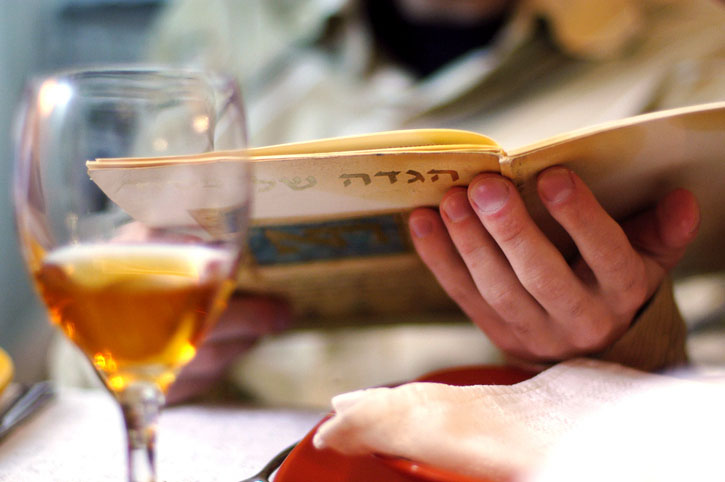
I was the oldest child at the Passover table during two decades of social turmoil, and so invariably I was the one to whom questions were directed.
Nes Gadol Hayah Sham.
We all agree that the letters on the sides of the dreidel stand for "A Great Miracle Happened There." (In Israel, of course, the letters stand for Nes Gadol Hayah Po -- "A Great Miracle Happened Here.")
But -- and this is why there's a book titled "Two Jews, Three Opinions" -- what miracle are we talking about?
Israel may suffer from a lot of shortages -- oil, water, new immigrants -- but it has an astounding abundance, an endless supply, of opinions.
Keep Your Opinions to Yourself