Advertisement
View the most popular tags overall?
Rejoice! Spring has arrived, and Pesach is here. The time of our liberation is at hand. The Exodus from our narrow straits is re-enacted once more.
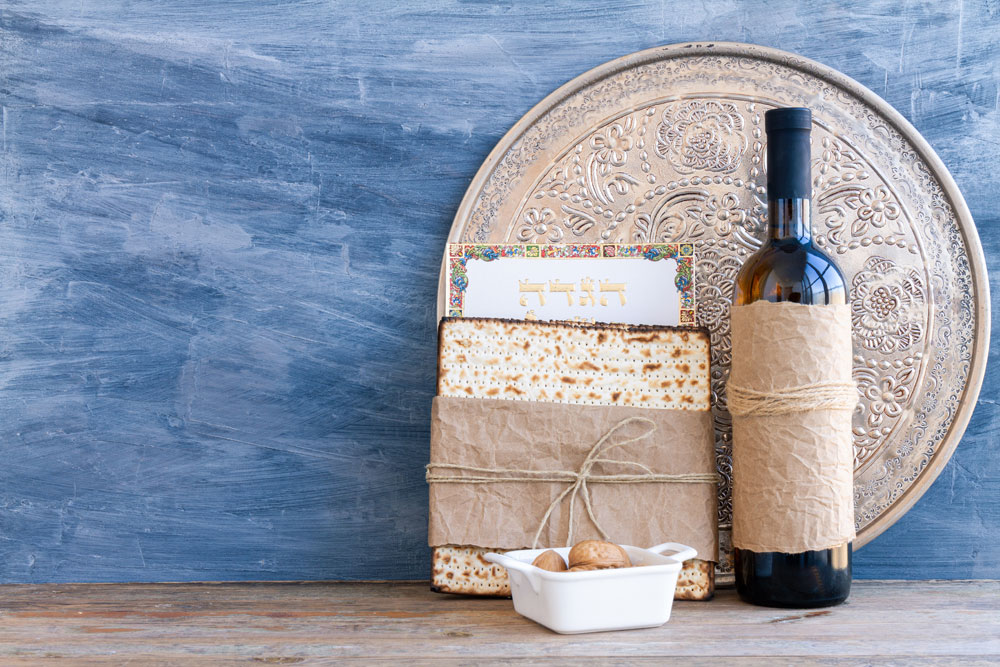
Judaism is a religion that likes symbols. The Passover Seder table is full of them: There’s the salt that can represent tears or bitterness, the wine as metaphor for blood, the unleavened matzah as a symbol for humility, and so on.
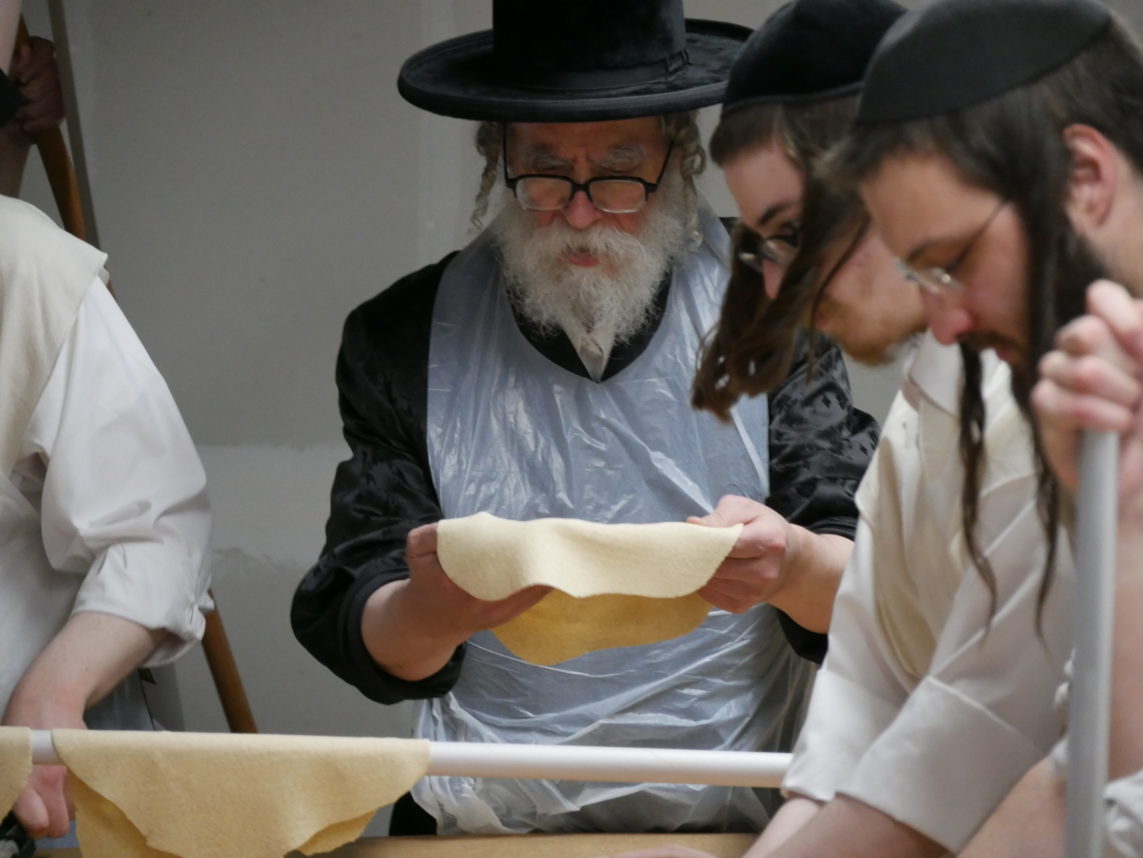
With focused eyes and wide smiles, a sea of preschoolers in white baker’s hats worked slowly, carefully kneading and flattening the dough that would soon emerge from a brick oven as that classic Passover food: matzah.
The matzah aisle in any local kosher supermarket — even some nonkosher ones — is increasingly more likely to resemble a cereal aisle with its myriad options rather than the modesty and simplicity that is matzah itself.
For the many who feel overwhelmed by Passover because of the demands of cooking without leaven, a word or two: That should not be an obstacle.
This year, more than 1,000 Los Angeles families in need received food from organizations that provide assistance specifically for Passover.
Israeli soldiers in the Kfir Brigade ate salami and matzah for their seder meal after a base chef heated up the real seder food inappropriately, rendering it unkosher.
It’s fashionable to look at Passover as a universal idea. This makes sense; after all, how much more universal can you get than the theme of human freedom? Also, it’s a lot easier these days to be outer-directed and feel outrage at injustice.
Why is the day after the seder different from all other days? Is it because we are exhausted? Or our clothes no longer button? Possibly. More likely, I suspect the day after is different because of all the newly minted questions that drop into our brains like zuzim.
It's April and steel shopping carts clang and collide like bumper cars in the kosher-for-Passover aisle of my local supermarket. Even in this mob I find soul mates, shoppers who share my angst about eating many of the hechshered-for-the-holiday packaged foods. Foods made with what blogger Lisa Rose calls the "four food groups of Passover: cottonseed oil, MSG, white sugar and potato starch."
Award-winning pastry chef Chris Hanmer doesn’t let a little matzah meal scare him. Hanmer, who, in 2011, came in first in the second season of “Top Chef: Just Desserts,” has been pastry chef at catered Passover programs at Ritz-Carlton hotels in Lake Las Vegas, Nev., and Naples, Fla.
Valentine’s Day can be a tough time for a young Jew. Fancy restaurants do not cater well to our people. The last time I took a lady to a snooty eatery, the special was baked swiss-cheese-topped-pork stuffed into a lobster served on a picture of Jesus.
Ataste of Israel is no farther away than your local grocery store — and not just in the kosher aisle.
A U.S. federal judge has ruled that a Jewish inmate in a New York jail does not have a constitutionally protected right to matzah and grape juice.
A few weeks before Passover, there was a moment when Shirley Friedman looked worried that there might not be enough food for everybody. Friedman, who calls herself “a full-time grandmother,” is expecting to feed three dozen people over the first two nights of Passover at her table at home — but on that Thursday morning, she wasn’t worrying about a problem that could be solved by another trip to the supermarket.
3 eggs, separated, About 1/2 cup water or chicken stock, 1 to 1 1/2 cups matzah meal
In 1886, Naphtali Herz Imber, an English poet originally from Bohemia, wrote the words to Israel's national anthem, "Hatikvah." Samuel Cohen, an immigrant from Moldavia, wrote the melody
My Pesach preparation, like that of so many Americans, usually involves walking to my local supermarket and loading a cart full of Manischewitz products...
The hunt for matzah stretched beyond the afikomen this year. A matzah shortage this week left many Southern California shoppers driving to multiple supermarkets in search of the unleavened bread, which plays a leading role during Passover seders and is used throughout the week.
When my student Adam confronted me recently with this question "In a post-Freudian world, how can we trust the honesty of our intentions?" my response was, "Our conscious and subconscious can be likened to matzah and chametz."
Breaking matzoh clean
Circuit News.
7 Days in the Arts
While there are only four questions posed in the haggadah, most seders struggle with the unasked fifth question, "When are we going to eat?" It is asked, not only by hungry children, but also by adults who feel disconnected to the rituals of their ancestors.
An anonymous source breathes heavily on the other end of the receiver, softly intoning that the only way to get the goods is from an inside contact. Through friends, I discretely discover my intermediary, who leads me through several dark corridors for an encounter with an angry man.
How many times can you say "Passover" during the seder? For instance: "Pass over the salt." "Please pass over a soup spoon." Keep count and decide what the winner gets for a prize!
Back in the day, Passover meant meat, matzah and potatoes for eight days of the Passover.
The afikomen: dessert or simply a ploy to keep children -- and some adults -- awake through most of the seder? Most people probably favor the latter, and tend to choose one of two techniques to make finding the half-piece of matzah interesting:
Picture our forefather Moses as a child, standing outside a swimming pool, waving to other children in the pool. They look confused because the pool waters have been parted.
Southern Californians can travel from Pharaoh's palace to Midwestern wheat fields to a rain forest -- all without leaving Westwood.
Ari Greenspan knows his matzah. It's not the only thing he knows, but he definitely knows his matzah.
All-inclusive Passover hotel programs cost anywhere from $1,200 to $3,000 per person and take place all over the country -- from ski resorts in Utah to the legendary scene in Miami. Most have one thing in common: Lots and lots of good food.
Laurie Gwen Shapiro is not, repeat not scion to a matzah fortune, like the heroine of her hyperkinetic new novel, "The Matzo Ball Heiress."
The faces of The Jewish Federation's main fundraisers are changing.
Once a year, soon after Purim, my parents lug down the hydraulic press from their attic.
Kids Page
My great-grandmother, Gouda, escaped Germany by boat at night when she was in her 60s. My grandfather, Opa, fled with her and his wife and two small children when he was 42. Both lived long, energetic, brave lives in their adopted country: she, chasing her great grandchildren around in a playful hide-and-seek when she was 95 years old; he, establishing a synagogue in the Bronx after abandoning one in Grebenaou, Germany. Both also had elaborate Passover breakfast rituals involving broken pieces of matzah.
"Gouda lined her half-full coffee cup, with thin strips of matzah," my mother told me. Then, in the order they went in, she lifted each piece out, sprinkled it with sugar and ate it.
Christmas Eve 2001. Bing Crosby's on my radio, Jimmy Stewart's on my television and I'm on my couch.
I have never quite gotten used to celebrating two seders.
After doing only one seder for each of the nine Passovers I was in Israel, the second night now seems like religious deja vu, a "Groundhog Day," where I'm setting the table yet again, rereading the haggadah and singing the same songs, thinking that if only I get it right this time, I won't have to relive the night once more.
A women's tefillin set with a beaded velvet box and blue satin straps.
A silver "Kiddush" cup in which ceremonial wine passes through a delicately crafted silver net formed from the Hebrew word for "blessed."
A sukkah with brightly painted walls made of the long, plastic
strips found in industrial-sized refrigerators -- and furnished with stools and a mirrored table symbolizing the self-reflection expected during the High Holy Days.
It's not always easy to contend with an artist who decides to bite the hand that feeds him.