

Advertisement
View the most popular tags overall?
Air Canada passengers stuck aboard a delayed flight on Wednesday were treated to an impromptu onboard klezmer concert.
An annual Jewish film festival; a week of performances by world-class klezmer acts; the construction of a $26 million Jewish museum in the country’s capital; “Tot Shabbat”: This is the stuff of Jewish communal life in many American cities.
A DJ and a music professor, using old recordings and new, recreate the typical sequence of tunes a klezmer band would play at every stage of a traditional wedding.
'2nd Ave. Breakdown' by Margot Leverett and the Klezmer Mountain Boys.
Courtesy of Diwon, the artist formerly known as DJ Handler and otherwise known as the executive director of Modular Moods and Shemspeed.com, comes this fresh mix of pop, hip-hop, electronica and . . . Yiddish?
JDub was never supposed to be just a record label, and as JDub records celebrates its fifth anniversary with a free concert on July 27 downtown at California Plaza, it is more clear than ever that the organization's founders have greater ambitions than merely putting out good Jewish CDs
He's a nice Jewish boy, she's a nice Jamaican girl, but what will happen when klezmer meets reggae at the wedding?
In 1909, an impoverished Jewish immigrant arrived in Hamilton, Texas, hawking 1-cent bananas from his pushcart.
Haskell Harelik had fled Russia to escape pogroms, docking not in Ellis Island but in Galveston, Texas, via a plan to route Eastern European Jews to the West. He spoke no English and was the first Jew the Hamilton residents had ever seen. But he found some friendly faces, and he stayed in that Baptist town, founding a dry goods store and raising three sons there.
First there was bluegrass, then there was newgrass and now, perhaps inevitably, there is Jewgrass.
It is no easy feat to yell melodiously, but the Jewish rock quartet, The Shondes, has achieved just that. The screams on their new album, "The Red Sea," sound ancient and somewhat cantorial, piping in from the Old Testament to talk to us about the Israeli-Palestinian conflict, misogyny, Bible tales and intimacy.
Jewish music of 2007 reviewed.
CD reviews, Metropolitan Klezmer, "Traveling Show", The Polina Shepherd Vocal Experience (featuring Quartet Ashkenazim), "Baym Taykh", Blue Fringe, "The Whole World Lit Up" , Gail Javitt, "Like a Braided Candle, Songs for Havdalah", Klezamir, "Warm Your Hands", Romashka, "Romashka", Chana Rothman, "We Can Rise", Slavic Soul Party, "Teknochek Collision".
Practitioners of world music are constantly exploring ways to fuse disparate musical strains in new and interesting ways. Given all that, it should not be a surprise that there is a new group that combines klezmer with salsa. Odessa/Havana -- "The Explosive Jewish/Cuban Musical Mash-Up" -- a musical project that brings together these two musical traditions in a jazz context will perform at the Skirball Cultural Center at 8 p.m. on Thursday, Nov. 29.
Arts and entertainment briefs.
In the 1950s, a few years after Yiddish culture in Europe had been decimated, there was a bustling metropolis in the Western Hemisphere that still had a thriving Yiddish culture. This city had a number of schools in which classes were taught in Yiddish; there was an active theatrical scene, a couple of daily newspapers, books, literary magazines, songs and musicals -- all in Yiddish. There were Yiddish comedians, as well as cafes where Yiddish-speakers gathered to chat and drink tea with a bissel (little) lemon. And there were vacation resorts, a few hours' drive from the city, where Yiddish was regularly heard. New York? Montreal? Actually, Buenos Aires.
Everyone knows the legend of American pioneer 'Davy Crockett, King of the Wild Frontier.' Far fewer know the exploits of 'Duvid Crockett, King of Delancey Street.' You shouldn't worry, Duvid's life and times were immortalized in this Yinglish song by the great Mickey Katz.
Veretski Pass (http://veretskipass.com) play Yankee Doodle Dandy at one of their workshops -- first straight, then in a Jewish hosidl style, then in a Ukranian kolomeyke style.
Denmark's red hot Jewish momma Channe Nussbaum and Klezmofobia: 'Vi ahin zol ikh geyn? Where can I go?'
All in all, 2006 was a very good year for Jewish music.
Once you've seen and heard 'Fiddler on the Roof' in Japanese, what's left but klezmer from Ireland?
Of all the Jewish holidays, none is so firmly rooted in the home and so joyously celebrated with song as Passover. This simple fact would lead you to expect an avalanche of Passover records, but this year the avalanche is more like a mild rain of pebbles, at least in the quantity department.
Joellen Lapidus points out that klezmer, which has famously experienced a revival since the late 1970s, has never been performed exclusively at Jewish functions, and the bands have often included non-Jewish musicians. Likewise, Extreme Klezmer Makeover is not comprised solely of Jews.
7 Days in the Arts
Two winters ago, in one of its traditional Victorian teas, A Noise Within (ANW), the classical repertory theater company in Glendale, staged a series of holiday readings from actors as varied as Ed Asner and Fred Savage.
7 Days in the Arts
"There was level of musical sophistication that goes with the kind of music you can play on the mandolin, and my intention was to start a new acoustic-fusion thing, with an emphasis on string and wind instruments," said Eric Stein, who went on to form Beyond the Pale, a klezmer-fusion band.
7 Days in the Arts
Neil Sedaka has had a noteworthy place in American music for four decades; he became a comfortable perennial who did not let himself turn into a tortured titan like Sinatra or a forgettable one-hit wonder like The Imperials, Haircut 100 or Luscious Jackson.
7 Days in the Arts
Since the klezmer revival exploded a quarter century ago, the Ashkenazi musical tradition has experienced more variations than deli sandwiches. There has been klezmer-infused jazz, hip-hop, bluegrass and most any other permutation one can imagine. But as klezmer has morphed from shtetl to nightclub fare, one of the most unusual things it has added is women, said musician-scholar Yale Strom.
"Traditionally, the purveyors of Yiddish songs and culture were women, but that didn't occur outside the home," said Strom, author of "The Book of Klezmer" (Chicago Review Press, 2002). "Women did not play in klezmer bands because of the Orthodox prohibition against hearing a woman's voice and because nice Jewish girls stayed home."
"I came to klezmer quite by accident," said virtuoso clarinetist David Krakauer.
He was a noted classical musician around 1987 when a chance encounter on a Manhattan bus changed the direction of his career.
7 Days in the Arts
A single album, inherited from his late father, led disc jockey Max Reinhardt to rediscover his Jewish musical roots. The recording was "Mish Mosh," by comedian and klezmer clarinetist Mickey Katz: "He does a version of Dean Martin's 'That's Amore' as 'That's Morris,' which my father, Morris, was forever playing for his Jewish friends," Reinhardt, 52, recalled from London.
To most people, "Jewish music" is something familiar: the
"Avinu Malkeinu" they hear every Rosh Hashana, a Yiddish lullaby or the theme
from "Schindler's List."
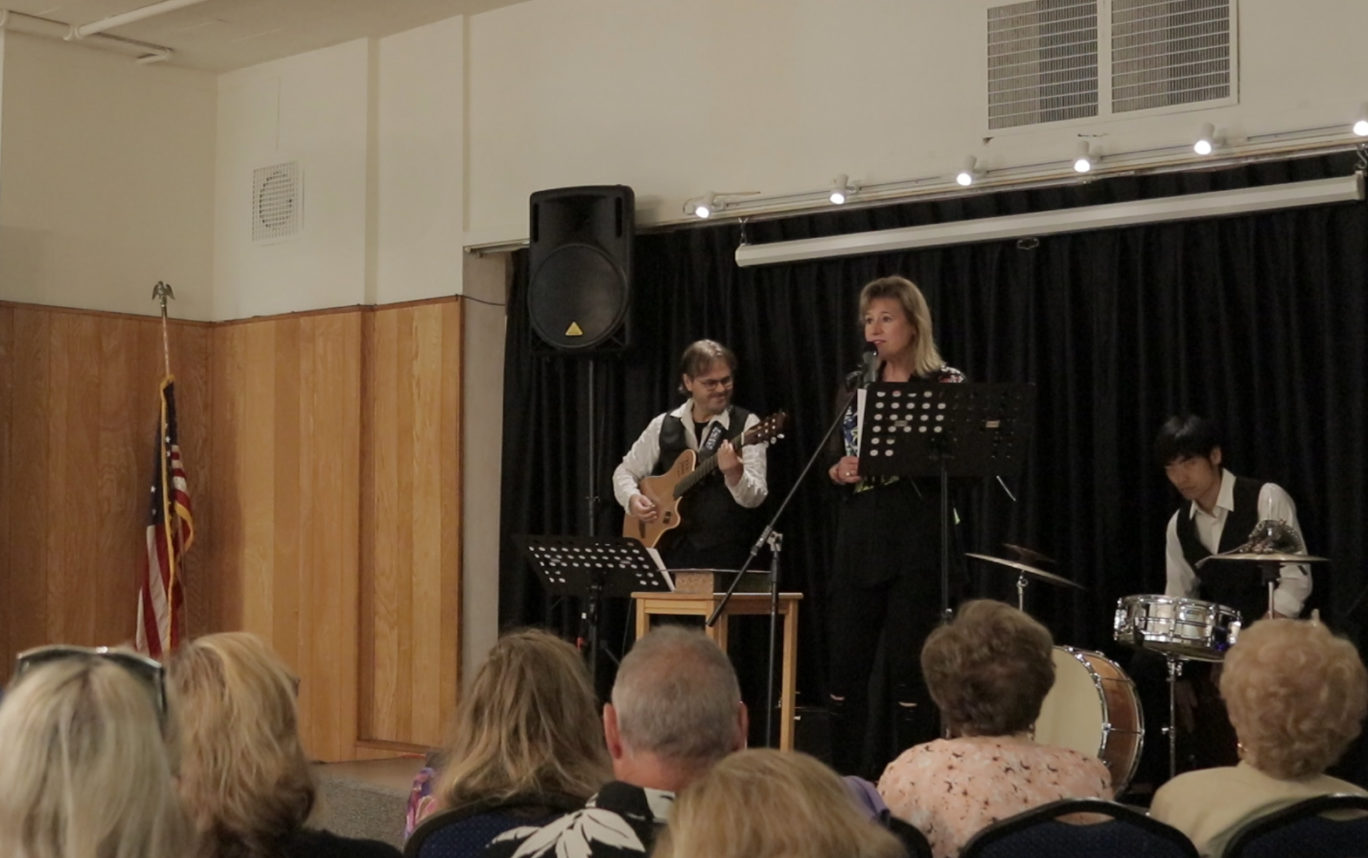
As a member of the South Coast Simcha Band, 44-year-old Chattler brings those traditional Yiddish melodies to the Southland.
Three new klezmer recordings offer a listen into the genre's past, present and possible future.
Klezmer was originally the soundtrack to the Jewish wedding, but no band has attempted to recreate such an event until recently. Working with people who were in Eastern Europe at the time klezmer was developed, the band Budowitz -- named for the maker of their accordionist's instrument -- crafted "Wedding Without a Bride" (Buda Musique, $18.98).
This is not your grandmother's halftime show. Unless of course, Grandma grew up in a kibbutz or shtetl with a 145-piece marching band in residence.
"Gershwin the Klezmer" aims to show their continuing contribution to the musical zeitgeist: "It's really about the Jewish soul of American music," Vass says.
If ever there was any doubt that Jewish music is a universal language, these records put it to rest.
On a warm spring evening this month, the boisterous strains of Eastern European music wafted out the window of a large, Spanish-style home in Santa Monica.
Advertisements
Advertisements