
Advertisement
View the most popular tags overall?
Caveat emptor means “buyer beware.” Fake medicines are now a multibillion-dollar industry affecting people in virtually every country in the world, and the problem is getting worse. It has been estimated that up to 15 percent of drugs sold worldwide are counterfeit, and in parts of Africa and Asia it can surpass 50 percent. We are also vulnerable in the United States even though we have a better-regulated pharmaceutical system.
Have heartburn after eating a late-night falafel sandwich? There’s a pill for that. Did the winter weather give you the gift of a chest infection? You’ll likely need some antibiotics for that.
Abdulmalik, a 13-year-old boy from Yemen’s capital city Sana’a, started chewing khat leaves at the age of seven. “My father would pass me small handfuls at weddings,” he told The Media Line. “But I didn’t start chewing every day until I turned 12 and started to work. Khat gives me energy for work.”
When medical marijuana became legal in the state of California, I went out and got some. I say this not because I am cool, or like to get stoned — I’m not, and I don’t.
At least eight Israelis described as former military personnel are being investigated for drug trafficking in Colombia.
“How long must I roam, to find my way home …”
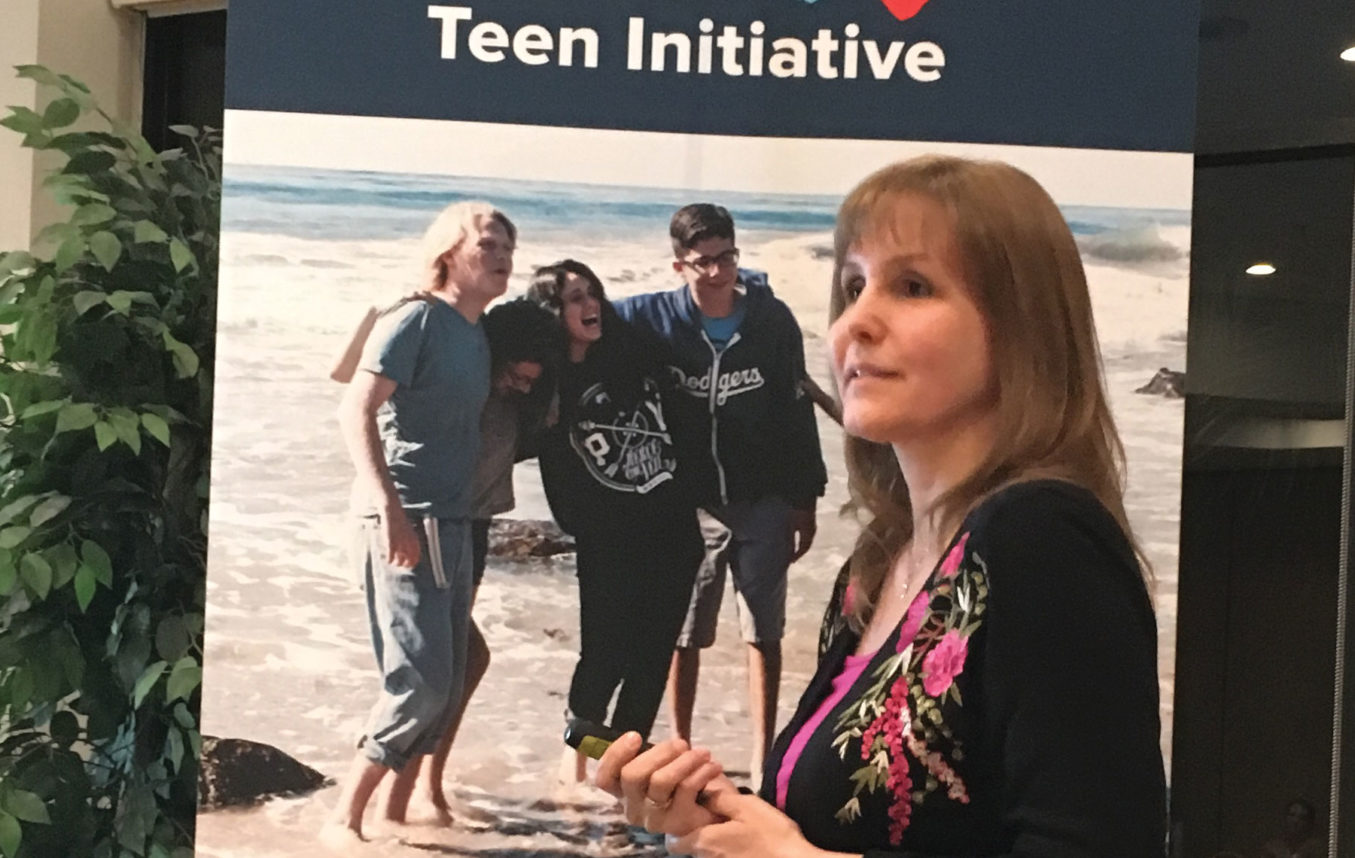
Chabad of Camarillo, located just outside the planned senior community of Leisure Village, is receiving a federal grant of $625,000 to prevent teen drug abuse in Ventura County. It will also receive $10,000 in county funds to focus specifically on prescription drug abuse.
The only U.S.-born Jew on Israel's Olympic team has been kicked off after failing two drug tests.
Over the next 13 years, Mensh snorted cocaine (sometimes off the turntables at his disc jockey gigs), added acid and Quaaludes to the mix, and imbibed to the point that he blacked out, only to awaken in a ditch or a stranger's car or bed.
Briefs
letters to the jewish journal
life-size soft sculpture of a cleaning woman scrubbing the floor marks the entrance to the office of Harriett Rossetto, founder and executive director of Beit T'Shuvah
On a wall at Beit T'Shuvah's sanctuary there are plaques with the names of those connected with Beit T'Shuvah who have passed away. One of those names is that of Josh Lowenthal, a former resident who died on June 11, 1995
For many years, at-risk behavior and drug use among yeshiva high school students has been an open secret, but only in recent years have kids and their families had anywhere to turn.
Letters; Custody Battle; Maher Hathout; At-Risk Youth; Politicized Reports; RJC Ads; Faith and Season.
With any luck, Daniel will be spending Rosh Hashanah on the outside. It's likely he'll soon be making the transition from jail to the recovery program at Beit T'Shuva, a nonprofit that works with at-risk youth.
The film "City of God" shed light on a long-neglected subject, the Third World conditions and inescapable warfare existing in Rio de Janeiro's slums. Now comes "Favela Rising," a documentary that not only limns the tragedy of the favelas, the Brazilian ghettoes, but also tells the inspirational tale of Anderson Sá, a black Messiah figure who founds a reggae music club that offers a nonviolent alternative to their rampant drug and gang activity.
Bobbi Fiedler, who rode an anti-school busing platform to political prominence, stood out as the potential vanguard for Jewish conservatives when The Jewish Journal profiled her as its first cover story in February 1986. The Journal recently caught up with the still-active Fiedler, 69, between civic activities.
The 200 closely knit families of Burbank's Temple Beth Emet, heeding the precept that all Jews are responsible for one another, are accustomed to providing aid and comfort quietly and inconspicuously. But the congregation has been galvanized to very public action by news that the mother of fellow congregant Roni Razankova's mother, a citizen of Macedonia, has contracted liver cancer and needs urgent medical attention in the United States.
When Amy Kaplan heard about Betty (not her real name), a Jewish Family Service client in her early 70s who said she couldn't afford all of her medications, Kaplan suspected there was more to the story.
Susie Tiffany of Beverly Hills suffers from a rare blood disorder and needs monthly infusions of blood components, which her insurance company ultimately declined to cover. She hoped the government's new prescription drug benefit would help her out because, despite her ZIP code, she's a low-income senior. But the possibilities, were baffling: an array of private insurance plans that covered different things, explanations on the Internet that included terms she never had to know before, additional complexities depending on a person's income and a confusing interplay of state and federal agencies. However, Tiffany was able to find assistance in her case from Jewish Family Service. A social worker helped get Tiffany's treatment covered by new state funds intended to help seniors with the transition to the new federal system.
Peter Gould had his last drink on Purim night seven years ago -- or, more accurately, his last drinks. "I drank more alcohol in a day than a human body can handle," he said, relaxing on a puffy couch in Baltimore in jeans, sneakers and a black knit kipah.
Five years ago, Leibovic was approached by the prodigal son of a prominent Orthodox family for help and inspiration. Soon, their one-on-one Torah study grew into a larger group, made up mostly of recent alumni of Neve Zion, the yeshiva outside Jerusalem where Leibovic had formative experiences as a teen and young adult.
The question before voters is whether the drug companies should regulate themselves, as laid out in Proposition 78, or whether the state should be granted authority to pressure drug companies into providing discounts, as specified in Proposition 79. If both initiatives pass, whichever receives the most votes becomes law.
I am an involved member of the Temple Beth Am Library Minyan, graduate of Pressman Academy, senior at Shalhevet High and chair of the Israel Action Committee at my school.
Two drug-related incidents occurred in the American yeshiva community in Israel last week, which may give all parents pause.
Friends and family gathered on Sunday, Jan. 23, at Eden Memorial Park in Mission Hills to bury 19-year-old Eric Siegel, who died last week at a yeshiva in Israel after he overdosed on heroin.
Briefs
When John Ostlund was 33, a judge offered him a choice: Quit heroin or lose your 3-year-old daughter.
In this presidential campaign year, the figure is ubiquitous: One out of four Americans, about 70 million people, do not have health insurance.
Judith Aaronson is one of the many people who obtain federally approved drugs from online business brokers, but instead of cost as the motivating factor, it's idealism that moves her and other Jews around the country to turn to Israel for their drugs.
Today we are beset with a series of health-care plagues, each seeming worse than the one before. The number of Californians without health-care insurance coverage hovers between 6 million and 7 million people -- that's about one in five of us. About 85 percent of those people are working in jobs where health care is not provided. Nationwide, health-care costs are the second largest cause of personal bankruptcy.
In a narrow Jerusalem alley a few blocks away from the souvenir shops of Ben Yehuda Street, a former drug addict who wants to
be called Shimon is telling me the story of his horrific childhood.
"I knew this could be a good story because so many different things had happened to people," said Dan Klores, sounding more like an introvert than a schmoozer. "You have a group of guys, and one is homeless, one wins a $45 million lottery, two lose their children and one lives without electricity or running water in Woodstock, N.Y."