Advertisement
View the most popular tags overall?
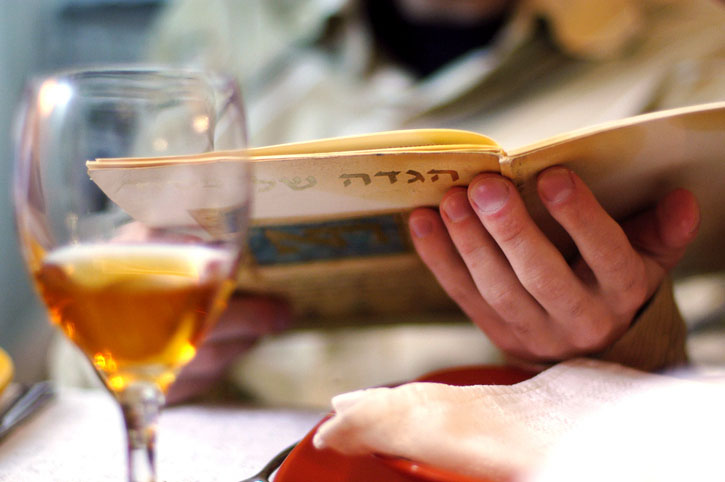
Many years ago, when I was a young, harried father, I would sit in synagogue on Shabbat mornings and try to keep my kids quiet. It was a task I consistently failed at. Their mother, the rabbi, was on the bimah, leading services. She had the easy job.
The train arrived at Dachau one morning in late November 1944. As the doors opened, German soldiers wielding big sticks yelled, “Raus, raus” (“Out, out”). Alex Friedman and the other Jewish prisoners exited, were marched toward the camp and, outside in the snow and cold, ordered to strip.
The American online retailer Amazon.com has stopped selling a jigsaw puzzle featuring the Dachau Nazi concentration camp following complaints.
Eight Muslim American leaders who visited concentration camps and met with Holocaust survivors signed a statement condemning Holocaust denial and anti-Semitism.
I am a Muslim intellectual woman who teaches Judaism and Islam, a Muslim who seeks dialogue with Jews, a Muslim who sympathizes with Jews and understands the need for the state of Israel.
Crossroads School in Santa Monica might not be where one would expect to find the archived works of a celebrated composer who survived Dachau and Buchenwald, especially when one considers that the Vienna-born Herbert Zipper worked as an educator at a variety of institutions of higher learning, including USC and the New School for Social Research in New York. But when Zipper died at the age of 93 in 1997, he left his papers to the K-12 school where he taught musical composition and theory in his retirement years. His relationship with the school was such that co-founder and former headmaster Paul Cummins wrote Zipper's biography.
There was something haunting about taking the train. The aged boxcars on a parallel track seemed frozen in time. I quieted my thoughts. After all, the train was a necessary evil. This bitter irony was not lost on me as the train sped from Munich to Dachau on probably the very same tracks that led thousands of innocent people to their deaths more than a half-century ago.