| |||||||||
November 18, 2009
Last Friday evening, I arrived early for a Shabbat event at American Jewish University, where I was supposed to interview Israeli writer Amos Oz in front of some 300 guests.
If you heard Benjamin Netanyahu speak at the General Assembly in Los Angeles three years ago, you would have thought, except for the perfect diction, it was a different man.
I arrived in Israel in 1984. I didn’t speak or understand Hebrew, didn’t have a job and didn’t have a friend. In my pocket I had the name of the one person I knew in the entire country: a middle-aged Israeli American woman I had heard lecture on contemporary Hebrew literature at an Orthodox synagogue in Berkeley. After her talk, I mentioned to her that I would soon be moving to Jerusalem. She scribbled down her address and told me to come by for Shabbat.
Every day, more like every hour of every day, I get e-mails, letters and phone calls crying out that Israel faces dire threat, if not certain doom.
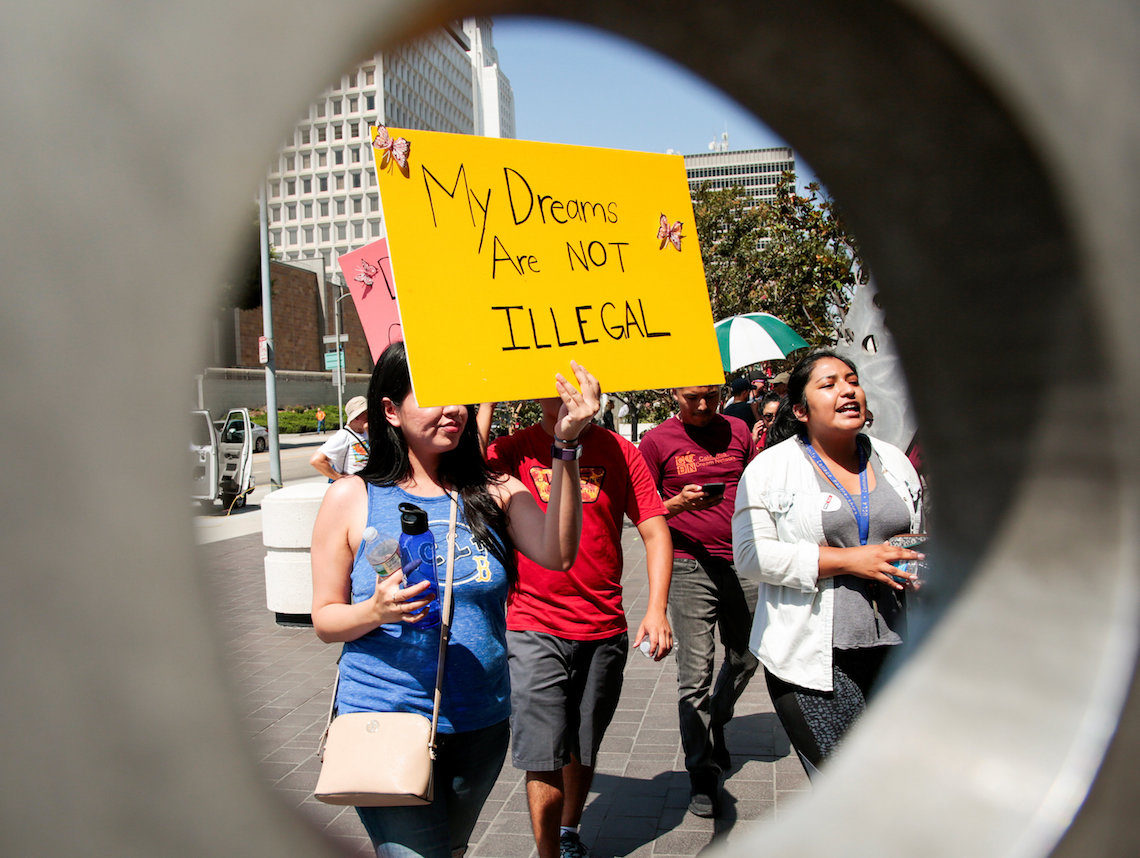
Everybody with a cause, everybody angry at a country eventually ends up in front of the Federal Building on Wilshire Boulevard at Veteran Avenue, waving a poster at passing cars, hoping for a honk. It may not be the most effective form of activism, but at least it tries to reach Angelenos where we live: in our cars.
The way I see it, after a sheriff rides into town, cleans the place up, then rides off into the sunset — those townspeople better be out in the center of Main Street, waving goodbye and choking back tears.
My friend Norma came up to me at the celebration following my daughter’s bat mitzvah and said, “Do you know how special this is?”
This past summer, the last two Westside gas stations offering 99 percent pure biodiesel closed down their pumps. You can still buy regular gasoline at those stations, but the Great Green Hope of the Millenium, a powerful fuel made from sustainable organic matter, is nowhere to be found. Well, not quite.
I have tried to hate Frank Luntz, but I can’t. Luntz is the Republican-aligned pollster and wordsmith who devised the Contract with America that thrust Newt Gingrich into power. He renamed the estate tax the “death tax” and sealed its doom in public opinion.
The people trying to discredit J Street, the new left-leaning pro-Israel lobbying group, are using many of the same tactics Barack Obama’s opponents used to try to derail his presidential campaign. I have one question for them: How’d that work out?
A few weeks after Sept. 11, I visited the site of the wreckage with a group of Jewish journalists. The makeshift museum that had sprung up along the perimeter fence — photos, snapshots, handmade “Have You Seen Her?” posters, flowers and toys — was as tragic as anything I’ve ever seen.
I watched two Holocaust revenge movies this weekend, the first of which left me wondering: How did Quentin Tarantino get inside the mind of every 12-year-old Jewish boy born since 1939? His “Inglourious Basterds” is about a secret team of American Jews sent behind enemy lines during World War II to kill and terrorize Nazis — in other words, it’s what all of us growing up wished “The Dirty Dozen” and “The Great Escape” and “Guns of Navarone” were about. We wanted to be Steve McQueen on his motorcycle, or Anthony Quinn with his plastique explosives. As Nazis blew up around us, we imagined ourselves taking extra delight in knowing we weren’t just winning the war, we were getting even.
Fern Wallach is my mother-in-law’s sister’s daughter. You’ll want to keep that in mind for this column to make sense.
I’m no different than most Jews — I enjoy a good Kiddush.
Not long before he became Israel’s Ambassador to the United States, historian Michael Oren wrote an essay in Commentary magazine on the “seven existential threats” his country faces.
Fifteen years ago this week, a bomb ripped into the Asociación Mutual Israelita Argentina (AMIA) building, a Jewish community center in Buenos Aires, killing 85 people and wounding more than 250.
You know how every deli has its table of regulars, the same aging Jewish men who tell the same jokes, kvetch over the same aches and pains, order the same turkey sandwiches (dry) and complain about how the world is going to pot?
I have seen the Jewish future — it’s loud, and hypnotic, and it reeks of pot.
Some of the most moving and fearless reporting out of Iran this past week has flowed from the pen of New York Times columnist Roger Cohen. Cohen was with anti-Ahmadinejad protesters as riot police chased them with electric batons and tear gas into a small hiding place.
OK, let’s tally up the historic Middle East speeches this month. First, there was President Barack Obama’s June 4 address at Cairo University, where he charted a new course for U.S. policy in the Middle East.
I’ve had six different conversations over the past two weeks with the leaders of six different pro-Israel groups, few of whom get along particularly well and none of whom work closely together.
All great literature, and most good Disney movies, begin with a missing parent. And so “The Happy Life of Martin Manrique” begins with these words:
I first heard about Dr. Izzeldin Abuelaish when everyone else did. As he was being interviewed live, in Hebrew, on Israeli television describing the conditions inside Gaza in the midst of the last war, the news came in that an Israeli tank shell had landed on his home and killed his three daughters. It happened at 3:05 p.m. on Jan. 16, 2009.
So I woke up Saturday morning to discover I was brilliant. That’s what the Los Angeles Times reported, right there on the front page of the paper, Column One, Section A.
When I finally spoke with Joseph Neustadt by phone, I told him how nice it had been to see him a few weeks ago in person.
“We’ve never met,” he said.
Last Saturday night, I was at the Honda Center in Anaheim watching Billy Joel in concert. He was banging about the piano, singing his heart out, doing all those great songs about being young and horny and streetwise back in the old Italian neighborhood.
Advertisement
Advertisements