Advertisement
Posted by Rav Yosef Kanefsky
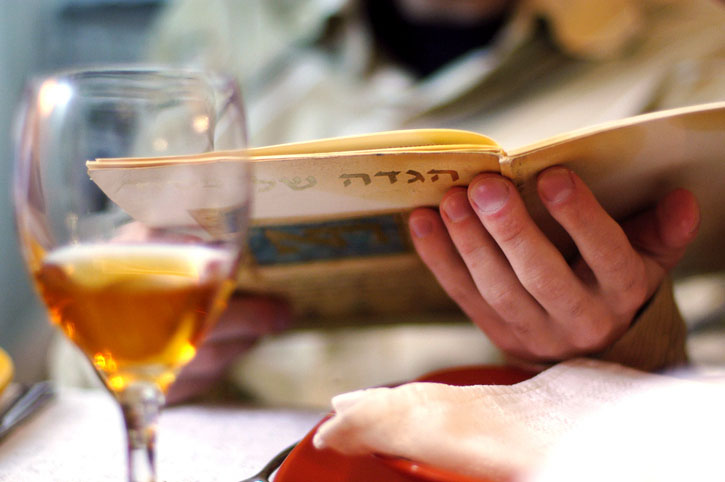
This one is really in our hands. Quinoa has been a breath of fresh culinary air in the non-kitniyot Pesach kitchen, and has restored dietary sanity to us Ashkenazim. But the kitniyot zealots are lurking. The OU, for example, has begun to equivocate on quinoa’s non-kitniyot status (see page 93 of the 2010 Pesach guide). The battle for quinoa has been engaged, but if we all work together, we can win this one.
Remember when peanuts were not considered kitniyot? Probably you don’t. But when Rav Moshe Feinstein zt”l was asked about peanuts in 1956, most Ashkenazim were eating them on Pesach. And not only that, but Rav Moshe argued clearly and unequivocally that peanuts should remain permissible, and that they should NOT be lumped in with beans and legumes. (Igrot Moshe, Orach Chaim 3, 63) The only reason we don’t pack up peanut butter and jelly on matzo for our Chol HaMoed outings today, is that our forbearers buckled before the kitniyot zealots of their day. And those of us who ignore history are doomed to repeat it.
The kitniyot zealots of Rav Moshe’s day used arguments quite similar to those being raised by the forces conspiring to deprive us of quinoa today. The rabbi who posed the peanuts question was “astonished” that Ashkenazim were eating peanuts, for “he had heard that there is a place somewhere in which people are making flour ” out of peanuts, and further, “he had heard that peanuts are planted in fields in the same manner as other kitniyot are (i.e. they too share uncomfortable proximity to grains) ”.
But Rav Moshe, while acknowledging that these are the concerns that motivated the custom of not eating kitniyot, nonetheless dismissed the idea that the peanuts ought to now be added to the prohibition. To begin with, he points out, not everything out of which flour can be made is kitniyot, with potatoes being exhibit “A”. Additionally, not everything that may come into contact with grain is considered kitniyot, as pointed out by Taz and Magen Avraham, the classic commentaries on the Shulchan Aruch. In short, Rav Moshe concludes, the category of kitniyot includes only those items which “were explicitly prohibited, and those which are widely known [to be included]”. Further, he states, “the Sages of recent generations did not want to add new items” to the kitniyot basket, even as they would not permit that which already was customarily not eaten. . Rav Moshe continued, “and accordingly, in many places the rabbis did not want to prohibit peanuts. And in places where there is no custom prohibiting them, one should not prohibit them, for in matter such as these one should not be machmir (stringent).” Rav Moshe spoke. But we just didn’t want our peanuts badly enough.
The quinoa game is ours to lose my friends. To win, all we need to do is to keep eating it (and to check the raw quinoa for any foreign matter before cooking it, the same way Sefardim check rice). If it becomes our minhag (custom) that we eat quinoa, then the halachik argument is settled. So let’s fight for our quinoa! And then turn our attention to cooking up the most meaningful, inspiring Pesach that we can.
Chag Kasher v’same’ach to all!
5.24.13 at 9:43 am | My mother-in-law is Halachikly alive
4.24.13 at 9:29 am | Over the past two weeks, I received many. . .
3.23.13 at 10:19 pm | Are things perfect? No. Could things be better?. . .

3.7.13 at 7:29 pm | Further argument in favor of the importance of. . .
3.1.13 at 9:48 am | In fact men and women are very different and we. . .

2.28.13 at 1:13 pm | This one is in our hands.
5.24.13 at 9:43 am | My mother-in-law is Halachikly alive (37)
12.3.09 at 12:12 am | (12)
1.2.13 at 10:01 am | (6)


March 16, 2010 | 11:20 pm
Posted by Rav Yosef Kanefsky
With the dust settling (for the moment) over the issue of ordaining women, a question of a much more sweeping and urgent nature needs to be squarely addressed. The right-wing opponents of the RCA’s measured statement are demanding with one voice that the ordination of women expressly be labeled as “a breach of our mesorah (received tradition)”. Their claim is that it ultimately doesn’t matter whether bestowing the title “rabbi” upon a woman violates Halacha or not. Even if it does not, it is an act of near heresy, as it implicitly denies the validity of our received tradition which we believe originated at Sinai – a tradition which bans women from the rabbinate, or so their argument goes. This is the stance taken by Agudah, among others. Their argument is designed to be a debate-stopper. Such has always been the purpose of crying “heresy”.
But is their understanding of the term “mesorah” accurate? Let us for now leave the specific issue of women’s ordination aside (though to argue that we have a tradition barring women from the modern rabbinate is comparable to the argument, made nearly a century ago, that we have a tradition barring women from voting). Let’s focus only on the larger question: Do we believe that to change any long-standing Jewish practice is perforce to deny the validity - or even the existence of – a legally binding “mesorah”?
Or might the opposite be true? That to stubbornly insist on never changing long-standing practices is actually itself a departure from our received tradition?
There is a constellation of points in Jewish Law and practice which when taken together form a striking pattern. Accepted, Biblically-sanctioned legal practices are sometimes understood as falling short of our religious ideals, and are then subject to formal or de facto change. One point in the pattern is the Talmud’s decision to label the “Law of the Captive Beauty” (D’varim 21) as being a concession to the dark side of human nature, the yetzer hara. Yes, the Torah permits the Israelite soldier to seize a beautiful woman whom he finds among the captives of war. But to rabbinic thinking, the fact that this is permissible doesn’t imply that it is a behavior that meets Judaism’s religious/ethical ideal. Our Sages explicitly label seizing a woman, even under these circumstances, as being a bad thing. It is something that a decent religious person does not do. Long-sanctioned legal tradition though it may be, the unmistakable conclusion is that as we progress in our ethical self-expectations, the “Law of the Captive beauty” is a practice that should not be perpetuated (and in fact would never be tolerated in a Jewish army today)
Take, as another example the fate, in rabbinic hands, of the Torah’s instruction that we take Canaanites as our slaves, and that we not to ever emancipate them. Indeed, Tanach attests to the established tradition of Israelites owning non-Israelite slaves, and presumably bequeathing them to their children. But to the rabbinic mind, this Biblical law was a concession to economic realities, not a reflection of our religious ideal. (See Sifra Behar, parsha 6). In light of the severe Biblical restrictions concerning owning and working an Israelite slave, the earliest generation of Jews simply needed an alternative. (In the words of the Sifra, “Since You prohibited all of these, what labor shall we use?!”) But the Talmud attests in several places, that our sages had grown uncomfortable with this long-standing practice of permanent servitude. In fact by the time of the Hadrianic persecution, the practice of emancipating foreign slaves was so common among Jews that when the Romans charged R. Elazar ben Parta with the crime of observing Jewish Law, one of the charges leveled against him was “why did you emancipate your slave?” . This practice, Rashi comments, was widely regarded as “dat yehudit”, standard Jewish practice (Gemara and Rashi A.Z. 17a}
The traditions of warfare are yet another point in the pattern. The Midrash (Tanchuma 96:3, in the context of D’varim 20) portrays Moshe himself as rejecting the Biblical mode of warfare in which civilians are not always given the opportunity to escape. Moshe’s midrashic refusal to comply with God’s command to carry out just such a campaign, anticipates the halachik change to this effect. (See for example, Rambam’s Mishna Torah, Laws of Kings 6:1)
What these examples share is the fact that the stated law, the established practice, fell short of a religious/moral ideal that the Torah itself elsewhere expressed. The taking of women against their will is listed a sin of the generation of the flood. Our founding story revolves around the moral evil of forcing people to labor as slaves with no hope of freedom. Our progenitor Abraham’s greatest moment was the one when he insisted that one cannot kill the innocent along with the wicked. And in each of the above cases, the legal tradition was ultimately modified.
These are but a few points in the pattern. Over time, our tradition has also effected changes in the areas of divorce, the taking of concubines, and the implementation of capital punishment, all with an eye toward the ideals the Torah elsewhere articulates. The underlying legal theory is the recognition that our people’s historical journey from the real to the ideal is a long one. As well as the recognition that the travelers with which we began our journey - those who left Egypt - possessed but the most tenuous of grasps on what it was that God was envisioning. Rambam said it best. “Many things in our Law are due [to the fact] that a sudden transition from one opposite to another is impossible. And man, according to his nature, is not capable of abandoning suddenly all to which he was accustomed. (Guide, 3:32) As paraphrased by Rabbi Jonathan Sacks, “the Torah is a series of provisional enactments, tending toward the realization of an ideal society”.
It is unmistakable that our received tradition instructs us to continuously reflect upon our long-standing practices. For the fact that a given practice is long-standing can point either to the conclusion that it is worthy and good, or to the conclusion that it is overdue for a reassessment, as it represents a premature plateauing in our constant ascent toward God’s ideal. To change is not to breach the mesorah. If anything, the opposite is true.
We have a received tradition regarding the means and the methods of change as well. The process is characterized by cautiousness and consensus-building, care and community. But we need to be wary of those who brandish the term “mesorah” as a weapon against any change that doesn’t suit their political tastes. They are abusing the term, and leading us backwards.
March 10, 2010 | 2:53 pm
Posted by Rabbi Barry Gelman
We Are All Jews…. Sort Of – Rabbi Barry Gelman
The Big Sort by Bill Bishop follows the phenomenon of the sorting of America into communities made up of like minded people with similar religious, political and social views. The also traces some of the outcomes of this phenomenon including extremism and lack of the ability to build consensus.
The book reminded me of an article written by Rabbi Howard Joseph on how the Netziv fought against Orthodox separation for the non orthodox community. Use link below to get to the article. http://www.edah.org/backend/JournalArticle/joseph.pdf
In many ways the Orthodox community in America has undergone a “sort” of our own as many orthodox communities and shuls are almost entirely made up of ortrhodox families etc. While there may be some diversity among the types of orthodoxy, by and large, most of our communities are, by a large margin,
orthodox.
Personally, I think this is a bad thing. I prefer the old version of American Orthodoxy of “the shul that I do not go to is Orthodox” or as Dr. Jeffery Gurock has written about, the Non Observant Orthodox.
On an obvious level, I want as many people in Orthodox Shuls as possible, davenig and learning Torah. Modern Orthodox shuls are best suited to present Orthodoxy in a relevant and meaningful fashion to the non orthodox. It could be that the reason why that Chabad and Aish Hatorah have cornered the market on outreach is because modern orthodox shuls simply are unwelcome places for the non observant.
By the way, I think that the Chabad/Aish Hatorah model of shuls and centers that only or mainly cater to balei teshuva not the best way to go. It is sometimes hard for those folks transition to regular shuls.
There is another reason why I want the non observant in orthodox shul. Frankly, I think they make Orthodox shuls better places. One example of this is the fact that the presence of the non orthodox forces us to reconsider our attitudes towards the non observant. It is no secret that many orthodox Jews speak disparagingly about the non observant. The presence of any group of “others” in our midst, over time, leads to greater understanding and thoughtfulness towards that group.
Anecdotal evidence tells me that there is more sensitivity towards non observant Jews from the sectors of the Orthodox community that regularly interacts with the non observant in a religious setting. It should be noted that when I speak of sensitivity, I am referring to real concern and respect for the person and their views as opposed to “loving” the non observant because One sees them as a kiruv target.
Finally, there is much that orthodox shuls can gain in terms of Torah from the non observant. Bishop points out that one of the downsides of “sorting” is that sorted populations keep hearing their viewpoints reinforced, leaving no room for intellectual, political; or religious rethinking and clarification. People in that situation tend to get lazy and there is no need to defend positions. Such a life is safe, but without intellectual vigor.
Many non observant Jews do not come with the pre-existing notions, embedded ideas, or understanding of Torah and Judaism that the orthodox do. The questions and challenges posed by the non orthodox who do not take certain things for granted forces the orthodox to formulate clearer and more coherent understandings of Torah.
There is more to say on the subject, but I will leave it as is for now.
All in all, “sorting” is bad for the Jews.
March 8, 2010 | 3:57 pm
Posted by Rabbi Hyim Shafner
In a recent Jerusalem post article Rabbi Daniel Gordis wrote that in his view there is no creativity in the torah of religious Zionism and that indeed since Rabbi Solovetchik and Rabbi Kook there has not been any. As a result he does not feel that religious Zionism is able to speak to secular Jews in Israel. The article can be read here:
http://www.jpost.com/Home/Article.aspx?id=169638
My vehement disagreement with him was published as a letter to the editor in the Jerusalem Post last week. In it I argue that the only place in the Torah world today (think Machon Hertzog, Siach Yitzchak and others) in which there is any creativity is in the world of Religious Zionism, that this creativity is a result of its relationship with the land and people of Israel, and that only this approach has any hope of truly engaging the nonreligious population.
Here is the letter:
February 28, 2010
Letter to the Editor
Sir, -I vehemently disagree with Daniel Gordis’ pronouncement that Religious Zionism has not produced any creative thinkers. It is in fact only in the world of Religious Zionism today in Israel that creative thinking about Torah and Talmud is taking place.
One example: As an Orthodox American Rabbi on sabbatical in Jerusalem, I commute to Lod each day to learn from Rabbi Israel Samet, the Rabbi of the Religious Zionist garin in Lod and head of its yeshiva. Rabbi Samet’s ground breaking approach to Talmud is based upon the observation that the Talmud, like the Bible, is not a legal work. Both are primarily narratives of which the law is but a part. The rabbis of the Talmud, according to this new vision, were not halachists but are rather telling the story of the Jewish people, integrating the law with the narrative of the Talmud to do so.
It is in fact only Religious Zionists that can understand the Mishnaic Rabbis in this wholesome way since they live lives closest to those of the ancient rabbis, speaking their language, living in their land, and seeing the Jewish People as a nation, not solely as a religion to which Judaism in Diaspora must of necessity be limited.
This approach to Talmud will soon affect a sea change in the way that the Talmud and Torah speak to our people in Israel who have moved from observing laws in a vacuum (or for much of Israeli society, not observing them) to living the continued narrative of the Jewish Nation. This approach which emerges from and speaks directly to the Jewish nation living in its land, has the potential to finally bridge what it means to be a Jew with what it means to be an Israeli, thus engaging the world of non-religious Israelis who feel the Torah and the Talmud offer little of relevance to their lives today but are thirsty for something that does.
Rabbi Hyim Shafner
Bais Abraham Congregation
St. Louis, Missouri (currently on sabbatical in Jerusalem)
March 3, 2010 | 6:50 am
Posted by Rabbi Barry Gelman
Modern Orthodoxy’s Parallel Universe
Modern Orthodoxy’s identity crisis is manifested in compartmentalized living. It seems that many in the Modern Orthodox camp live their lives and at other times live their Jewish lives. Often the two do not resemble on another.
Here are a few examples.
In our daily lives we are committed to equality and embrace the idea that women should have all the professional and social opportunities that men have. When it comes to our Jewish life we often revert to a pre-modern approach wherein we decline to offer women religious opportunities no barred by halacha. In our secular settings we are perfectly happy to listen to a women give a lecture, but many cringe at the thought of a women delivering a Dvar Torah in shul. Consistency would demand that we either embrace the later or refrain fro listening to women speak entirely.
In our work places we interact with non Jews all the time and we accord them respect and treat them as equals. Often when talking about gentiles in the Jewish context the tone and language change and the most radical approaches to gentiles an Jewish gentile relations are accepted.
Another area is in the realm of Torah study and understanding of Jewish law. For the most part, we live a life on nuance and recognize that there is often more than one way to approach a question or solve a problem. However, when it comes to Torah study and more so when it comes to halacha, many in the Modern Orthodox community expect that there is only one approach or answer to a given question. This may stem from the growth in popularity of Daat Torah, that the great sages of the day have the single and ultimate answers to everything. Perhaps some Modern Orthodox Jews have Daat Torah envy.
The problem with this approach is that Modern Orthodoxy, at its core, recognizes that there are often a multiplicity of approaches to a given question and that more than one answer can be legitimate
These are a few examples of the parallel universes that many modern orthodox Jews live in. It seems to me that the modern orthodox lifestyle has been adopted and championed without much thought about the underlying ideals of Modern Orthodoxy. We embrace the Modern Orthodox license to watch television, attend the opera and read philosophy without coming to terms with some of the important ideological underpinnings of Modern Orthodoxy.
This “double life” cuts to the very definition of Modern Orthodoxy and raises an important question. Is Modern Orthodoxy as practiced today in America based on a series of high ideals that lead to a certain lifestyle or is Modern Orthodoxy simply the decision of Jews to live a convenient lifestyle while essentially adopting chareidi philosophical positions?
March 2, 2010 | 6:44 pm
Posted by Rav Yosef Kanefsky
Over the last few days, two thoughtful writers and teachers articulated a blunt truth about Modern Orthodoxy. They each pointed out that most of us who identify ouselves as Modern Orthodox, are not meaningfully living up to the challenge that this noble term implies. We seem not to undestand what we’ve committed ourselves to. And as a result of this failure, both authors conclude, Modern Orthodoxy – as well at its cousin, Religious Zionism - have had precious little to offer the Jewish people in the way of visionary national leadership.
Rabbi Danny Gordis, writing about Religious Zionism, penned the following,
“… Religious Zionism has long since had very little of importance to say to Israel at large…It hasn’t produced any creative religious thinkers of the likes of Abraham Joshua Heschel, Abraham Isaac Kook or Joseph Dov Soloveitchik,… For religious Zionism to really matter, it must produce the next generation of religious leaders for Israel, people who must have something to say not only to the yeshiva world, but to the Jewish, democratic society that is Israel.”
Rabbi Donniel Hartman similarly noted that,
“… the centrist or modern Orthodox and the religious Zionist communities, have chosen a third path, a path which lives in the modern world, learns from it and tries to engage in a dialogue between the world and our ancient tradition. .. Alas, while religious Zionists and even the modern and centrist Orthodox have chosen clearly to delineate themselves from the ultra-Orthodox, they have failed to create the ideological foundation to justify this distinction.”
We need to ask ourselves, “What is at the root of our failure to ideologically thrive? What dimension of the Modern Orthodox concept are we failing to vigorously engage, and how is this failure holding us back from our appointment with Jewish destiny?” Fortunately, we need not dig very deep to discover what’s wrong. It’s right before our eyes. It’s what Hartman refers to as “the elephant in the room”. We are a community that identifies itself as “Modern Orthodox”, but doesn’t actually understand what the term “modern” refers to in this construct.
Several years ago, a terrible New York Times article about the Five Towns (NY), characterized Modern Orthodoxy as the seamless blending of halachik observance and indulgent materialism. The article was about eating at Glatt kosher restaurants that one’s non-Jewish clients can’t believe are kosher. Or taking the early train home on a winter Friday in order to celebrate Shabbat in one’s million dollar colonial home. About laying tefillin at 6:00, and then pumping iron at the gym at 7:00. Unfortunately, our brethren who were interviewed for the article did noting to dispel the author’s notion that “Modern” referred to nothing more than an all out pursuit of the American dream. Sadly, there is of course much truth to the article’s characterization. And it is little wonder then, that we have not made our mark as a community that “has something to say” to the Jewish people or beyond.
Our Religious Zionist community, in Israel and here, also tends to understand the term “Modern” in a superficial and utilitarian way, rather than in a way that generates a philosophically sophisticated modern vision of Judaism. In Religious Zionist terms, “Modern” refers merely to an embrace of the rebirth of Am Yisrael as a nation-state in our land, and a recognition of the validity of the modern political and military instruments that brought the State of Israel into being. (This in contrast to the “non-Modern”, who await the Messiah as a pre-condition of emergence of such a State.)
Here again though, “modern” has nothing to do with what the “modern” in “Modern Orthodox” is actually about. What it’s actually about is the quest to articulate a religious vision that speaks to, and has the capacity to bring positive change to the modern world - a world whose notion of morality is rooted in a commitment to the equality of all human beings and to universal human rights, a world whose idea of religious responsibility entails not the building of self-encasing walls, but the building of bridges to communities who are “other”, a world in which people seek a relationship with God that does not require them to jettison rational thought or common sense. Articulating this kind religious vision, and understanding and living our halachik commitments so that they support – not contradict – this vision, is the objective that puts the “modern” in “Modern Orthodox”. This is the work that will render us historically important, and religiously relevant. It’s work that’s underway here and there if you look for it. It is work that needs many many more hands.
To close, with Gordis’ words,
“Gone are the days when religious leaders can conceive of themselves as offering spiritual insight and guidance to people only in their own narrowly defined religious community.” The epic challenge of “modernity” is to give Orthodoxy a voice that truly matters.
May 2013
April 2013
March 2013
February 2013
January 2013
December 2012
November 2012
October 2012
August 2012
July 2012
June 2012
May 2012
April 2012
March 2012
February 2012
January 2012
December 2011
November 2011
October 2011
September 2011
August 2011
July 2011
June 2011
May 2011
April 2011
March 2011
February 2011
January 2011
December 2010
November 2010
October 2010
September 2010
August 2010
July 2010
June 2010
May 2010
April 2010
March 2010
February 2010
January 2010
December 2009
November 2009
October 2009
September 2009
August 2009
July 2009
June 2009
| |||||||||