Advertisement
Posted by Karmel Melamed
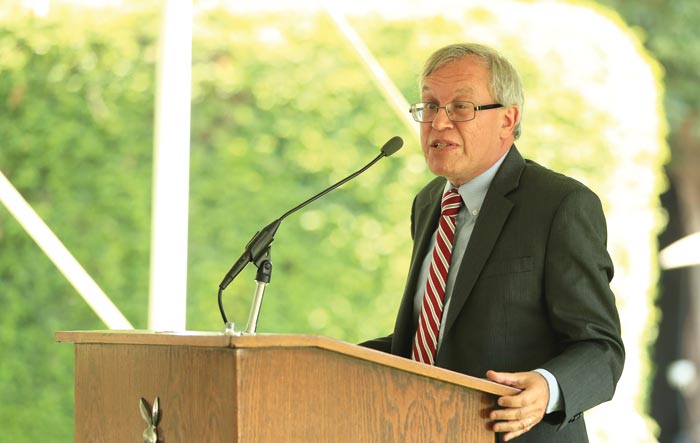
Villaraigosa’s staff have indicated that Nahai will focus on renewable energy programs and modernize the reliability of water and electricity in Los Angeles. The Los Angeles DWP is the nation’s largest public utility with a $6.16 billion annual budget and more than 8,000 employees. Nahai was elected as President of the L.A. DWP Commission in September 2006 and one of his last votes on the DWP Commission was to support the first electricity rate increase in 15 years. The measure must now be approved by the L.A. City Council and Mayor. The DWP board under Nahai’s leadership also approved increasing residential water rates by about $1 per month, beginning on July 1 in both 2008 and 2009.
This new position is significant in that Nahai becomes one of only two Iranian Jews currently serving in local government in Southern California. Nahai’s involvement in this local government post would indeed been a rare achievement for the Iranian Jewish community which had never been involved in political office in Iran. Nahai has been one of the few politically active members of the local Iranian Jewish community and I have interviewed him on a number of occassions. During his campaigning on behalf of John Kerry in 2004, Nahai spoke at a number of community venues and also on KIRN 670 AM, the local Persian language radio station. More importantly, Nahai was key in campaigning and helping with fundraising efforts in the larger Iranian community on behalf of Villaraigosa during the 2005 mayoral race. Political activism is a fairly new phenomenon for Iranian Jewish immigrants who, for more than 2,000 years in Iran, were generally denied voting rights and the right to partake in political activities. My 2005 article in the L.A. Jewish Journal explored the Iranian Jewish community’s growing interest and involvement in local politics.
Indeed, Nahai is no novice when it comes to environmental issues as he practices environmental law as a Century City attorney and has worked on the Los Angeles Regional Water Quality Control Board. In January 2005, Nahai was reappointed by Gov. Arnold Schwarzenegger for an unprecedented third term on the Water Quality Control that overseas water quality in Los Angeles and Ventura counties. In addition, he currently serves as vice chairman of the Santa Monica Bay Restoration Commission. Last but not least, Nahai is married to the acclaimed Iranian Jewish author Gina Nahai.

5.28.13 at 10:54 am | Argentina's president creates a sham commission. . .

4.29.13 at 7:52 pm | Another member of the local Iranian community has. . .

4.1.13 at 6:26 am | "Shahs of Sunset" producer and other media ignore. . .

3.31.13 at 11:16 am | San Francisco based non-profit video interviews. . .
3.29.13 at 12:02 pm | Photos captured of various No Rooz celebrations. . .
3.15.13 at 10:38 am | Couples find Judaism is a key to keep their. . .
1.28.08 at 10:30 pm | (47)
8.28.07 at 10:21 pm | (27)
10.13.07 at 3:19 pm | (26)


October 29, 2007 | 12:01 am
Posted by Karmel Melamed
The High Court of Israel announced that on Tuesday it will hold a hearing to review six petitions against the plea bargain former Israeli President Moshe Katsav made with the government regarding a criminal probe for his alleged sexual misconduct and other crimes. The Association of Women’s Support Groups in Israel as well as other organizations have been furious over a decision in late June by Israeli Attorney General Menahem Mazuz to offered to drop all charges and suspend any prison time for Katsav. Mazuz offered the deal citing a lack of evidence in the case, on the condition that Katsav would plead guilty to sexual harassment and resign his post as president.
Katsav, who had originally defended himself against the allegations of sexual misconduct, was mocked in the world media over the case. He was also embarrassed for pleading guilty in the Iranian Jewish community in the U.S.—the group of his main supporters, as he hails from an Iranian Jewish ancestry. My article in the L.A. Jewish Journal covered the shock Southern California Iranian Jews felt after Katsav agreed to plead guilty and resigned his post. Katsav’s ascension to the presidency eight years ago marked the first time an Iranian Jew was elected to such a high political office in any government. The achievement served as a source of pride for many Iranian Jews worldwide. Yet the community really turned their backs on Katsav after this scandal broke out.
Many average folks and other Jews are unaware of the tremendous impact shame and embarrassment have on an individual living in the Iranian Jewish community. Since the Iranian Jewish community is so tight knitt and close, everyone is held to a high standard not to let any of their friends and family down. In a way, many Iranian Jews look down upon anyone from among their ranks for their shortcomings and this rejection can almost be more painful than any kind of physical punishment. I can say for certain that the embarrassment and rejection Katsav has encountered from his own community must be unbearable, especially after he rose to such a high ranking in Israeli society. Now I have not passed judgment on Katsav regarding this case nor am I a supporter of Katsav. Yet as a neutral journalist, I can say for certain that the Israeli groups’ decisions to drag on Katsav’s case in the High Court is not beneficial to anyone. If they want Katsav to go to jail, he’s already suffering a worse isolation after being dejected by many of his friends and supporters in the Iranian Jewish community. If they want Katsav to suffer financially, he has already lost his government pension after pleading guilty and his entire savings to pay for this attorneys. Lastly, he has received immense and irreversible damage to his reputation. Their decisions to continue fighting this case only takes up the High Court’s precious time on a ridiculous case where the alleged wrongdoer has been punished and continues to suffer in the public eye.
Instead of beating a dead horse in this instance, those who are upset with Katsav’s plea bargain should channel their energies into something productive. For instance they could begin an educational campaign to help end sexual harassment in the work place and in government. Worst of all, keeping this scandal alive in the media is only serving to maintain the black eye Israel received to its image in the world. Israel’s enemies like the Iranian mullahs and Hamas are cheering at this infighting among Jews and they are pleased to see that the Israeli society’s real focus has been turned away from them. The purpose of plea bargains are to expedite justice and to allow the court to move onto other pressing issues, so the High Court in this instance should reject the calls for the plea bargain to be set aside and move on!
October 25, 2007 | 9:11 pm
Posted by Karmel Melamed
“What are those delicious dumplings that look like matzah-balls?” an American rabbi inquired of me recently. “You’ve got to find me someone who has the recipe for this food, it’s one of the best I’ve ever had in my life!” The rabbi could not stop asking me questions about some mouth-watering “dumplings” he had recently eaten at the home an Iranian Jewish family. I immediately knew he was talking about the famous “Gondi” dumplings. He never had this special dish before because it is exclusively prepared by Iranian Jews in the home and rarely if ever offered in Persian restaurants.
Gondi, (pronounced go-n-dee) is perhaps the single most unique food to the Jews of Iran and is on the dinner table of most Iranian Jewish families for their Shabbat dinners. Prepared as dumplings that are cooked and served in chicken soup, Gondi is the traditional side dish or appetizer Iranian Jews enjoy along with a Middle Eastern bread as well as raw green vegetables including mint, watercress, and basil. It is typically served in a hot bowl of chicken soup with some families also adding in potatoes and a turkey leg. I’ve come to realize that the preparation of Gondi is not only a labor of love for Iranian Jewish mothers but enjoying the dish is always a time for families to gather and in a way reconnect with their past. Over the years, the vast majority of Iranian American Jews have informed me that Gondi first originated in the Jewish ghetto in Tehran many years ago—exactly when, no one knows. Now before any Jews coming from a city either than Tehran gets upset with me, I must mention the fact that Jews from the other Iranian cities also claim to be the first inventors of Gondi. In any case, it was a special food prepared only for Shabbat dinner because its main ingredient of ground lamb or chicken was expensive. While Iranian Jews have over the centuries eaten the same types of foods as other Iranians, Gondi has been one of their few culinary innovations that they can claim their own.
Now if you ask older Iranian Jewish women what the ingredients of Gondi are, they will give you almost 100 different variations of the same ingredients. To the best of my research the following is a recipe for a serving of eight Gondi dumplings:
4 medium onions, peeled and quartered
1½ pound skinless, boneless chicken breast
8 ounces or about 2¼ cups of ground chickpeas
1 tablespoon olive oil
1 teaspoon salt
1 teaspoon freshly ground black pepper,
1½ teaspoon cardamom
The preparation of Gondi can be tricky but first the onions are very finely minced by hand or thoroughly blended in a food processor. Then ground chickpeas or chickpea flour is added to the mixture and hand mixed with the onions. Next, chicken breasts or turkey breasts are blended or ground, to have the same texture as ground beef. Now some folks who prefer the taste of veal will use a combination of ground veal and ground chicken breasts. In any case, the ground chicken is added to the onions and oil, salt, pepper, and cardamom are added to the mixture. Some individuals will also add turmeric and cumin to the mixture.
Again all these ingredients should be hand mixed very well, then water should be added to make a dough-like mixture. The mixture should then be refrigerate until well-chilled for about two to three hours. Next, when the chilled mixture is removed, the chef preparing the dish should dip their hands in cold water and divide the mixture into small portions. Each portion is then fashioned into balls about two inches in diameter. Finally the dumplings should be gently added one by one to a chicken soup that has been brought to a boil. The pot cooking the dish should be covered and left to simmer for about 30 to 40 minutes.
Preparing Gondi is no easy task and more often than not, amateur cooks fail in their first several attempts. Nevertheless, practice makes perfect and overtime anyone who is able to prepare a delicious tasting Gondi dish is typically given high praise in any Iranian Jewish family. My only hope is that younger Iranian Jews living outside of Iran will continue cooking this amazing dish not only because it’s delicious, but because it’s a part of our heritage that needs to be kept alive. Unfortunately since Gondi is not widely available to the general public and not cooked in restaurants, the older generation of parents and grandparents have a responsibility to pass on the recipes and techniques of cooking Gondi.
I bid you happy eating and encourage you to ask your Iranian Jewish friends to indulge you with Gondi the next you visit them for Friday night dinner!
October 24, 2007 | 12:58 pm
Posted by Karmel Melamed
“It sucks being Iranian these days,” a Jewish comedian of Iranian heritage Dan Ahdoot jokes in his stand-up act. “People ask me the dumbest questions; “Yo, Dan, level with me. Are they making the nuclear weapons or what?” Like there’s this big e-mail list that goes out every month to anyone who’s Iranian, that reads, “Greetings from Tehran. Everything is going according to plan. Soon all the Americans will die! And now birthdays: Mahmoud from Virginia is celebrating his 34th!’”
It’s no secret that Iranian Jews living in America have attained substantial success as doctors, lawyers, real estate developers, professors and entrepreneurs. The final frontier in careers that we have yet to conquer is in the entertainment field—and Dan Ahdoot is slowly but surely making a name for himself and our community in the industry. I first interviewed the Long Island native two years ago for an article about Iranian Jews getting into the entertainment business. I was literally in tears laughing at his hilarious routine which is based on growing up as a child of Iranian Jewish immigrants in America. I think his comic take on the challenges of trying to please his Iranian Jewish parents who have high expectations of their children not only resonates with younger Iranian Jews but other young Americans. Though not necessarily for the reasons he outlines in his onstage routine, life has not been without its
difficulties for Ahdoot. In 2000, after graduating pre-med from Johns Hopkins University, he was set to enter medical school. But before he could even crack open an anatomy book, he decided to change course and take a shot at becoming a professional comedian. He took this brave step despite the opposition he faced from his family. So far, the gamble has paid off and Ahdoot has achieve some success after becoming a finalist on Season 2 of the NBC reality show “Last Comic Standing”. He has opened for such well known comedians as Lewis Black, Jay Mohr, and Dave Chappelle. He was awarded first prize at the Philadelphia Comedy Competition in 2003 and the 2002 first prize at the NYC Triad Comedy Competition. He currently tours colleges around the country sharing his humor and I recently had a chance to catch up with him about his career:
What’s been going on with your stand-up career since we last spoke?
My work at the colleges have really taken on a life of its own. For two years in a row now I’ve become the highest booked comedian at colleges across the country. So that’s really taken off and been good to me. I’ve signed on with new managers that are very successful in L.A. I finished writing for a show for MTV called “Short Circuit” with Nick Cannon and its airing now. I’ve been traveling non-stop across the country and I did a really cool benefit for a charity called “Patha Community” up in San Francisco. It’s a charity for community services for the Iranian community in the Silicon Valley. A lot of corporations are hiring me to do shows.
How has your stand-up material you’ve been doing changed? Are you still focusing on your life as an Iranian American Jew?
I think that as long as Ahmadinejad continues to say stupid things, I’ll have a wealth of material. I don’t know if my material is centering around the Iranian stuff anyone, I’m writing more about myself as an individual. I consider myself a comic who happens to be Iranian and Jewish not an Iranian Jewish comic, I think that’s important because a lot of people are identifying themselves by race as opposed to who they really are.
Your family has been supportive of your career as a stand-up, unlike many Iranian Jewish parents who discourage their kids from getting into entertainment. Are they still on board with your career choice or have things changed?
No, they’re still on board, they realize that I’m still doing well thank god. Now they’re nudging me to get married, it’s getting on my nerves that my job causes me to be out of town all the time and I can’t meet up with any of the “khasetgars” (Persian word for a person who wants to get married and goes through a formal courtship). No khasetgar action going on in north-western Missouri where I am now!
How do you feel about young Iranian Jews who look up to you as a source of inspiration for not getting into a traditional career in medicine or law?
I still feel that there’s still a big gap in our community of what people want to do and what they end up doing. It doesn’t take much to be an inspiration to the Persian community—if you do what you want to do instead of what your parents want you to do, you’re suddenly an inspiration. I don’t feel like I’m that inspirational, but think it strikes a cord with them when you’re doing something that you love and you’re successful at. A lot of people in our community think that’s impossible to do something you love and be successful at it. They think you’re either going to be poor doing something you love or rich doing something you don’t like. As a community we’re so successful in everything we get into medicine or the law, that people fear that (the arts) is because no one has really given it a shot. I feel that many Iranian Jews that are getting into the arts, are realizing that they can use that know-how, that drive that we use in business in show business as well.
What reaction do average folks in the Iranian Jewish community have when you tell them that you’ve chosen a career in stand-up?
I feel that a lot of people in the community don’t take what I do seriously. They think it’s a joke— no pun intended. It’s funny because Americans who book me, they treat it with so much more respect.
So what is it really like working on the road constantly as a stand-up?
It’s become more of a job, which is really my dream come true. Last night I was in Kentucky, I did a show till 10 o’clock and a meet and greet till 11. I went to bed, then got up at five o’clock in the morning, drove two hours to the airport, got a plane to Missouri and here I am exhausted in the hotel room talking to you. I have to be on stage again in about an hour and be funny and cheery again. I’m on the road now doing 70 colleges a semester in three months, so it gets really exhausting after a while. But that’s what I’m in it for and I get exhilaration when a crowd gets my jokes.
October 22, 2007 | 10:20 am
Posted by Karmel Melamed
The International Fellowship of Christians and Jews, (IFCJ), a Chicago-based charity group is promising $10,000 to nearly 20,000 Jews living in Iran to immigrate to Israel. The non-profit currently provides millions of dollars in donations from evangelical Christians to Israel every year and its leaders have said they are seeking to get Iran’s Jews out of the country for fear of the danger they face while living in Iran. “Is this not similar to the situation in Nazi Germany in the late ‘30s, where they (Jews) also felt they could weather the storm?”, said IFCJ head Rabbi Yechiel Eckstein in a recent AP interview. “Instead, six million were killed in the Holocaust, which Ahmadinejad has called a “myth”.
Eckstein said his group has raised nearly $1.4 million for this project. They have increased the amount of money offered to Iranian Jews who immigrate to Israel from $5,000 to $10,000 because since the beginning of the year the group has only been able to entice 82 Jews out of Iran. What’s interesting about the IFCJ is that they have well known infomercials that regularly run on American television networks appealing to evangelical Christians to donate to their efforts to bring out Jews from the former Soviet Union to Israel. Today they are using Radio Israel broadcasted in Persian language into Iran to spread their $10,000 offer to the country’s Jews.
On a regular basis I have many non-Iranian Jews ask me why Iran’s Jews do not leave the country. Iranian Jews who regularly travel between Iran and the U.S. have informed me that the Jews do not want to leave Iran for two primary reasons. They are either too wealthy and do not want to give up their easy living or uneducated and without any skills available to them to earn a decent living if they leave the country. However, the best response to why Iran’s Jews do not leave the country was given to me in my L.A. Jewish Journal article earlier this year:
Frank Nikbakht, an Iranian Jewish activist and director of the L.A.-based Committee for Minority Rights in Iran, said a substantial number of Jews have stayed in Iran because they feel they will face economic and cultural challenges if they leave the country.
“Some successful and resourceful Jews [in Iran] have either a false sense of security or are willing to take risks, hoping to outlast the regime,” said Nikbakht, “while some have converted to Islam or other ‘safer’ religions such as Christianity to help them survive.”
While that the IFCJ may be doing is a noble cause because the Jews of Iran live in potential danger from the regime that might turn on them, their efforts in this instance may also indirectly be feeding into the hands of the Iranian government. The regime in Tehran loves to use stories about offers to lure the Jews out of Iran because it gives them a chance to spread their propaganda about how “peace loving” and “tolerant” Iran since non of its Jews want to leave the country. I do know that since the 1980’s there have been quiet and successful efforts by various Jewish groups in the U.S. to help slowly bring out Jews living in Iran. But again these groups have accomplished this work without the media spotlight, so as not to create a public relations fiasco for the Iranian government. The Iranian regime clearly does not want to get rid of their Jewish population because they can use them for both propaganda purposes and as potential hostages if Israel were to attack their country. The regime’s radical Islamic leaders know that the best way to scare off the Jews in Iran is to begin executing them or randomly taking away their assets—and this is exactly what they successfully accomplished in the late 1970s and early 1980s. These actions caused a mass exodus of Jews to flee Iran for Israel, Europe and the U.S., as a result the regime was able to cash in on millions of dollars worth of Jewish assets left behind.
Historically, we must not forget that the Jews have lived for more than 2,000 years in Iran dating back to the times of Cyrus the Great. For centuries they set roots in Iran and remained there despite facing mass conversions and constant harassment by the Muslim majority. So for this reason it might be difficult to break these ancient ties overnight.
On a final note, this story about inciting the Jews to leave Iran reminds me of a popular street slogan spread in Iran during the 1979 Revolution. An Iranian Muslim gentleman recently shared it with me; “When the Ayatollah (Khomeini) arrives, first we will banish all of the Armenians back to Russia, then we will take money away from the Jews and finally we will execute all the Bahia’s!”
October 20, 2007 | 11:19 am
Posted by Karmel Melamed
News media outlets from New York to New Dehli for the past month have been a buzz and praising the content of the latest teleivision drama series “Zero Degree Turn”, produced by Iran’s state-run network. The show has been hailed by reporters worldwide as sympathic to the issue of Holocaust—a supposed change of rhetoric coming from Iran in light of the anti-Semitic comments spewed by Iran’s president in the last few years. To the contrary my own personal research has revealed that “Zero Degree Turn” in no way sends a positive message about the Shoah or Jews and that many publications including the Wall Street Journal failed to properly review and translate the program with the help of experts. My investigation of the new Iranian program with the help of experts fluent in the Persian language revealed that “Zero Degree Turn” is nothing more than the same old anti-Semitic and anti-Israel propoganda put out by the Iranian government.
Iranian Jewish activist Bijan Khalili and researcher Dr. Fariborz Mokhtari exposed just a handful of the program’s hateful messages and inaccuracies in my latest L.A. Jewish Journal article on “Zero Degree Turn”:
“This TV program lists in its credits a man named Abdollah Shabazi, who was an ideological strategist for the Iranian government, and he gave this idea to make this propaganda film to show that Iranians are ‘good with the Jews,’” said Bijan Khalili, a Los Angeles-based Iranian Jewish activist and Persian-language book publisher. “But in reality, this man is the author of many anti-Semitic and anti-Bahai [Persian-language] books.”
“One of the objectives of this program is to show that Jews are corrupt, because they are shown as both giving bribes and accepting bribes,” Khalili said. “The story includes a character called Homayoun Talab, an Iranian diplomat, who accepts bribes in order to provide false papers to Jews.”
Talab, Khalili said, is loosely based on Abdol Hossein Sardari, Iranian ambassador to German-controlled France during World War II, who forestalled the deportation of 200 Iranian Jews living in Paris at the time.
Fariborz Mokhtari, a professor of Eastern studies at the National Defense University in Washington, D.C., recently completed a book on Sardari’s life. He said “Zero Degree Turn” egregiously misrepresents Sardari, who never accepted money for giving Jews in France Iranian passports.
“Sardari was duty-bound to look after the interests of Iranians. Whether they were Zoroastrian, Christian, Jewish or Muslim was not very important to him,” said Mokhtari, who is Muslim and has been researching Sardari since 2002. “As he was quoted having told his inquiring nephew, ‘It was his duty to his country and to God.’”
Khalili also said that other episodes of “Zero Degree Turn” make repeated references to the Israeli-Palestinian conflict, which are historically out of place, because the issue was not prevalent in the 1940s. Likewise the Jewish characters in the series are shown in a poor light, because they speak an improper form of the Persian language, as compared to the Muslim characters, Khalili said.
“We have a responsibility as Iranian Jews living outside of Iran to reveal to the rest of the world how anti-Israel and anti-Semitic the Iranian government is through this program and others like it,” Khalili said.
It’s quite sad when reputable publications and news outlets in the U.S. and Europe are too lazy or close-minded to do their research and dig deeper into a story regarding Iran before jumping to conclusions. These editors and reporters failed to ask the most important question before filing their stories on “Zero Dgree Turn”; since when has the Iranian government put out programing that was supposedly “positive about Jews”? Never, so some red flags should have gone up for them. On a final note, what is even more disturbing is the fact that millions of Iranians living in Iran who are watching this very popular show are indirectly being brainwashed with the anti-Semitism protrayed in this program.
October 18, 2007 | 12:44 am
Posted by Karmel Melamed
On a weekly basis I probably receive more than two dozen Iran related videos from various friends that are silly and pointless. Yet recently I was forwarded the above Persian language video of Iran’s president Mahmoud Ahmadinejad that is quite intriguing with its mocking political commentary about this man. An American friend who forwarded the video to me, asked me to translate the video and explain what was so funny about it because its message goes beyond the typical silly shtick you see on the Internet.
Those who don’t speak a word of Persian will obviously not understand the video, but it’s simply a political satire of Ahmadinejad and his involvement with Iran’s nuclear weapons program. The music and dance of the video are based on an old and popular Iranian children’s nursery rhyme called “Atal-Matal-Too-Too-Leh”. The song is quite similar to the American “Hokie-Pokie” song kids sing in grade school. This video is not only hilarious because Ahmadinejad’s character speaks in a high pitched child’s voice, but the lyrics of his song are filled with double meanings and puns regarding his failure to grasp the dangers of having a nuclear weapon. Aside from Ahmadinejad’s character doing his song and dance, a caricature version of Iran’s Supreme Leader Ayatollah Ali Khameini also appears in the video as Ahmadinejad’s puppet master. In the video Khameini is referred to as “Seyyed Ali” and is the real powerhouse in Iran who is pulling the strings on Ahmadinejad. There are other political references in this video to the “NPT” or Nuclear Non-Proliferation Treaty and the “Agency” which is a reference to the U.N.‘s International Atomic Energy Agency”. In the course of the video, Ahmadinejad’s henchmen are thrown off a swing, that is probably a reference to the fact that Iran’s regime easily executes those who let them down—in this case it would be individuals involved in Iran’s nuclear program. The “Shahab” mentioned to in the song is a reference to Iran’s long range missile systems with the same name.
So you wonder who produced this video? Most likely it was made by one of the many pro-democracy groups in the U.S. who abhor Iran’s regime controlled by radical Islamic clerics. I can verify the source of the video because a small logo in the upper left hand corner of the video is of the famous “sun and lion” which was one of the symbols of Iran’s government prior to the Islamic revolution of 1979. Only those opposition groups sympathic to the regime of the late Shah typically use this symbol in their communications.
While some of lyrics of the song are not audible, I’ve taken the time to translate as much of them as I can. The translation to English obviously does not have the same funny meaning as it does in Persian:
“Atom-Atom-Too-Too-Leh”, I am Ahmadie the shortie…
I have a bomb that is nice and round and belongs to Mister Seyyed Ali…
Seyyed Ali told me ‘Ahmadie enjoy this bomb and place it ontop of a Shahab’. I didn’t know what I had with this (bomb) but with his help I made a mistake”.“Mister Seyyed Ali made me stupid and he made me excited…
He said the world was too busy”.“Atom-Atom-Too-Too-Leh”, I am Ahmadie the shortie…
I have a round bomb that belongs to Mister Seyyed Ali…
When I throw the bomb down, it goes up in the air and you can’t imagine how high it goes!”“The bomb was being prepared, but someone exposed my pool of heavy water and I was turned upside down. The Agency and NPT came and sealed the place where the bomb was being made—it was as if I was hit over the head because I had failed”.
“Now get me a ticket, a ticket straight to the garbage can!”
October 16, 2007 | 7:06 pm
Posted by Karmel Melamed
Hollywood Temple Beth-El was once known as the “Temple to the Stars” in the 1920’s for Jewish celebrities from Hollywood’s golden years but now is one of the emerging synagogues for Iranian Jews living in the Los Angeles area. Today the old synagogue located in West Hollywood is home to a small but growing contingent of Iranian Jews and operated by the Iranian American Jewish Federation (IAJF). Back in March of 1999, the IAJF which is an umbrella organization made up of more than a dozen Southern California Iranian Jewish groups, purchased the site for $2.8 million.
The purchase of the synagogue was quite controversial at the time in the local Iranian Jewish community as the majority of Iranian Jews felt the site was too far away from Beverly Hills, West Los Angeles and Santa Monica where the majority of them reside. The more religious in the community refused to attend the synagogue because of the significant distance and their desire not to drive on Shabbat. Other Iranian Jews were frustrated with the lack of parking for the synagogue which only had a small adjacent parking lot. The temple’s need for renovations was of concern to others who felt the building was too out of date. These frustrations resulted in many local Iranian Jews not attending the synagogue in the first few years since its purchase.
Yet within the past few years an adjacent banquet hall has been elegantly renovated and now become a popular location for a number of weddings, bar mitzvahs and other events for local Iranian Jews to use. While roughly 30 to 40 typically people attend the synagogue’s services on Shabbat mornings, the number of Iranian Jews attending for High Holy Services balloons to a few thousand. Likewise a parking lot across the street from the synagogue that was made available has drawn more Iranian Jews to the celebrate their events at the site. Perhaps the most interesting aspect of the synagogue today is the fact that many local Iranian Jews often use the synagogue’s main sanctuary for their memorials during the week. Often large groups of 100 to 200 people, typically friends and family members attend these memorial services to comfort grieving families. Another interesting aspect of the IAJF synagogue is the fact that it’s the only Iranian synagogue in California that also has the pre-Islamic revolution flag of Iran hanging in its sanctuary and banquet hall.
Hollywood Temple Beth-El was originally Ashkenazi and founded in 1920 then relocated in 1952 to its present site on Crescent Heights Boulevard just south of Sunset Boulevard. At one time the synagogue’s members included actors Edward G. Robinson, Eddie Cantor, Universal Studios founder Carl Laemmle, the Warner brothers, “Wizard of Oz” director Mervyn LeRoy, cosmetics mogul Max Factor and producer Joe Pasternak. But as the American congregants died or moved to other parts of Los Angeles, Temple Beth El’s membership aged and dwindled. In 1998, the 1,200-seat sanctuary attracted only 50 worshipers, most in their 70s and 80s. Likewise only one of 20 classrooms were still in use. After the temple was sold many in the greater Jewish community were pleased that the site was still preserved for other Jews to enjoy, but many Iranian Jews have not taken to using the synagogue much aside for holding their parties at the banquet hall.
(former Temple Beth El member, actor Edward G. Robinson)
Today, the synagogue’s main sanctuary has not been renovated and still has the early 1950’s look and architecture. When I recently attended a memorial at the synagogue’s main sanctuary it was as if I had stepped into a different point in time as the interior decor has remained the same but is now filled with Iranian Jews instead of American Jews.
May 2013
April 2013
March 2013
February 2013
January 2013
December 2012
November 2012
October 2012
August 2012
July 2012
May 2012
April 2012
March 2012
January 2012
December 2011
November 2011
October 2011
August 2011
June 2011
May 2011
April 2011
March 2011
February 2011
December 2010
November 2010
October 2010
September 2010
August 2010
July 2010
June 2010
May 2010
April 2010
March 2010
February 2010
January 2010
December 2009
November 2009
October 2009
September 2009
August 2009
July 2009
June 2009
May 2009
April 2009
March 2009
February 2009
January 2009
December 2008
November 2008
October 2008
September 2008
August 2008
July 2008
June 2008
May 2008
April 2008
March 2008
February 2008
January 2008
December 2007
November 2007
October 2007
September 2007
August 2007
July 2007
June 2007
May 2007
April 2007
March 2007
February 2007
| |||||||||