Advertisement
Posted by Danielle Berrin

Even though this is technically yesterday’s quote of the day (which I failed to post because I was fulfilling my religious obligation to eat enough for three and drink midday—thank you, Shavuot, Torah is the giver of many gifts) the column contains timeless wisdom from the modern era’s Mama-feminist Maureen Dowd.
Speculating on why men from Weiner to Schwarzenegger to Spitzer to Strauss-Kahn have derailed their lives for sexual connection, Dowd wrote: “Maybe feminists have learned that male development stops at power.”
Sometimes powerful men are secretly insecure, needing constant reassurance about how important and attractive they are. The waxed bare-chested picture Weiner sent to Meagan could have been captioned: “Geek who buffed up.” As Orwell noted: “Any life when viewed from the inside is simply a series of defeats.”
Often powerful men crave more than love and admiration from The Good Wife. Sometimes they want risk, even danger. Sometimes they’re turned on by a power differential. They adore a fan reaction like the one from Lisa Weiss, the Vegas blackjack dealer, who flirted with Weiner on Facebook: “you are sooo awesome when you yell at those fox news” pundits, and “I bet you have so many chicks after you! you are our liberal stud.”
In her book, Elizabeth Edwards wrote that she would have bet her big house that her husband would not fall for a cheesy line like the one Rielle Hunter tossed at him: “You are so hot.”
But clichés work.

5.2.13 at 12:21 pm | Of all the roles one plays in life, how many are. . .

4.24.13 at 5:45 pm | I was supposed to be in the middle of a very. . .

4.23.13 at 5:06 pm |
4.23.13 at 12:40 pm | "Through movies I learned about love," Sherry. . .

4.18.13 at 5:31 pm | When Facebook COO Sheryl Sandberg burst onto the. . .

4.16.13 at 2:21 pm | Weiner’s lachrymose lament does seem genuine. . .

5.18.12 at 2:38 pm | Now in it's fifth season, Jewishness on "Mad Men". . . (3587)

5.22.12 at 10:21 pm | It took Daniel Mendelsohn's discursive and. . . (331)

2.15.12 at 6:47 pm | Matzah ball soup and brisket are on the menu the. . . (289)


June 7, 2011 | 2:48 pm
Posted by Danielle Berrin

It may be stunningly self-involved to assume “X-Men” is about the Jews but Jewish Telegraphic Agency editor in chief Ami Eden makes a convincing argument.
In an amusing video, Eden suggests the plot for “X-Men” is an extended metaphor for divergent Jewish responses to the Holocaust. Combining voiceover narration, clips from the film and archival news footage, he compares the ideologies of “X-Men” overseers Professor Xavier (Patrick Stewart) and Magneto (Ian McKellen) to those of Rabbi Irving Greenberg and Rabbi Meir Kahane.
The film, Eden says, “echoes the real-life clash between two radical theological responses to the Holocaust” and focuses on a compelling moral question apropos of Jewish political power: “Does having superpowers [read: Israel] obligate the mutants [read: Jews] to seek peace with the rest of humanity? Or entitle them to wage war at the first sign of human hatred?”
Eden illustrates the two responses to the Jews-in-danger paradigm as follows: Professor X (read: Greenberg) advocates co-existence and peacemaking, while Magneto (read: Kahane) believes in pre-emptive combat that preserves safety and security. The film is explicit in conveying how the Holocaust shaped Magneto’s attitude towards humanity, but also in delivering Professor X’s message of the “self-destructive nature of anger and hate.”
The real world, Eden says, seems “stuck” between these disparate realities: Bin Laden is dead but the war on terror persists; the Arab Spring has occurred but the future is uncertain; Israelis and Palestinians still seek peace but no deal has been struck. And so on…
As for the video itself, the narration is a bit self-serious for my taste (Eden manages only one quip about Yitz Greenberg’s baldness) but the parallels are perceptive.
See for yourself:
June 7, 2011 | 11:09 am
Posted by Danielle Berrin

In addition to commentating on The Sperminator, the new editress of the New York Times and “why women aren’t funny”, TheWrap.com’s editor-in-chief Sharon Waxman has weighed in on the now defunct Santa Monica ballot measure advocating a ban on circumcision.
Waxman’s post, admitting that at first she thought the measure “a joke” came long after my colleague Jonah Lowenfeld broke the news that the Santa Monica ballot measure had been withdrawn. However, a similar measure is still being put forward in San Francisco, where the backers of the initiative have supplemented their efforts with the provocative comic book, “Foreskin Man” that has at least one prominent Los Angeles rabbi accusing them of anti-Semitism.
At first I thought Waxman’s writing about this was, well, a joke. Why is the editor of an entertainment news Website writing about foreskin?
Then I realized it makes perfect sense: Hollywood and issues of Jewish interest are bound to overlap.
No pun intended.
June 6, 2011 | 10:35 am
Posted by Danielle Berrin

Last week, Atlantic national correspondent Jeffrey Goldberg announced his plan to move his eponymous blog, “Goldblog” to the online Jewish magazine, Tablet. This came as a surprise, since during an interview for a profile I wrote of him last fall, he expressed considerable discomfort with the term “Jewish journalist.” He said it was “ghettoizing” and that he didn’t want to be “pigeonholed” and that blogging on Jewish issues from The Atlantic’s general interest platform suited him just fine (see below). “It’s the best of all possible worlds,” Goldberg said.
Well, something changed his mind (or maybe it was Mem Bernstein, the venture philanthropist that funds Nextbook Inc. and affiliates). Because what once seemed parochial and limiting to Goldberg is now being plugged in the most flattering terms: Tablet is “entertaining, stimulating, sophisticated and complicated,” he said in a PR statement posted on Tablet’s Website. But writing on his blog last Friday, he was more honest about his ambivalence: “I don’t make this move lightly,” he wrote.
“I think we’re entering a period of huge disruption in the relationship between America and Israel, and between American Jews and Israelis, and I want to be able to focus on these conflicts in an intensely granular way, inside the Jewish community. Tablet is the most exciting Jewish publication I’ve seen since I worked, in the previous century, at the Seth Lipsky-led Forward, and it is becoming the hub of the worldwide Jewish conversation.”
Judging by the numbers, not exactly. While Tablet boasts a number of highfalutin contributors including New Republic editor Leon Wieseltier, the humorist David Rakoff, historian Deborah Lipstadt and others, it has yet to find a large enough audience to catapult its high-quality content into the national conversation.
Based on a one-year web traffic comparison between Tablet and The Forward (where Goldberg got his first journo gig) at compete.com, The Forward consistently outperforms Tablet, sometimes by a margin as wide as 62,000 unique visitors a month and other times, by a narrow 15,000. But at least according to a survey of the past year, the 2009 upstart has never gained the edge. Adding Goldberg’s blog and its devoted following to the Tablet arsenal might help sway the numbers in their favor.
In any event, I’d like to welcome the reluctant Jewish journalist back to Jewish journalism—of the “official” sort.
Jeffrey Goldberg on Jewish Journalism:
Danielle Berrin: So you’re Jewish and you’re a journalist. Do you consider yourself a Jewish journalist?
Jeffrey Goldberg: No.
DB: Why not?
JG: Oh you want me to give long answers. I’m Jewish and I’m a journalist. I don’t know what that term means. It has a kind of ghettoizing implication that I don’t like. I’m a journalist. I write a lot about Jewish subjects – but I don’t consider myself, I mean others do obviously, but I don’t consider myself acting on behalf of the Jewish people. One of the reasons I’m sensitive about the idea of Jewish journalists is you don’t want to be pigeonholed. I was a generalist for a long time and there are many advantages to being a generalist such as you don’t get bored by one subject. I think you should write about what obsesses you and I’m obsessed with these questions of Israel and the Arabs and Jewish identity but I’m also interested in other things. My longest piece this year was an 18,000 word piece in the New Yorker about elephant conservationists in Africa, which you should go look up.
DB: You started your journalism career at The Forward and have gone on to write for The New Yorker, New York Times, Jerusalem Post, The Atlantic. Did you consider yourself a Jewish journalist when you began? Can you speak to your evolution from niche journalist to generalist, in terms of what issues concern you or interest you the most?
JG: I was interested in those [Jewish] subjects, but I didn’t want to be limited by them so I wanted to get away from it. For a long time I was all the way away from it, covering organized crime for New York magazine, and then when I went to The New Yorker ten years ago, I picked up the Middle East issues again more in earnest. And then you know, 9/11 happened, and then after that obviously the appetite for stories about that part of the world increased. The funny thing is, you know, when you start a blog, you don’t know what’s going to happen to it, and obviously it’s become pretty damn Jewy. And I think that’s because a blog is a pretty organic extension of yourself and your interests. I’m glad to have the blog located in a general interest magazine. It’s the best of all possible worlds; I get to pursue some of these obsessions—there is a certain appetite in the general world for coverage of JStreet but not that much—but on my blog, I can go at it fairly intensively and nobody seems to mind.
June 3, 2011 | 11:52 am
Posted by Danielle Berrin
“Trial or not, John Edwards is the Charlie Sheen of American politics - great hair and no chance for rehabilitation.” —Democratic consultant Jack Quinn to the Associated Press.
June 2, 2011 | 2:36 pm
Posted by Danielle Berrin

What’s better than a silly little scandal starring a nice Jewish congressman to stir the pot in the circumcision debate? Call it divine intervention, but defenders of the Abrahamic cutting ritual were bestowed with blessing when Rep. Anthony Weiner allegedly published his package on the internet. What awaits is a magical marketing opportunity that speaks to circumcision’s measured appeal. As Weiner’s friend Jon Stewart proves, there is always a plethora of penile jokes. The danger for Weiner of course, is that his wiener could give him away.
June 2, 2011 | 11:27 am
Posted by Danielle Berrin

Since Scientologists are so famously cagey, leave it to a big-mouthed Jew from New York to produce a major motion picture about Scientology. I’m speaking of Harvey Weinstein, of course, who last month in Cannes picked up the rights to an as yet untitled project helmed by “Magnolia” director Paul Thomas Anderson. The film, which begins shooting next month is about an L. Ron Hubbard-inspired character who after completing Navy service, starts a religion. The film will star Phillip Seymour Hoffman, Joaquin Phoenix and Amy Adams.
At least in Hollywood, Jews and Scientologists seem to like each other. Just last month, some of the industry’s biggest names—Jerry Bruckheimer, Les Moonves, J.J. Abrams, to name a few—gathered to honor Scientology spokesman Tom Cruise with a Simon Wiesenthal Center humanitarian award. Despite the surrounding controversy, no one who attended seemed to mind sleeping with strange bedfellows. Tom Cruise even talked some Torah.
If it seems odd that Weinstein would put his stamp on a movie about another religion, remember how well Quentin Tarantino fared with “Inglourious Basterds.” Sometimes it takes a critical distance to tell a story the way it needs to be told. Paul Thomas Anderson, the auteur filmmaker who will likely determine much of the film’s content, has said that he is interested in “why people turn to religion in times of trouble,” according to a reference on Wikipedia. Well, what else should you do when the sky starts raining frogs? Have a cup of tea?
June 1, 2011 | 10:36 am
Posted by Danielle Berrin
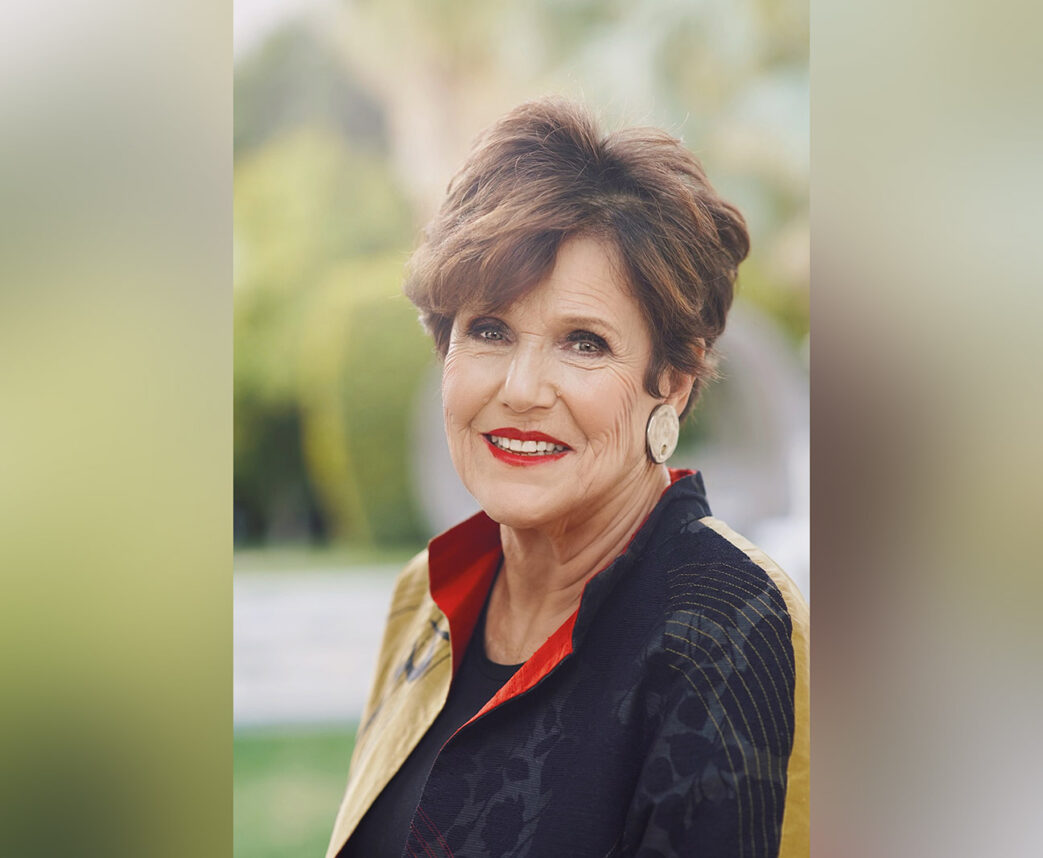
Nina TasslerExcept for her petite frame and that little black dress, you’d never know Nina Tassler once wanted to be an actress. She was entirely in her element at The Jewish Federation of Greater Los Angeles’ Once In 100 Years party last week, working the 1,300-plus crowd scattered across Santa Monica’s Barker Hangar, many of whom had come to see Tassler, the president of CBS Entertainment, honored for her work as chair of Federation’s Entertainment Division. Too tiny to be bigheaded, Tassler even wandered to the back, where media entrepreneur David Lonner and director Jon Turteltaub were sitting.
“I feel so blessed to have the life I have now,” Tassler, 54, said by phone a few days before the event. “But there is a part of me,” she added wistfully, that wonders what it would have been like to be a theater star. “I tried my hardest. I used to call myself ‘the callback queen,’ but it got very frustrating having your life being subject to somebody else’s decisions.”
It’s no small irony, then, that Tassler has become The Decider, making and breaking the dreams of other artists who long for a spot in the CBS lineup. And since she took over as chief of the network’s entertainment programming in 2004, Tassler has proved her taste; she is credited with launching some of the most successful dramas on TV, including the “CSI” franchise, “Without a Trace,” “The Mentalist” and “The Good Wife.” But though the ratings race demands her choices have wide appeal, they are not arbitrary.
“Before I go to bed, sometimes I’ll just sit outside and philosophically assess the day,” she said. “I feel it’s our responsibility to keep our ear tuned to public discourse. There’s a lot of noise out there, and our responsibility is to pick up on the themes and issues that work their way through all of society. You have to present characters an audience can relate to.”
Tassler’s own journey echoes that trope. She grew up variously in Manhattan, upstate New York and Miami, in what she describes as a “politically progressive,” multicultural family. Her late father was a Jewish audiovisual engineer and her mother, born in Puerto Rico, converted to Judaism. Holidays, she said, were steeped in an awareness of the social movements of the day — the civil rights movement in particular — and when her father inherited a bungalow colony in upstate New York, the family ran it as a camp, welcoming African American and Native American children, in the 1960s, when such was not common practice.
Tassler’s worldview was shaped as much by this exposure as it was by the broad-mindedness of the theater world, and it’s one of the reasons she never felt hobbled by being a woman in male-dominated Hollywood.
“I’ve always seen the world as very gender-neutral,” Tassler said. “I mean, I’m a feminist, but as far as having any greater or lesser opportunity because of my gender? I never thought of it that way.”
It didn’t hurt that Les Moonves, the entertainment titan and current president of the CBS Corp., took Tassler under his wing more than 20 years ago and has given her some big breaks. “He’s always been a huge supporter of promoting women,” she said. And while being female hasn’t defined her, it has informed her style. “Because I’m a mother and a wife, I’m the consummate multitasker, and in terms of caregiving, I’m predisposed to making sure people are content and enjoy coming to work.”
Through Federation, Tassler has also helped buttress Hollywood’s relationship with Israel. In 2009, she traveled to Israel to participate in a Los Angeles-Tel Aviv master class connecting Israeli artists with Hollywood tastemakers. “What we’re trying to move toward is taking that art and the dialogue that has been ongoing and build joint-venture commerce out of it,” she said.
For an industry leader so comfortable in her Jewish skin, it must have been awkward when one of the year’s most unsavory anti-Semitic episodes came from within her own network. Last February, when former “Two and a Half Men” star Charlie Sheen erupted in a diatribe aimed at his Jewish boss, Chuck Lorre, it was an embarrassment for CBS, which swiftly canceled the season’s remaining shows, fired Sheen and shortly thereafter replaced him. It was a debacle Tassler would like to forget — and prefers not to discuss. “We’re beyond that now,” she said. “We’re looking to the future and not talking about the past.” But Tassler admits the year’s spate of anti-Semitic ranting — from Oliver Stone to Lars Von Trier is “frustrating and disturbing.”
“I do feel that because of the Federation and the network of Jewish artists and their strength of voice, that there is a system in place whereby there is a swift response from the Jewish community when these kind of remarks are made.”
In the meantime, she’s focused on other pursuits, like her daughter’s upcoming bat mitzvah. “As I’ve gotten older, I’ve become more spiritual and more active in the religious life of our family. We’re at this place right now where we’re kind of waiting for the other shoe to drop, so finding that time to pray and reflect has become more important in my life.”
May 2013
April 2013
March 2013
February 2013
January 2013
December 2012
November 2012
October 2012
September 2012
August 2012
July 2012
June 2012
May 2012
April 2012
March 2012
February 2012
January 2012
December 2011
November 2011
October 2011
September 2011
August 2011
July 2011
June 2011
May 2011
April 2011
March 2011
February 2011
January 2011
December 2010
November 2010
October 2010
September 2010
August 2010
July 2010
June 2010
May 2010
April 2010
March 2010
February 2010
January 2010
December 2009
November 2009
October 2009
September 2009
August 2009
July 2009
June 2009
May 2009
April 2009
March 2009
February 2009
January 2009
December 2008
November 2008
October 2008
September 2008
August 2008
| |||||||||