Advertisement
Posted by Danielle Berrin

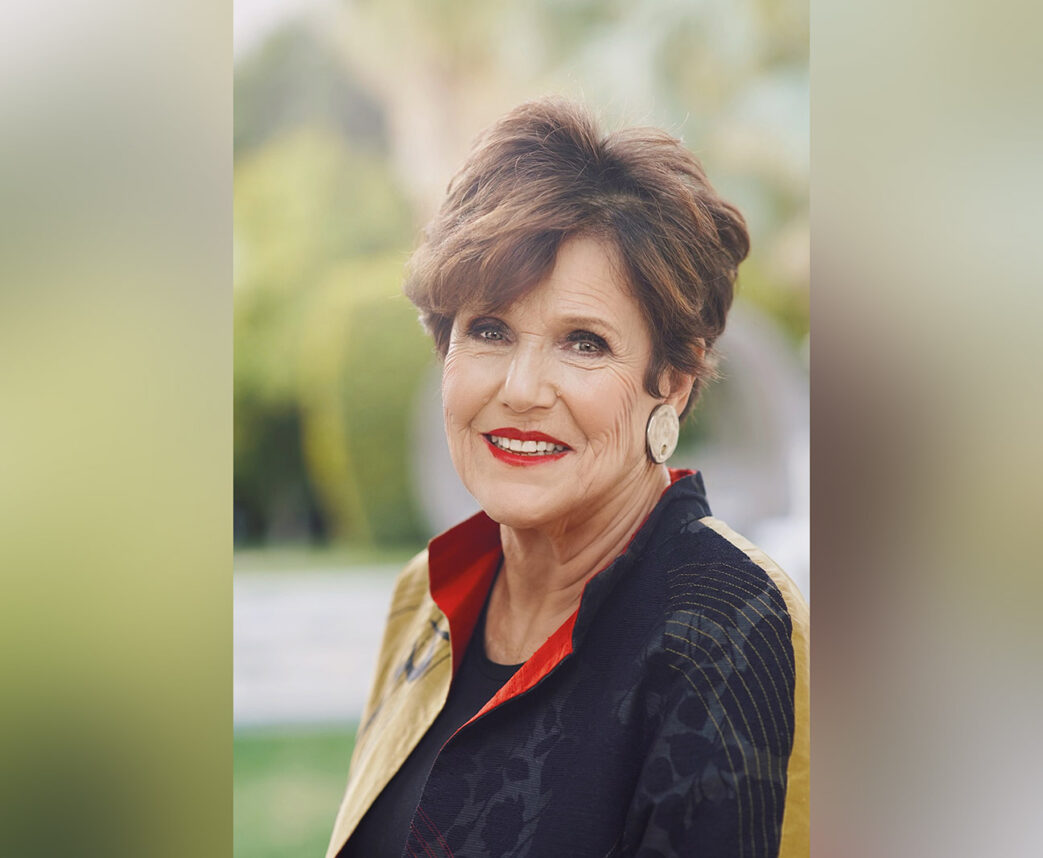
Laura Ziskin
The next time someone says that Hollywood-types don’t have heart, I’m going to namedrop Laura Ziskin.
The trailblazing producer of mega-hits including the “Spider-Man” franchise and the Oscar-nominated “As Good As It Gets” died on June 12 at age 61, after nearly a decade-long battle with breast cancer. Ziskin was a fiery female anomaly; one of those people who defied industry stereotypes at the same time as she was defining them. She was a true original.
At least that was the portrait that emerged at the lavish memorial – well, really party (just as she wanted) – that was held on Stage 15, where “Spider-Man” was filmed, at Sony Pictures Studios on June 25. More than 1,000 people attended – including Warren Beatty, Renee Zellweger, Sherry Lansing and Cuba Gooding Jr. – to pay homage to Ziskin’s life and work, in what many said was typical Ziskin style.
It was like a scene from a Sunset-strip club: crushed velvet couches, cabaret tables and expert low-lighting; a jazz band, a Celine Dion-caliber singer, wide open bars and buffets featuring wild kind salmon and summer corn risotto. There was a “signing wall”, the likes of which you see at a Bar Mitzvah and 12 giant flat screens looping personality-filled pics of Ziskin & Co., from her days as a beautiful blonde (“She was the prettiest Jewish girl I ever met” went one voiceover) to her twilight with the breast cancer buzz cut. Tributes and testimonials from Brian Williams to Emma Stone overlaid of on-set action and at-home family time.
“It’s a Laura party,” gushed one of her assistants. “It’s a total Laura party.”
But despite exhortations to “keep your drinks in your hand” it wasn’t without tears.
Beginning with her only child, the incredibly poised and well-humored Julia Barry, Ziskin was remembered as a fierce, wholesome heroine whose nurturing maternal instincts were as powerfully felt by director Sam Raimi as they were by friends and family. “The privilege of a lifetime is being who you are,” Barry said, quoting the 20th century writer and philosopher, Joseph Campbell. “My mom had that her whole life – the only thing she hid behind was a chic pair of sunglasses.”
Barry referred to her mother as “a mom in a man’s world” and Ziskin’s first producing partner, the actress Sally Field, echoed the same. Upon meeting Ziskin, who was then pregnant, Field recalled saying, “Laura Ziskin, will you please work with me?” Anticipating her upcoming birth Ziskin told Field she wouldn’t always be available. “I’m not one of those mothers who leaves their child at home and goes to work.”
Field replied: “Well, neither am I!”
She said she’d never forget the image of Ziskin in their production office, arguing with a studio head—while breastfeeding her daughter from their donated couch.
Raimi, the director of “Spider-Man” called Ziskin his “white knight” and said her optimism changed his life during the decade they worked together. “In moments when I feel lost, I now feel lost until I’m found – she changed me.”
But Ziskin was more than a Blockbuster producer – she was a champion for cancer research and prevention. After her diagnosis, she created the non-profit organization “Stand Up 2 Cancer” and raised more than $200 million for the cause. In tribute, Spidey himself (the actor Tobey Maguire) read a letter from a cancer survivor who had met Ziskin at an event and wrote to her after her death. The heartfelt missive emphasized Ziskin’s impact on cancer research, how effective she was at influencing and informing. So much so, in fact, that a chocked-up Maguire, who never raised his eyes, had to pause while reading to suppress his grief. “I’m sorry,” he said.
The up-and-coming young actress Emma Stone made a pitch to solicit donations for Ziskin’s cause. “I wish I could say Laura didn’t keep tabs on actors who didn’t donate to Stand Up 2 Cancer – but she did,” Stone quipped.
To conclude, “the love of Ziskin’s life”, Alvin Sargent, ascended the podium. He told a telling tale, about how Ziskin would call him from the Sony lot, all disgruntled. “They hate me!” she’d say.
“Well, what did you do?” Sargent would ask.
“I just told them ‘I want what I want’ and they didn’t understand.”
“Did you say something you shouldn’t have?” Sargent said.
“Maybe,” Ziskin would say. “But I want what I want! I want Woody Allen to be on my Oscar show,” Sargent recalled her saying.
“You can’t get Woody Allen,” he said. “He doesn’t come to Hollywood and he doesn’t even touch the Oscars he wins.”
“I want what I want,” Ziskin would say. “And she got him,” Sargent said, before his voice broke describing his plan to scatter her ashes at sea.
By this point, the memorial had turned melancholy with nary a dry eye in the house. A thousand people had paid their respects to a woman who was “inspiring, funny, ballsy, bold, tough, vulnerable – and sometimes inappropriate” according to the speakers.
A film clip of Ziskin speaking at a cancer event told her heroic Hollywood story: “In my world, the hero always defeats the villain, the boy always gets the girl, and cancer is no more,” she said.
At the end of the night, her good friend Amy Pascal, chairwoman of Sony Pictures, threw her arms around her 11-year-old son. Her husband, former New York Times correspondent Bernie Weinraub was wearing sad eyes. “Let’s go,” Pascal said to her family.
On the way out, clips from Ziskin’s movies played. A line from “Spider-Man” felt uniquely resonant: “Sometimes we have to be steady and give up the thing we want the most,” said Spidey’s aunt, May Parker.
For the vivacious Ziskin, this was nothing short of life itself.

6.12.13 at 4:30 pm | Of the many upbeat ways to describe the dance. . .

5.29.13 at 3:24 pm | The Dreamworks Animation CEO borrows a lesson. . .

5.29.13 at 12:30 pm | Ratner's contribution is especially significant,. . .

5.23.13 at 5:48 pm | Was there no way to portray Fitzgerald’s Jew as. . .

5.21.13 at 9:43 am | Tribal affiliation notwithstanding, Apatow, 45,. . .

5.20.13 at 12:02 pm |

5.18.12 at 2:38 pm | Now in it's fifth season, Jewishness on "Mad Men". . . (1393)

6.12.13 at 4:30 pm | Of the many upbeat ways to describe the dance. . . (392)

5.22.12 at 10:21 pm | It took Daniel Mendelsohn's discursive and. . . (253)


June 27, 2011 | 11:40 am
Posted by Danielle Berrin

So it’s not entirely an intermarriage. Daniel Craig deserves a little tribal credit for his portrayal of WWII resistance fighter Tuvia Bielski in the 2008 film “Defiance”, not to mention his portrayal of a Mossad agent in Steven Spielberg’s “Munich”.
Actress Rachel Weisz became Daniel Craig’s permanent Bond girl when the two wed last Wednesday in New York at a very, very under-the-radar ceremony (Were they hiding from her ex-“Black Swan” director Darren Aronofsky?). The two tied the knot after a swift six-month romance; Weisz and Aronofsky only announced the end of their 9-year relationship last February. According to reports, Weisz’s 5-year-old son Henry Chance Aronofsky attended the small ceremony, as did Craig’s 18-year-old daughter, Ella. The newlyweds will play husband and wife in “Dream House” set for a fall release.
Craig talked his impressions of Jewish family after he met members of the Bielski clan:
Before filming Craig and the cast did get the chance to meet members of the Bielski family. “We sat and we drank and we talked and we had a conversation and we didn’t talk much about Tuvia, but we sort of talked about… I just wanted to get a feel for them, really,” said Craig. “They were just sort of incredibly forward people, really energetic and really full of life and a proper family. They’re like families are, sitting there and shouting at each other. Why whisper when you can scream? They’re kind of like all families are and they’re full of life. I mean, both Liev and I said, ‘These guys are kind of scary guys.’ They were like, ‘Hey! Come on!’ I can imagine that that’s how their parents were, their father was.”
Of the Jewish resistance during the war, he said:
“I knew about it a little bit. I knew that there was a Jewish resistance, but the only thing that I’ve read about it is that it was wiped out mercilessly,” explained Craig. “It makes complete sense. Of course they did. The fact that nobody did would’ve been totally strange, but there were major pockets of resistance everywhere. People did fight. The fact is that there was really nowhere to run. The situation here is that the resistance happened within places like this where there was a forest, where people could get away from them. The local population was in cahoots. Unless you could get on a boat and get out of Europe, you were absolutely stuck. This was an incredibly well organized exercise by the Germans. I mean, they did it really efficiently - as we all know. I think that our knowledge of the 2nd World War is based on, and so it should be, what the result of The Holocaust was. Those are the images and the knowledge that we have of that period as we should, and we should be reminded of it as often as we possibly can.”
Weisz is outspokenly Jewish. She has talked about the fact that her Hungarian-born father, an inventor, fled to England to escape the Nazis and in 2001, gave an incredibly insightful interview to Blackbook Magazine about being Jewish in Hollywood (more specifically, about being a Jewish woman in Hollywood). It’s one of my favorite, go-to pieces about perceptions of Jewish women in Hollywood and I find myself referring to Weisz’s comments again and again. You can read it here.
Mazel tov to the new couple.
June 27, 2011 | 10:40 am
Posted by Danielle Berrin

I’m not a big Tom Cruise fan, though many in the Hollywood Jewish community adore the guy.
But when I saw this photo I thought, wow, he has an impressive…acting range. I’m not kidding; you can see how ‘in character’ he is from this “Rock of Ages” still and I always find it refreshing when a movie star can get lost in a character. Cruise is, unfortunately (well not that unfortunately, he’s doing just fine) one of those actors whose celebrity is so powerful and pervasive, it often usurps his ability to transform into a character. When one’s fame is so grandiose, it tends to compromise an audience’s ability to believe a movie star is anyone other than themselves (see: Angelina Jolie, Julia Roberts, George Clooney, Brad Pitt etc). When we “know” celebrities too well from tabloid coverage and US Weekly photos, it becomes difficult to know them as the character they’re playing. On the other hand, it works to their (and our) advantage because then we’ll go see them in a big summer Blockbuster irrespective of whether or not the film has any artistic merit whatsoever.
But I digress.
So what do we know about “Rock of Ages” (besides the fact that it’s a Hanukkah song)?
For one, it was a hit Broadway musical featuring the music of awesome 80s talents like Journey, Styx, Bon Jovi and Pat Benatar, which is reason enough to pre-purchase your movie ticket asap. The tagline, “A small-town girl arrives in Hollywood at the height of the 1980s rock-music scene” should give you the gist of the story but if you want the play-by-play, check Wikipedia, though I warn you it’s full of spoilers.
In addition to a high-octane cast—Cruise, Alec Baldwin, Russell Brand, Catherine Zeta-Jones, Paul Giamatti and Bryan Cranston to name a few—the film is being directed by Adam Shankman, the director/producer/choreographer of 2007’s “Hairspray”, a modern redux of John Waters’s 1988 cult classic. Shankman also directed and choreographed the 2010 Oscar cast hosted by Hugh Jackman which featured plenteous splashy musical numbers but ultimately failed to inspire.
Shankman grew up living the good Jewish life in Brentwood, though he told the San Francisco-based Jweekly.com
that as a kid, “there were a lot of beach clubs that wouldn’t let Jewish members attend.” He later attended Julliard but dropped out to pursue musical theater.
Read how Shankman got his big break in this 2007 interview with The Journal:
Shankman, who grew up in Brentwood and attended Julliard, said he “never had the directing bug” until about seven years ago. The 42-year-old was featured as an up-and-comer in a Journal article when he was 22, before his leap to choreographer (“The Addams Family”) and eventually director (“Cheaper by the Dozen 2”).
“All of my work ends up being about family—that’s the Jewish part of me,” he said.
And yes, all of that was really a long-winded excuse to post the picture of Tom Cruise. What can I say? I’m shallow.
June 22, 2011 | 4:31 pm
Posted Lauren Bottner

If he walks like an anti-Semite, rants like an anti-Semite, looks like an anti-Semite, then maybe…
John Galliano, former Dior Fashion Designer, went on trial in Paris today for anti-Semitic and racist remarks to local café patrons earlier this spring. Charged with “public insults based on origin, religious affiliation, race or ethnicity” on two alleged incidents in Oct. ’10 and Feb. ‘11, the now-apologetic Galliano could face up to 6 months in prison and a $32,000 fine. After watching footage of a third incident where Galliano called a woman in a Parisian restaurant a “dirty Jew face” and on another occasion was caught on video verbally assaulting guests at a neighboring table:
It’s a tad challenging to believe Galliano’s statement: “All my life I have fought against prejudice, intolerance and discrimination, having been subjected to it myself,” he said. “I do not have these views and I have never held them.” Really? All evidence to the contrary!
Quick recap:
- Galliano spews drunken tirade at an unfortunate couple nearby in Paris’ La Perle: (sample: “Dirty Jewish face…you should be dead,” he yelled at the woman—who reportedly turned out not to even be MOT—while insulting her thighs and eyebrows. And “f—king Asian bastard,” he told the man, before threatening to murder him.”
- The fashionista was suspended from Dior, and Galliano filed a defamation suit against the couple.
- “I Love Hitler” video surfaced, also filmed last year at La Perle, which kind of makes the whole defamation suit moot. Seems he does a fine job of that all by himself!
- Natalie Portman takes a stand for her tribe: “I am deeply shocked and disgusted by the video…and as an individual who is proud to be Jewish, I will not be associated with Mr. Galliano in any way.” Impressively following through on her threat, she changed her outfit for the Oscars that Sunday from a Dior dress to Rodarte.
At first Galliano denied the charges against him, claiming he was a victim of verbal harassment and unprovoked assault. But now comes an about-face, with an apologetic Galliano blaming a drug and alcohol addiction for his bad behavior.
Will that defense actually work? His lawyers sure hope so.
To help his case, Galliano has spent the past 2 months in a U.S. rehab facility which will hopefully prevent a recurring tirade in court.
But the best line goes to Rabbi Marvin Hier, Founder and Dean of the Simon Wiesenthal Center who, in reaction to the lawyer’s defense that he was intoxicated, said:
“Just as in the case of actor Mel Gibson, this argument does not wash. There’s an old Yiddish proverb: Vos bei a nichteren oif dem lung, iz beim shikker oif der tsung - What a sober man thinks, a drunkard speaks. A better defense would be, ‘I said it, I meant it, it won’t happen again, and I am truly sorry.’”
If Galliano does find himself behind bars, here’s one way to kill time: Learn Yiddish.
June 21, 2011 | 5:19 pm
Posted by Danielle Berrin

There is a nasty little phrase being thrown around in entertainment circles that Jews may find discomfiting: Holocaust fatigue. The implication is that Holocaust narratives have become so ubiquitous and trite as to induce a kind of queasy listlessness in movie audiences. Another Holocaust movie? Check, please.
The latest Holocaust-inspired scene to hit the silver screen appears in the movie “X-Men: First Class.” The idea that a blockbuster comic book could appropriate Holocaust iconography for purposes of popcorn entertainment has elicited philosophical commentary and critical condemnation. Should such serious subject matter only be seen in serious contexts?
The mantra “Never Again” would seem to imply that the more Holocaust stories appear in film and literature, which is to say the more Holocaust imagery and allusion is injected into mainstream culture, the better.
In 2008, New York Times film critic A.O. Scott’s seminal and prescient piece on the topic, “Never Forget. You’re Reminded,” captured the 21st century’s “morbid” preoccupation with one of the greatest traumas in the history of the world,
“The moral imperatives imposed by the slaughter of European Jews are Never Again and Never Forget, which mean, logically, that the story of the Holocaust must be repeated again and again,” Scott wrote. “But the sheer scale of the atrocity — the 6 million extinguished lives and the millions more that were indelibly scarred, damaged and disrupted — suggests that the research, documentation and imaginative reconstruction, the building of memorials and museums, the writing of books and scripts, no matter how scrupulous and exhaustive, will necessarily be partial, inadequate and belated. And this tragic foreknowledge of insufficiency, which might be inhibiting, turns out, on the contrary, to spur the creation of more and more material.”
“X-Men: First Class” opens at Auschwitz. It is there that teenage Erik, who becomes the future mutant leader Magneto, encounters Dr. Josef Mengele, who senses his gift and provokes the rage that will unleash it by gunning down Erik’s mother. This childhood trauma becomes the animating force of Mageneto’s life, propelling him toward his destiny to defend societal outcasts.
John Podhoretz, Commentary magazine editor and the Weekly Standard’s film critic, called this appropriation of Holocaust imagery “an act of monumental disrespect” in the latter publication.
“I actually considered rising from my seat and demanding that the audience follow me into the lobby in protest of what may be the most sickening misuse of Holocaust imagery ever,” he wrote after seeing the film. “I mean, are you [expletive in gerund form] kidding me? Auschwitz? You begin a superhero movie at Auschwitz? Has the world gone mad?”
For Podhoretz, the unmitigated use (read: misuse) of Holocaust imagery in films that lack cultural or educational gravity is cause for communal outcry. He was particularly incensed by the conjured image of “X-Men” extras on set, dressed in their raggedy stripes and yellow stars, standing around the craft food table having a snack. Hollywood should have more modesty, he wrote, “the kind of modesty that recognizes it is impossible for us really to come to any kind of understanding of the evil done, and so whatever it is we are seeing must seek to evoke it in a manner that is respectful to the enormity of the horror.”
Podhoretz and Scott share the opinion that cinematic depictions of the Holocaust are problematic by nature. After all, how can books or films, or even museums, which Scott calls “the ordinary tools of culture,” ever encapsulate a genocide? But, he writes, “Those tools, however crude, are what we have to work with.”
The cultural serving up of Holocaust narrative has many uses — among them, to educate, entertain and cultivate empathy. But the benefit Podhoretz overlooks is the benefit of incorporation: Every single reference helps create a deeper awareness of the Holocaust, to the point that it becomes so ingrained in our collective psyche, we are no longer ‘never forgetting,’ we are doing something better: remembering.
The films “Schindler’s List,” “Night and Fog” and “Shoah” are opuses for the cultural and historical record, films that have transformed trauma into works of art. But their success also has enabled lesser films, like “X-Men,” to appropriate and exploit those images. As Scott noted, “Schindler’s List” “helped to domesticate the Holocaust by making it a fixture of American middlebrow popular culture.”
This attitude is precisely what enabled JTA Editor-in-Chief Ami Eden to wax poetic on the metaphorical possibilities of the lowbrow “X-Men.” In the somewhat treacly YouTube video “X-Friends: Mutant Rabbis,” Eden postulates that the film suggests different theological responses to the Holocaust, drawing parallels between the ideologies of “X-Men” overseers Professor Xavier and Magneto to those of Rabbis Irving Greenberg and Meir Kahane.
Eden’s read suggests that context, not content, is of utmost consequence. Even if a comic book adaptation such as “X-Men” is deemed unsophisticated or insufficient in its presentation of the Holocaust, there is still something worthy gleaned. Quentin Tarantino’s “Inglourious Basterds” served a similar purpose; it was not, to be sure, a film about the Holocaust, but it assumed a cultural awareness so entrenched in Holocaust history, and so mired in its injustice, in order to hinge its entire narrative on a Jewish revenge fantasy.
To realize the axiom “Never Forget,” we can’t be so picky. As we emerge from the immediacy of history, the endurance of the Holocaust story may lie in its ability to become as ubiquitous and intimately known as the darkest fairy tales of our youth. It must become so expertly ingrained in our consciousness as to shape our understanding of the world.
June 21, 2011 | 2:56 pm
Posted by Danielle Berrin

When actress Megan Fox, then-star of the “Transformers” franchise decided to liken her boss, the director Michael Bay, to “Hitler” in an interview with a British magazine, her star-seeking fortunes changed.
“Fire her right now,” Steven Spielberg reportedly said, according to Bay’s account in the July 2011 issue of GQ.
Fox’s tactless Hitler talk wasn’t the only reason she was canned. According to Bay, “She was in a different world, on her BlackBerry.” And according to “Transformers” screenwriter Ehren Kruger “She was there for rehearsals. But she seemed like an actress who didn’t want to be a part of it.”
The sudden revelation of a steely Spielberg has the blogosphere aghast. Who knew that the man who comes off as so polished and benevolent could have a hard heart? But as it turns out, even the saintly sculptor of “Schindler’s List” has a wild streak, a tempestuous side.
When Hollywood’s bit-players jab at Jewish sensitivities, the results are predictable (just ask Oliver Stone, Charlie Sheen, Lars Von Trier, Mel Gibson et al). But Spielberg has a reputation that precedes him and doesn’t seem the type to succumb to hot-headed impulse. Which probably only means Fox deserved to get the boot. Think about it: If your director, cast and crewmates take to a national glossy to vent about your bad behavior it doesn’t exactly bode well for your staunch professionalism.
Spielberg, on the other hand, has a reputation for employing utmost civility and poise. As one of Hollywood’s most powerful, he’s the kind of industry class act that has a low tolerance for underlings who are under-mannered. Comparing one of his employees to Hitler was probably the final straw in a frequent display of crassness and conceit.
June 20, 2011 | 1:22 pm
Posted by Hollywood Jew
Stars from “Grey’s Anatomy”, “Raising Hope” and “Rookie Blue” were treated to a weeklong tour of Israel courtesy of America’s Voices in Israel and El Al, Israel Airlines. Kevin McKidd and Sarah Drew (aka Dr. Owen Hunt and Dr. April Kepner on ABC’s “Grey’s Anatomy”) got to test out their doctor skills at the robotic surgery lab at Hadassah University Medical Center, using robotic tools to complete procedures. Seeing as they still are actors last time I checked, here’s to hoping that they were practicing on dummies and not actual patients!
Still, it sounds like an enviable trip for McKidd and Drew, along with Gregory Smith and Travis Milne from “Rookie Blue” (ABC) and Lucas Neff and Shannon Woodward from “Raising Hope” (FOX). Oh, and Mckidd’s mom, Kathleen, which is just adorable. “This is a lifelong dream of hers” Mckidd told The Jerusalem Post.
America’s Voices In Israel, one of the trip’s sponsors, is part of the Conference of President’s of Major American Jewish Organizations. One of Israel’s PR efforts, they send American media personalities overseas to experience Israel hands-on. By touring the country, meeting with political, cultural, business and scientific leaders, the lucky participants can gain a firsthand knowledge of what Israel is all about. Hence the delegation of some of Hollywood’s hottest young actors.
The actors began their tour in Tel Aviv, stopped in Jaffa, Sderot, Nazareth and Safed, and of course climbed Masada, got salty in the Dead Sea, and went swimming in Lake Kinneret. This group of young Hollywood darlings spent an exciting (read fun and very busy) weekend at the Inbal Jerusalem Hotel with an agenda highlighted by the Western Wall and Tunnels, the Jewish Quarter, and the not-so-uplifting-but-entirely-worth-it Yad Vashem. Still, they were pampered with massages and a gourmet meal by the hotel’s executive Chef afterwards, giving the stars a chance to relax before they geared up for the long flights home on Sunday evening. Smith and Milne planned to extend their stay in order to travel to Eilat and Petra in Jordan.
For a group of non-Jews, they took “Next Year in Jerusalem” at the close of our Seders very literally!
June 20, 2011 | 11:08 am
Posted by Danielle Berrin

This is the part where someone who loves Amy Winehouse tells her: “Honey we’re getting you some help.”
While giving a concert in Belgrade over the weekend, the beehive-haired broad appeared listless and stony, barely able to stand let alone sing, while cheers from the crowd did nothing to rouse her. Some called the impoverished performance Winehouse’s “worst concert ever” which prompted her spokespeople to cancel tour dates in Istanbul and Athens, according to TMZ.com (If only Winehouse’s camp could discern the health of her performance by actually watching it instead of through panicked headlines, perhaps she’d be in better shape.)
Despite her evident addiction, Winehouse may be getting short shrift. The Guardian’s Alex Needham wrote that while other musicians (read: men) with peculiar behaviors get props for theatricality, Winehouse is “typecast a troubled diva”.
The Diva is indeed troubled, but Needham has a point that Winehouse’s sozzled singing is sufficiently entertaining, but it’s also sobering and sad.
From The Guardian:
[W]as the gig really that bad? While addiction is clearly no laughing matter, the elements of the gig Winehouse is being pilloried for are praised in other musicians. As music critic Simon Price pointed out on Twitter, when Bob Dylan renders his back catalogue unrecognisable, as he did in London’s Finsbury Park at the weekend, people think he’s a maverick genius. When Arctic Monkeys frontman Alex Turner stops singing Mardy Bum and lets the crowd take over, people applaud it as a communal moment. When Robbie Williams has a wardrobe malfunction – according to the Sun, his penis fell out onstage in Dublin – it’s a laugh rather than a cause for concern.
Watch live video of the concert:
June 2013
May 2013
April 2013
March 2013
February 2013
January 2013
December 2012
November 2012
October 2012
September 2012
August 2012
July 2012
June 2012
May 2012
April 2012
March 2012
February 2012
January 2012
December 2011
November 2011
October 2011
September 2011
August 2011
July 2011
June 2011
May 2011
April 2011
March 2011
February 2011
January 2011
December 2010
November 2010
October 2010
September 2010
August 2010
July 2010
June 2010
May 2010
April 2010
March 2010
February 2010
January 2010
December 2009
November 2009
October 2009
September 2009
August 2009
July 2009
June 2009
May 2009
April 2009
March 2009
February 2009
January 2009
December 2008
November 2008
October 2008
September 2008
August 2008
| |||||||||