Quantcast

Search our Archives!


Advertisement

Hollywood Jew

December 6, 2010 | 4:22 pm RSS

Nora Ephron’s holy chutzpah

Posted by Danielle Berrin

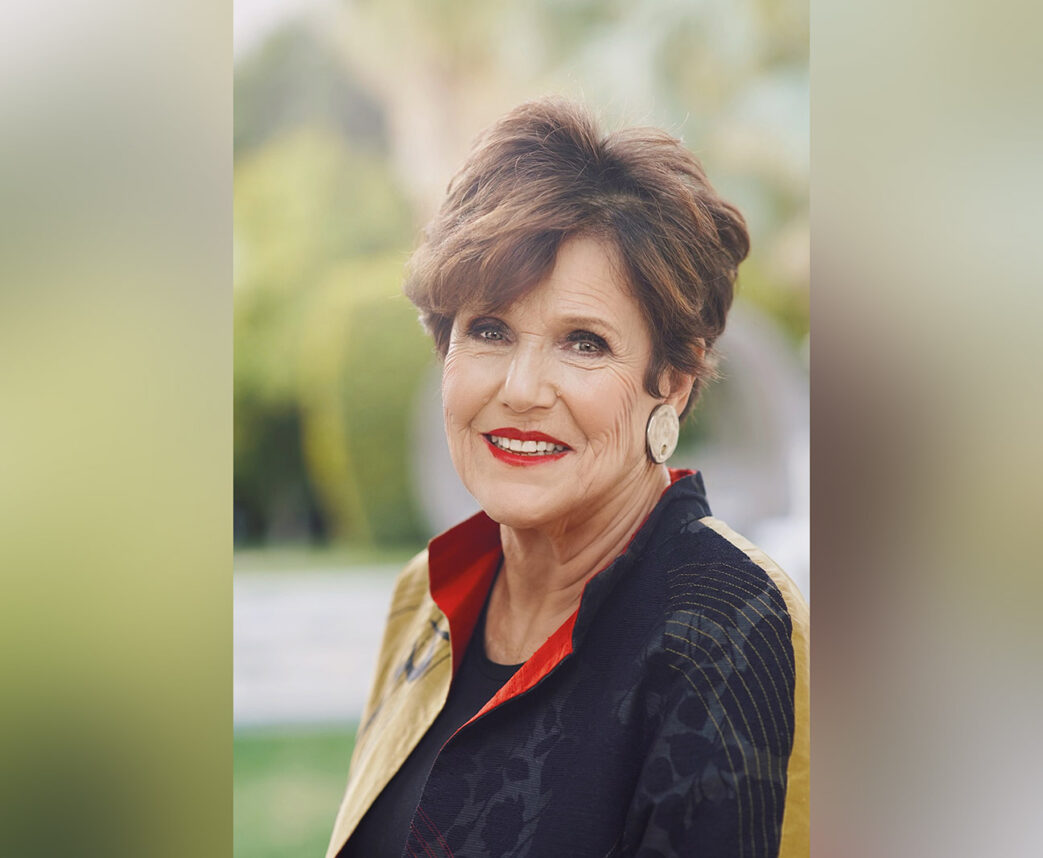
Photo

photo by Lucas Jackson

Breaking up is hard to do.

Just ask Nora Ephron, whose divorce from journalist Carl Bernstein (of Watergate fame) in 1980, apparently scarred her for life.

First she poured the emotional energy of her grief into the novel “Heartburn”, an acerbic tale of Bernstein’s affair —while she was pregnant with their second son—which, three years later, she turned into a screenplay, and three years after that, a Hollywood movie starring Meryl Streep and Jack Nicholson. The ghosts of lost love, of a woman scorned, of a mother trying to make sense of an adult problem that hurt her kids, resurfaced in her 2006 bestseller “I Feel Bad About My Neck And Other Thoughts on Being A Woman”. And now, again, Ephron’s meditations on divorce, which she refers to as the relationship that “never ends” appear in her latest essay collection “I Remember Nothing.”

In “The D Word”, her most recent essay on divorce, Ephron writes:

The most important thing about me, for quite a long chunk of my life, was that I was divorced. Even after I was no longer divorced but remarried, this was true. I have now been married to my third husband for more than twenty years. But when you’ve had children with someone you’re divorced from, divorce defines every¬thing; it’s the lurking fact, a slice of anger in the pie of your brain.

But as a writer, the fact that Ephron became subsumed with grief and heartache was a very good thing. It drove her to the pen (or keyboard) and spawned a variety of works that catapulted a prolific writing career and eventual prominence in Hollywood.

In the New York Times Book Review, author Alex Kuczynski wryly wondered:

“Does Carl Bernstein lie awake at night wondering how the hell his ex-wife of so many years ago turned his marital indiscretion into a multimedia juggernaut spanning the decades?”

Perhaps; but what did he expect? It was quite simply the Jewish thing to do.

Ephron is a case in point for the Jewish imperative of turning pain into possibility (Nevermind that in her book, which focuses on aging, she writes that one of things she’ll miss when she dies is bacon; and what she won’t miss: “Bar Mitzvahs”). Ephron was raised in a Jewish home in Beverly Hills in which the family religion, as she describes it, was “get over it.” Which coheres with Judaism more than Ephron probably realizes; Jews aren’t allowed to wallow. Even mourning has its limits: 7 days of utter despair (no chairs, no grooming, no sex) followed by a month of mourning (no shaving, no music) and then a year in which life isn’t fully lived (no theater, no concerts, no parties).

Even while wandering through the desert, after a dramatic exodus from the horrors of slavery, God had little tolerance for a mob of complaining Jews. Moses had to intervene to catch them a break.
There is a time for everything, says Ecclesiastes, which includes a time for “getting over it.”

Ephron did just that by telling stories.

Jewish suffering, of course, is legendary. And like the consequences of Ephron’s divorce, it doesn’t end. Even as Israel faces myriad existential threats, suffering persists: Just last week, 8,000 acres of the Carmel Forest went up in flames, and many people died.

The rabbis teach that the point of suffering is not to proclaim the magnitude of your victimhood, but to respond to the suffering of others. Pain should lead to compassion – and purpose.

In one of her writings on Hanukkah, which Jews are currently celebrating, Rabbi Sharon Brous introduces a question asked by the ancient rabbi, Rava: ‘Did you engage in the mitzvah to be fruitful and multiply?’ This is usually interpreted to mean the mitzvah of having children, because, let’s face it, no Jew thinks the world has enough Jews. But Rabbi Brous suggested something different. Making a mark on the world can be something well beyond expanding the gene pool.

“It doesn’t have to be the mark of a revolution, or even a social movement,” Brous wrote. “It could be a book. An idea. A piece of art. A song. A truly enduring love.”

Ephron responded to the pain in her life and the failure of her marriage with incredible chutzpah; who else could write a charming book smearing the man who brought down Nixon? And among other things in her long, brilliant career, she recently became the founder of the new divorce section on the Huffington Post, where she blogs regularly.

Hollywood, as a whole, operates much the same way. It is an industry founded in the wake of Jewish suffering, by Jews reluctant to embrace their Judaism, but who nonetheless had within them the will to dream. To imagine the world as it could be. Hollywood is no social movement. Whether it has, or even could, change the world is uncertain. Even irrelevant. What Hollywood does do is respond to the realness of life with audacious vision, with the daring to cull from the real—and imagine the ideal.

After all, in the darkness of a movie theater, anything is possible.


The Jewish Journal believes that great community depends on great conversation. So, jewishjournal.com provides a forum for insightful voices across the political and religious spectrum. Bloggers are not employees of The Jewish Journal, and their opinions are their own. Our entire blog policy is here. Please alert us to any violations of our policy by clicking here. (editor@jewishjournal.com). If you'd like to join our blogging community, email us. (webmaster@jewishjournal.com).

December 1, 2010 | 10:21 pm

Ronni Chasen suspect commits suicide in Hollywood hotel [UPDATED]

Posted by Danielle Berrin

The L.A. Times reports that the primary suspect in the shooting that killed publicist Ronni Chasen two weeks ago shot himself as he was being pursued by Beverly Hills Police:

A man believed to be connected to the slaying of veteran Hollywood publicist Ronni Chasen fatally shot himself at a Hollywood hotel Wednesday evening as Beverly Hills police were serving a search warrant there, sources told The Times.

The name of the man was not released, and his exact connection to the Chasen murder case was not immediately known. The shooting occurred after 6 p.m., according to two law enforcement sources who spoke on the condition that they not be named. The two sources said police believe he was involved in Chasen’s death.

Chasen was shot to death last month while driving her Mercedes-Benz near the intersection of Whittier Drive and Sunset Boulevard in Beverly Hills. She was on her way home from a movie premiere after-party.

According to TheWrap.com, “Beverly Hills investigators approached the man in the lobby of the complex, the Times reported, and he backed away, refusing to raise his hands. He then pulled out a pistol and shot himself in the head…”

Chasen was Jewish and laid to rest at Hillside Memorial Park and Mortuary on Nov. 21, where some of the entertainment industry’s most prominent Jews are buried, including studio mogul Lew Wasserman, producer Aaron Spelling, Milton Berle, Al Jolson and Dinah Shore. Rabbi David Baron of Temple of the Arts conducted Chasen’s funeral service.

Though details regarding the ongoing investigation are being kept under wraps, ABC News recently reported that investigators believe the killing was obviously premeditated:

Several high-profile investigators not involved in the case say the details that have emerged indicate that the killing probably was premeditated and perhaps tied to a soured relationship.

Robert Wittman, a former senior investigator for the FBI, believes that the murder—Chasen was shot five times in the chest—could have been a result of conflict in the publicist’s business or personal life.

“It would be a business-related situation or something that is personal, where she upset somebody or shrugged off a suitor, or a client who felt she did them wrong,” says Wittman, who spent 20 years with the FBI and specializes in art-related crimes. “It’s obviously a premeditated killing.”

But the potential personal nature of the murder could make it easier to solve, Wittman says. Michael Baden, a forensic pathologist, agrees.

“This sounds solvable because for somebody to go to the trouble of doing this and probably hiring somebody to do it means they know the person,” he says.

The L.A. Times also reported that the suspect, named by a neighbor at the Harvey Apartments complex on the 5600 block of Santa Monica Boulevard, as “Harold” had been bragging about having a gun and mentioned his expectation of a $10,000 payment from a “job” he did, though he later changed his story and said it was a settlement from a lawsuit. The Los Angeles County coroner’s office confirmed to TheWrap.com that Harold was an African-American male in his 40s. He told neighbors he had served two stints in prison for firearms and drug convictions, according to The Times, and that he would rather die than go back to prison.

The Times quotes resident Brandon Harrison saying: “He told me several times, ‘If it ever came back down to me going to prison, I would die first.’ ”

What is unclear is if “Harold’s” death will further obscure the truth surrounding Chasen’s murder. Questions remain as to whether Chasen’s death was the result of a hired hit and if the shooting suspect’s death will make further clues impossible to trace.

0 CommentsLeave your comment

Page 2 of 2 pages  < 1 2


About this Blog

Blog Home
About the Blogger(s)
Contact

RSS


Blog Archive


Newspaper

Serving a community of 600,000, The Jewish Journal of Greater Los Angeles is the largest Jewish weekly outside New York City. Our award-winning paper reaches over 150,000 educated, involved and affluent readers each week. Subscribe here.

© Copyright 2013 Tribe Media Corp.
All rights reserved. JewishJournal.com is hosted by Nexcess.net. Homepage design by Koret Communications.
Widgets by Mijits. Site construction by Hop Studios.

counter fake hit page