Advertisement
Posted by Robin Podolsky

No, nobody is obliged to put up with rocket barrages aimed randomly at civilians. Nobody could watch as their children are traumatized daily, or live with one’s own growing anger and anxiety when just commuting to work or going to the store becomes an act of steely resolve, and not demand concrete action to make it stop.
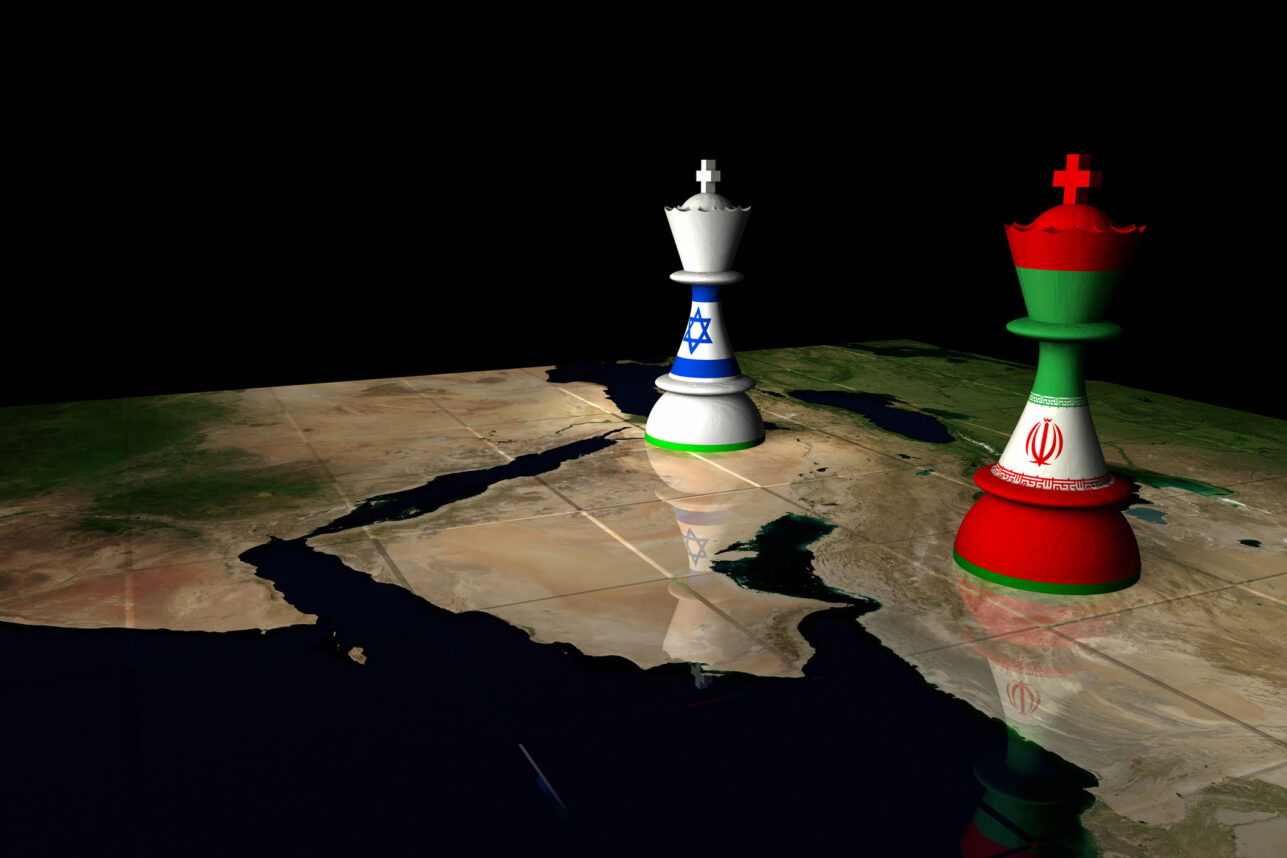
That bit of obviousness doesn’t license the current Israeli government to be irresponsibly callous about the loss of human life. Haaretz has reported that, before the assassination of Ahmed Jabari, there was a clear opportunity for a cease-fire between Israel and Hamas. Israeli peace activist Gershon Baskin says, “I think that they have made a strategic mistake…which will cost the lives of quite a number of innocent people on both sides…This blood could have been spared. Those who made the decision must be judged by the voters, but to my regret they will get more votes because of this.”
This is something of a pattern with Likud. Their alliance with Yisrael Beiteinu, whose Avigdor Lieberman makes no secret of his racism and contempt for Arab human rights, might win them an election, but it also is a signal that they don’t take Palestinian statehood seriously and would rather play to their ultra-nationalist base. Haaretz Editor Aluf Benn reminds us that, like Operation Cast Lead which also preceded elections, choosing war among other available options is an old electoral strategy in Israel. (Sorry couldn’t find a translation, and this is beyond what I could do quickly.)
The residents of Sdorot and Tel Aviv are indeed right to call for action. But what action? If, as reports now indicate, there was a credible chance for a cease-fire to stop the rockets, and to prevent civilian casualties in Gaza, then this is a war of choice. A grossly irresponsible and immoral choice. Is southern Israel secure today? Will the Gazan child injured in this bombing feel obliged to forgive as an adult? Rabbi Arik Ascherman of Rabbis for Human Rights, Israel teaches from Mishnah Avot 5:8, “The sword comes into the world because of the suppression of justice and the perversion of justice, and those who misinterpret Torah.” He further teaches that, “Our task as rabbis and Israeli human rights activists must be first and foremost to hold our own government to the most basic principle in international law and in the Jewish tradition: We have a right and responsibility to defend ourselves, but we cannot harm civilians, even in the name of self-defense. As I have taught in the past, Tractate Sanhedrin 74 teaches this principle and the principle of minimum necessary force. Somebody who kills a pursuer to prevent him/her from killing when s/he could have stopped him/her by other means is seen as a murderer. The Talmudic sage Raba teaches that we can kill the person coming to kill us, but cannot kill an innocent third person even to save our own life.”
Perhaps this would be a good time to admit that, if the blockade was supposed to make Israel safe from attack, while it might mitigate the rocket fire, it’s not working as a long-term solution. It is creating generations raised in bitterness. The Israeli human rights organization B’Tselem documents the economic devastation in Gaza—and, yes the misrule of Hamas only makes it worse, but that doesn’t lessen Israeli responsibility. Rabbi Ascherman argues, “Our message can not be to ignore the rockets on our fellow Israelis. However, when we hear "There would be no attacks on Gaza if their would be no rockets on the Western Negev,” we must both join the demand that the rockets stop and remind our fellow Israelis that we can best help ourselves if we stop using our overwhelming power to make life miserable for most Gazans. With our greater power comes greater responsibility.”
Reminders that life for most Gazans has not deteriorated into outright starvation ignore the effect of grinding hardship on bodies, hearts and minds. The situation will not change for the better until there is a truce and, in the longer term, a peace agreement. Right now, it seems as though Israel’s current government has chosen to escalate hostilities when it had other options. This means that people on both sides will die who might have lived.

5.1.13 at 9:07 pm | Of clothing, holiness and Bangladesh.

3.31.13 at 4:01 pm | On Pesach, let's remember two American Jewish. . .

3.7.13 at 4:26 am | Silverlake salon to feature American Jews who. . .

2.6.13 at 7:39 pm | When good TV attacks.
1.27.13 at 10:32 am | on the perils of carelessness
12.24.12 at 4:02 pm | On being really Jewish and having fun at. . .

5.1.13 at 9:07 pm | Of clothing, holiness and Bangladesh. (12)

6.23.12 at 7:54 pm | Another bulletin from a FASPE (Fellowships at. . . (4)
7.1.12 at 6:14 pm | Back home from FASPE trip to Auschwitz via German. . . (3)


November 9, 2012 | 3:06 pm
Posted by Robin Podolsky
President Barack Obama. Photo by ReutersSo I’ve been quiet lately, election-obsessed, but still trying to work out that ‘non-partisan’ thing in anticipation of becoming a rabbi. No more need for coyness now. If you’re my FB friend, you know who I supported (and if the rest of you should guess that my candidate’s name rhymes with ‘no drama,’ you would not be mistaken).
To my friends on the Left: no, I did not vote for Guantanamo or wiretapping or excessive compromises with Big Finance. I voted for the coalition that put this president into office and which has gained more space in the national conversation. To my friends on the Right: from where I sit, voting for expanded opportunity is voting for personal responsibility. To my friends worried about Israel: what is it you don’t like, Iron Dome or the sanctions on Iran? (Who cares how he and Bibi feel about each other? They’re grown ass men with jobs to do.)
I agree with what the President said in his acceptance speech: “…this country only works when we accept certain obligations to one another and to future generations, so that the freedom which so many Americans have fought for and died for come with responsibilities as well as rights, and among those are love and charity and duty and patriotism. That’s what makes America great.” To me that understanding of community which involves responsibilities as well as rights echoes that which our Rabbis bequeathed us.
Also, I agree with those commentators who observe that this election was, in some ways, more historically significant than that in which President Obama won his first term. Four years ago, we elected our country’s first African-American president in the context of an economic catastrophe that came from the rank incompetence of the opposing party. This time, we re-elected that African-American President whose strengths and weaknesses we now know, in the context of an economy that improves very slowly and based on the contrast between his policies and that of the other guy. Obama is no longer a symbol, he’s Number 44. And that means our country has matured and made real progress in treating one of the biggest wounds in our democracy since our founding.
As I’ve told you before, many of the students at AJR, the Academy for Jewish Religion, where I study are old enough to have extensive resumes before ever starting rabbinical school. One of my favorite colleagues is a healthcare professional, a woman who made her own breaks and redefined her job such that she now leads and trains others. We agree about some political and social issues, disagree about others, and our talks zip past slogans to real exchanges of ideas. I learn from and respect this person.
On Election Day, as she sometimes does, my friend came into the library wearing her Republican brooch. She knows that I am decidedly to the left of her on just about every issue. And when we saw each other, without needing to say why, we exchanged a warm supportive hug. How good to know that our Jewish tradition of fervent, sometimes harsh, contention between committed friends can extend to our lives as citizens.
Later, we did talk about how lucky we are, as Jews and as Americans, to live in a country where changes in the government happen at the ballot box. We knew that, when we awoke the next day, no matter which president would run the executive branch; there would be no shooting, no state of emergency. Neither of us was afraid for what might happen to Jews on the next day. There would be no pogroms, no purges. Thank you, ancestors, for coming here! You did good.
| |||||||||