Advertisement
Posted by Naomi Pfefferman

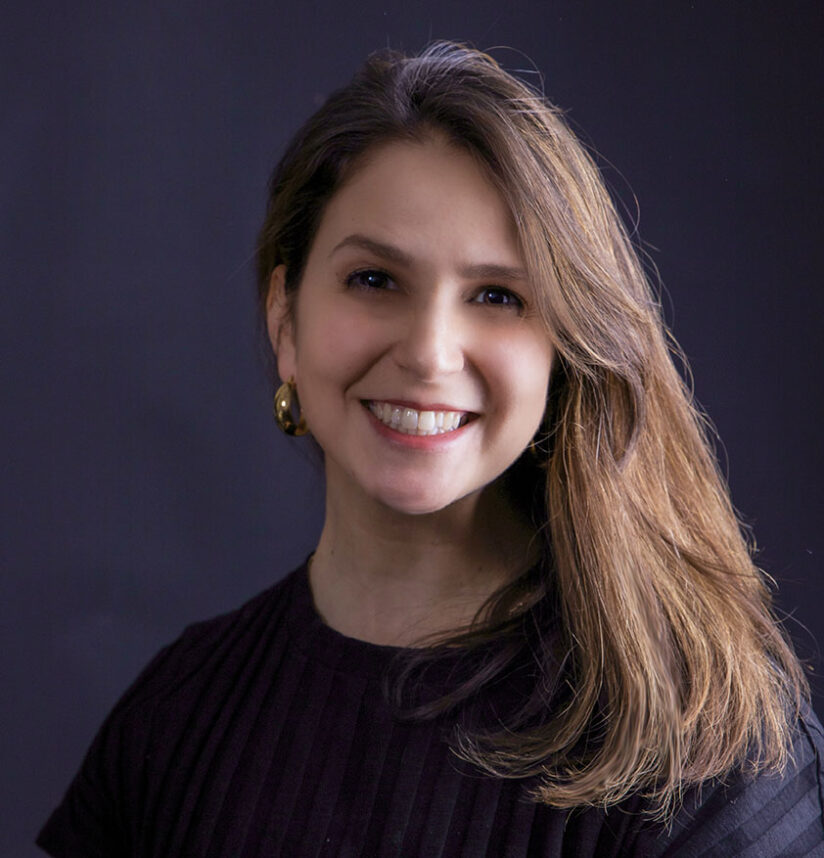
Liraz Charhi of "Fair Game"
Doug Liman’s “Fair Game” – about the outing of CIA operative Valerie Plame by the George W. Bush Administration – is earning Oscar buzz for stars Naomi Watts and Sean Penn. But Israeli actress Liraz Charhi also stands out for her pivotal, heartbreaking turn as Zahraa, an Iraqi expatriate whose fate devastates the tough ex-spy Plame.
In the film, Plame (Watts) flies to Cleveland in order to approach Zahraa, a physician and single mother who left her family behind to escape Saddam Hussein’s oppressive regime. Plame wants Zahraa to return to Baghdad to elicit information about Iraq’s weapons arsenal from her brother, a scientist in Saddam’s nuclear program. The expatriate reluctantly agrees – only after Plame promises that once the information is secured, Zahraa’s relatives will be whisked off to safety and a new life in the United States.
But then Plame’s husband, Joe Wilson (Penn) writes a newspaper editorial refuting Bush’s claims about nuclear weapons in Iraq; the film shows the administration retaliating by leaking to the press that Plame was a spy; and all of Plame’s undercover operatives – including Zahraa’s brother and his small children – face possible torture and death. In one of the most searing scenes in “Fair Game,” a hollow-eyed Zahraa confronts Plame about her brother’s whereabouts – causing the outed spy to spiral even further into despair.
Charhi was born in Ramle and raised in Ramat HaSharon, near Herzliya, but her family hails from Iran – her parents escaped Tehran as teenagers not long before the Revolution. Recently she spoke to Journal Arts & Entertainment Editor Naomi Pfefferman Magid, from Tel Aviv, about how she landed the role, the real Dr. Zahraa, how she was banned from shooting in Cairo and more.
Naomi Pfefferman Magid: You’re known as an actress and singer in Israel, but this is your first American movie. How did you break into Hollywood films?
Liraz Charhi: The whole story with America is kind of a miracle. I was invited to appear at the Israel Film Festival in Los Angeles in 2006 with my first film, “Turn Left at the End of the World,” and of course I knew that I was in a place of dreams: for every actor it’s Hollywood. However, I didn’t expect meetings or agencies to be interested in me.
Naomi Pfefferman Magid: But you met people who ultimately introduced you to your manager, Amy Slomovits, who is based in the States.
Liraz Charhi: Amy sent in my audition tape to the “Fair Game” casting director, Joseph Middleton, who was casting from Cairo. I had to do a Skype audition with him afterward, which was very funny. And two days later he asked me to fly to Jordan to meet the director, Doug Liman, which was a little bit shocking. It was the last two days of Passover, and there were no flights out of Israel. But my agent said, you’ll be in Jordan today – and she arranged for me to cross the border and to travel to central Amman in two taxis, a journey of eight hours. I met Doug Liman in the production office 10 minutes before he was supposed to leave for New York. And the instant I walked into the room, I could immediately sense he was not very happy to see me. He was very gentle of course, but I was sensitive because he gave a look to the casting director, the subtext meaning, ‘What the hell is she doing here? We were talking about how she wasn’t good for the role.’
NPM: What was the problem?
LC: Joseph Middleton said my audition tapes were very good, but I wasn’t what they had expected, and that I would have to prove myself more because of the way I look – they had something else in mind….He told me [for subsequent auditions] not to wear any makeup, and to be as natural as possible because the director expected my character not to be glamorous: she is a woman who had had a lot of trouble in life – she’s exhausted by life. Two days later Amy called me – as it turned out she had just given birth and was still in the hospital labor room – to tell me I had the part. And the funny thing is, when I had finished shooting my scenes Doug thanked me and said, “I have a confession to make. [Initially] I was pretty sure you were not the Zahraa I wanted.” And we both laughed.”
NPM: What kind of research did you do to prepare for the role?
LC: I did read everything I could find about Valerie, her story and her family. And I found an Iraqi [Jew] in Israel who arrived from Baghdad about 15 years ago – around the time Zahraa arrived in Cleveland. And I took from her every single memory that could help me build my character. I also looked for the real Zahraa; they told me her real name so I read a couple of articles about her and even found her on Facebook. But I didn’t suggest any kind of friendship. I understand from her interviews that she doesn’t really like to touch on that part of her past.
NPM: What memories provided by your Iraqi Jewish friend helped shape your interpretation of the character?
LC: The most powerful thing was the idea that you are losing your life and your family in a second. You’re choosing to leave Iraq because you want to have a normal, quiet life and you think you’re coming to this new place and are going to be happy, but you are also choosing to give up your family, your brothers, sisters, parents and that breaks you all the time. And you’re thinking, “Maybe I didn’t do the right thing, maybe I should go back.” What I chose for my character, in my own mind, is that she is returning home and doing this dangerous mission in order to bring her brother to the United States. It’s something she does for him, but also for herself – to have her family back. This breaking point is not leaving her. I thought about this a lot: What made Zahraa go back to Baghdad? I needed to get inside her journey.
NPM: Did you feel any more personal connections to your character?
LC: I remember when I first read the script I immediately started to cry; when I auditioned, I thought: I must be able to do this role, because I can feel it inside my soul. I could relate to Zahraa’s story – not because I endured what she did—but because hers is a story of immigration and the difficulties of immigration, and I know these stories from my own family. In “Turn Left at the End of the World” I also played an immigrant, an Indian Jewish girl who moves to Israel and settles in a town of Moroccan Jews.
NPM: When did your family leave Iran for Israel?
LC: Thank God most of them left before everything collapsed; they felt they couldn’t bear to be Jewish [under the Muslim regime] so most of them left three to five years before they would have been forced to stay. My mother’s family already had relatives in Israel so that was easier, but my father’s family had to escape very quickly [due to the Iranian Revolution in 1979]. My father found out he was going to have to leave his country and his friends just 24 hours before he had to go, which was kind of a traumatic thing for him, until today. And other family members stayed and had to escape through other countries, and it was troubling for them. I can tell you my family for years was practically inside the TV news every night, being shocked about what was happening in Iran and also in Iraq.
NPM: Growing up in Ramat HaSharon, when did you start working as an actress?
LC: From the age of 11 to 14 I worked professionally on the stage, in Habima—National Theater of Israel and elsewhere, but it was tough for me as a child not to have a normal life. I was very, very shy, and there was too much tension and too much criticism from the outside and criticism from myself. So then I took the simpler [road] of a girl who wants to be in the industry, which was taking voice lessons and acting and piano and dancing lessons, and performing at my high school. And I was a singer in a band in the Army, studied acting intensively at university and did some TV before my first movie, “Turn Left at the End of the Road,” which turned out to be one of the most successful Israeli films of all time. And all the clichéd things of becoming famous overnight happened to me – it was kind of a crazy and exciting experience and led to more film offers and my career.
NPM: When I spoke with Doug Liman, he said Egyptian officials threatened to revoke the film’s permits if he brought you, an Israeli actress, to shoot on the set in Cairo. Liman cast the Egyptian actor, Khaled Nabawy, as Zahraa’s brother, which he said was also a problem: officials threatened to ban Khaled from working again if he acted in a scene with you—even a scene shot in another country.
LC: I was very surprised because as far as I know, Israel and Egypt have peace. But in the end it didn’t really matter, because Doug moved those scenes to Amman and then I met Khaled, we had our shooting days, and everything went well. When we were at the Cannes film festival, we did the red carpet together, taking pictures. But the Egyptian press had lots of problems with that, unfortunately.
NPM: Did Naomi Watts talk to you about her visit to Israel with Liev Schreiber and their two children?
LC: When we were shooting in New York, she said she really wanted to visit Israel one day. I invited her—but she joked that she couldn’t go before Liev because he’s Jewish. But then she had a one week break between production in Jordan and Malaysia, and she arranged for her kids and her husband to come to Israel. They had a trip of four days, and I met her once for dinner in Tel Aviv. I know she really enjoyed Israel and wants to travel here again. And she was so kind when she had press interviews and spoke very nicely about being in Israel and working with me as an Israeli actress.

5.21.13 at 11:06 am | Using his preternatural smoothness, Justin. . .

5.20.13 at 11:40 am | Proving once again that there isn’t anything he. . .

5.14.13 at 9:59 am | This week on his podcast, Jewish comedian Marc. . .

4.30.13 at 10:58 am | Michael Diamond (Mike D.) and Adam Horovitz. . .

4.25.13 at 4:47 pm |
4.25.13 at 11:57 am | Burton Levin, an 88-year old Sherman Oaks. . .

4.24.13 at 3:15 pm | So, 17-year-old Milken Community High School. . . (817)

4.25.13 at 4:47 pm | (476)

5.14.13 at 9:59 am | This week on his podcast, Jewish comedian Marc. . . (131)


November 3, 2010 | 1:50 pm
Posted by Jonah Lowenfeld

On the morning after, the pot prince of Pico said he was happy to see Proposition 19 voted down.
“I don’t see the vote yesterday as a repudiation of marijuana being legal,” Matthew Cohen said of voters’ rejection of Prop. 19. “I see it as a repudiation of a badly written law.”
If Prop. 19 had passed, the owner of The Natural Way of L.A. dispensary would’ve enjoyed seeing the headlines this morning. “California Legalizes Pot,” Cohen said—but his tone changed dramatically when he imagined the less celebratory small print: “But it’s gonna be a lot harder to get than it was yesterday.”
Calling Prop. 19 “legalization in the name of legalization,” Cohen said that although he thought that enacting that ballot measure would have made him and dispensary owners in Los Angeles, Oakland, San Francisco “and maybe a couple of other college towns,” fabulously wealthy, the broader effect would have been to severely curtail access in most other spots around the state.
“My friend, they would be closed today,” Cohen said, speaking of the dispensaries in towns less friendly to marijuana, towns like Solvang and Temecula. Marijuana advocacy groups like Americans for Safe Access (which took no position on Prop. 19) and the Marijauana Policy Project have, just in the last few years, brought lawsuits against a number of California city councils that tried to curtail access to medicinal marijuana in their municipalities—and in 31 cases, Cohen said, the city councils have backed down rather than fight the marijuana advoctes in court.
“I read that officially there are 635 municipalities in the state of California,” Cohen said, and Prop. 19 would have given “every single one of them the option [of voting to ban marijuana usage and to close local marijuana dispensaries] without fear of a lawsuit.”
Still, Cohen saw evidence that the marijuana movement, is helping to move marijuana inexorably into the mainstream. “Look at the headway that we have made,” Cohen said. “It’s become so normal.”
November 2, 2010 | 9:24 am
Posted by Tom Tugend
Scientists glory in Nobel Prizes, soldiers proudly display their medals, but for the descendants of Stanley Mosk no honor is more meaningful than having a school named for the late California Supreme Court justice.
On Friday (Nov. 5) , a Canoga Park school, now bearing the prosaic name of Valley Region Elementary School No. 10, will be officially renamed the Stanley Mosk Elementary School.
The naming ceremony will begin at 10 a.m. at 7335 Luboa Ave. in Canoga Park. The public is invited.
Stanley Mosk was a native Texan, who in 1947 was instrumental in breaking the Los Angeles color barrier in restricted housing for blacks, at a time when Jews and Latinos suffered from the same kind of discrimination.
In his decision striking down restrictive covenants, the then 34-year old judge declared ringingly, “We read columns in the press each day about un-American activities. The court feels there is no more reprehensible un-American activity than to attempt to deprive persons of their own homes on a ‘master race’ theory.”
Mosk was a protégé of Democratic Gov. Culbert Olsen, but resigned his judgeship when he joined the army during World War II.
Olsen lost the next election to his bitter political rival, Republican Earl Warren, who held the seat open until Mosk returned and then reappointed him to his old post.
In the present political climate, such a generous gesture would be almost unthinkable, Mosk’s son, Richard M. Mosk, noted in the legal newspaper, The Daily Journal.
Despite his busy career as top aide to Olsen, then state attorney general and judge, Stanley Mosk was intensely involved in the Jewish community, serving as president of the then Jewish Federation Council, and lay leader of Vista del Mar, Bet Tzedek and the Anti-Defamation League.
The younger Mosk, now an associate justice of the California Court of Appeal, has been going through some of his father’s papers and discovered an intriguing footnote relating to Britain’s post World War II policy toward Palestine.
On Oct. 3, 1945, Mosk, then a Superior Court judge, penned a letter to Harold J. Laski, then the influential chairman of the British Labour (ok) party, which had just triumphed over Churchill’s Conservatives.
Mosk wrote in part, “No people on earth have endured the suffering of the Jews of Europe. It should be obvious to statesmen, as it is to other thoughtful people throughout the world, that only a national homeland in Palestine holds forth any hope for the displaced Jews. They have the right to expect entry there, if not historically, then by virtue of the Balfour Declaration.”
Laski did not take the criticism kindly and responded in part:
“In Palestine, it would certainly make the task of the British Government easier if the Americans would offer to share in the difficult responsibility of our mandate, instead of merely offering us advice by resolution. 5,000 American troops in Palestine are worth 100 resolutions from the United States Senate,”
Mosk sent this correspondence on to President Truman, who almost immediately replied with a thank-you note.
For additional background on Stanley Mosk, see the City Voice article by Bill Boyarsky.
November 1, 2010 | 5:09 pm
Posted by Orit Arfa
Tomer KoronIt makes sense that the Jewish State has begun to develop its own “pick up artist” (PUA) industry, a community of men (and a few women) who teach clueless guys how to turn a woman on. Jewish men, like Ross Jeffries and Neil Strauss, have pioneered the now saturated PUA industry in the US, although in my interview with Neil Strauss last May, he said Jewish men don’t necessarily need pick up advice more than other ethnic groups (I’m sure some Jewish women would beg to differ).
While the industry in Israel is still small, with just a smattering of companies and PUA coaches, Israeli men are recognizing the need for the skills and techniques these seduction specialists teach, says Tomer Koron, one of Israel’s pioneering “pick up” coaches. A few years ago, Koron left his job in the world of sales to master the art of relating to and attracting women and to spread the art in Israel.
I met with Tomer when I visited Tel Aviv this past summer, and over e-mail, he discussed (in Hebrew) the differences between the ways American guys and girls “pick up” and like to be “picked up.” Here’s the translation:
How are Israeli women different to “pick up” than American girls?
Israel women are rightly considered among the hardest-to-get of the female race when compared to Latin, European, Asian and American women. There are many reasons for this: army service, which makes many of them “manlier” and tougher; family and social pressure to be “independent” and “strong”; a high sense of self-worth and pride that doesn’t always match their appearance or personality; initial sexual experiences at a relatively later age; and, of course, the “Israeli bubble” in which everyone knows everyone, and which is quick to label women who come across “too easy” as a “slut” or “whore.”
Compared to American women, for example, Israeli women demand a special kind of treatment from men who go after them. Israeli women don’t have patience—they’re always rushing and they have a very fast pace (of walking, talking), which requires suitors to consistently demonstrate skills such as assertiveness, improvisation, concentration and focus, attentive listening, emotional self-expression, and the proper reading of body language.
Second, Israeli women are very, very loyal (until marriage at least) to their man, whether they are going out for two weeks, two months, or two years. Israeli society is very conservative and family-oriented, and the chance of getting a girl that’s taken – again, compared to American women – is close to none. In the US, the phrase “I have a boyfriend” is a recommendation, while in Israel it’s taboo.
Third, in contrast to American girls who sometimes have to roll with “shallow” small talk that’s part and parcel of American culture and not necessarily the fault of the specific man, Israeli women expect intelligent and deep conversations with men, and they won’t compromise on a lack of spiritual or intellectual depth. To get quality Israeli women, a man has to be the deepest man he could be and know how to express this to a woman.
What advice would you give an American man, whether he’s a tourist to Israel or an oleh (immigrant), who wants to pick up or date an Israeli woman?
The main tip I can give is to be unique and different. From whom? From the rest of American men. In the eyes of Israeli women, American men are perceived as materialistic, narcissistic, egotistical, shallow, crude, lazy, childish and sometimes dangerous. Therefore, you must show how you are different from these men, which means showing the deeper and more spiritual sides of your personality, your generosity and altruism, your empathy and honesty, your chivalry and maturity.
How are Israeli men different in the courtship process than American men?
When it comes to the courtship process, and in contrast to American men, Israeli men demonstrate much less chivalry. Basic actions like waiting by the car door when a man picks a girl up for a date; opening the car door or entrance; making restaurant reservations in advance; and sometimes even paying for the entire first date(!) are not part of the dating routine of Israeli men, much to the frustration of many Israeli women.
Another difference is that Israeli men generally don’t use alcohol as the main means to hasten the courtship. For example, the custom of making the first move by ordering a drink is rare and more of an exception in Israel compared to the US. Aside from the prevalent lack of chivalry, the main reason for this is the high cost of alcoholic beverages in Israel relative to the average Israeli salary. Treating two women for a drink in one night, and of course, ordering two drinks for yourself, can cost up to NIS 300 (@$75), which accounts for about 4 pecent of the average Israeli salary.
What advice would you give an American girl, tourist or olah, who wants to pick up or date an Israeli man?
The main tip I can give is to be consistent. What does that mean? Compared to American men who interpret a slow dance with a woman as an act of flirtation and one she’ll likely repeat with five to seven other men throughout the course of one night, an Israeli man interprets a slow dance with a woman at a party or bar as a sign of commitment and exclusivity for the rest of the night. So instead of going around dancing closely with several men, choose one guy that you want and stick only with him, and from there he’ll (hopefully) understand how to lead you in the courtship dance.
Check out Tomer Koron’s (Hebrew) website at www.tomerkoron.co.il, and check out Orit Arfa’s e-book on pick-up artistry, Survival of the Shittest, a guide on passing a woman’s tests
November 1, 2010 | 2:15 pm
Posted By Elissa Barrett
This is the fourth piece of a weekly series in which the Progressive Jewish Alliance looks at the propositions on this year’s California ballot in light of the weekly Torah portion.
After stone-throwing media ads from Jerry Brown and Meg Whitman this election season, you would think the two California gubernatorial candidates were constitutionally incapable of agreeing on a single issue. Not so! As part of a larger “tough on crime” stance, Whitman has proclaimed she’s “firmly against Proposition 19.” More colorfully, Brown has declared, “We got to compete with China. If everybody’s stoned, how the hell are we going to make it?”
Meg and Jerry may agree on this one, but Proposition 19 has been an intense source of debate among progressives and policy wonks alike.
Fortunately for us, grappling with complexity and nuance are hallmarks of Jewish religious text and tradition. Evidence of Judaism’s love of debate can be found in any page of Talmud, replete with rabbinical volleys across the generations, or in this week’s Torah portion (parshah), which celebrates the delightfully imperfect Abraham and Sarah.
Proposition 19 proponents claim the initiative will, “Put police priorities where they belong,” and, “Generate billions of dollars in [state tax] revenues.” They argue legalization will save $1 billion annually from reduced arrest, prosecution and incarceration of drug users and will reduce cross-border narcotics trafficking controlled by Mexican cartels. Proposition 19 continues prohibition of and penalties for driving under the influence. Proposition 19 also preserves criminal justice system referrals to drug treatment programs for certain individuals.
Perhaps the most powerful arguments in favor of Proposition 19 are made by those studying the disparate impact that criminalization has historically had on communities of color. The Drug Policy Alliance reports: “In Los Angeles County, with nearly ten million residents and over a quarter of California’s population, the marijuana possession arrest rate for blacks is 332% higher than the arrest rate for whites. Blacks make up less than 10% of L.A. County’s population, but they constitute 30% of the marijuana possession arrests.” This pattern is repeated across California:

Congresswoman Sheila Jackson Lee has used the term “scarlet letter” to describe the stigmatizing effects of a drug possession record. Even if you can pay the $450 plus in fines and court costs for a possession charge, the recorded misdemeanor “drug crime” follows you like a plague, inhibiting your ability to rent an apartment, enter college, get a student loan or find a job. Governor Schwarznegger recently signed sentencing reforms into law, but it is too soon to tell what impact they will have.
Judaism abhors the idea that a person could be stigmatized for life. Rather, great value is assigned to the practice of repentance or tshuvah, translated literally as, “Returning from evil” (Mishneh Torah, Laws of Repentance, 2:2-5). Jewish law also suggests that public policy reflect the Biblical notion that neither the community nor any individual should cause another to sin. This concept is based on Leviticus 19:14 (‘and you shall not place a stumbling block before the blind’), understood by the Rabbis and codified by Maimonides as the principle of not making one’s fellow a criminal (Mishneh Torah, Laws of Murder and the Preservation of Life, 13:14).
The opponents of Proposition 19 make their own set of powerful arguments. For starters, they claim Attorney General Eric Holder’s commitment to enforce the Controlled Substances Act even if Proposition 19 passes means that California could become embroiled in costly legal battles and lose billions of dollars designated for states that follow federal “drug free” requirements. And, the Rand Corporation has issued a set of studies that question whether legalization would have any meaningful impact on Mexican drug cartels and whether legalization actually provides budget relief, given the unforeseen public health impacts that could result from increased usage.
The San Diego Union-Tribune pointed out that Proposition 19’s imprecise drafting could create an unmanageable patchwork of local regulations and taxes:
“[Proposition 19] would allow every one of California’s nearly 480 cities and each of its 58 counties to develop their own regulation and tax schemes for the cultivation, processing, distribution, transportation and sale of marijuana. In San Diego County alone, that could mean 19 separate sets of regulations and taxes[]. That provision alone is an invitation to law enforcement chaos.”
In the end, Proposition 19’s imperfections are endemic of the ballot initiative process itself, which is ripe for critique and even an overhaul. Perhaps that is why pairing a proposition with each week’s Torah portion has felt so apt to us. In politics and religion, our best and highest calling may be to engage in the spirit of intellectual debate – to test, question, study, argue and sometimes resolve the complexities of our time.
The Progressive Jewish Alliance has wrestled with the issues and we’ve taken strong positions. We’ve examined and discussed and decided:
• Yes on Proposition 19
• No on Proposition 23
• Yes on Proposition 24
• Yes on Proposition 25/No on Proposition 26
We hope our arguments have been compelling. But when you enter that voting booth next Tuesday, it will be up to you. Until then, California, get inspired, get informed, and get to the polls.
Happy voting!
May 2013
April 2013
March 2013
February 2013
January 2013
December 2012
November 2012
October 2012
September 2012
August 2012
July 2012
June 2012
May 2012
April 2012
March 2012
February 2012
January 2012
December 2011
November 2011
October 2011
September 2011
August 2011
July 2011
June 2011
May 2011
April 2011
March 2011
February 2011
January 2011
December 2010
November 2010
October 2010
September 2010
August 2010
July 2010
June 2010
May 2010
April 2010
March 2010
February 2010
January 2010
December 2009
November 2009
October 2009
September 2009
August 2009
July 2009
June 2009
May 2009
April 2009
March 2009
February 2009
January 2009
December 2008
November 2008
October 2008
September 2008
August 2008
July 2008
June 2008
May 2008
April 2008
March 2008
February 2008
January 2008
December 2007
November 2007
October 2007
September 2007
August 2007
July 2007
August 2006
| |||||||||