Advertisement
Posted by Bob Goldfarb

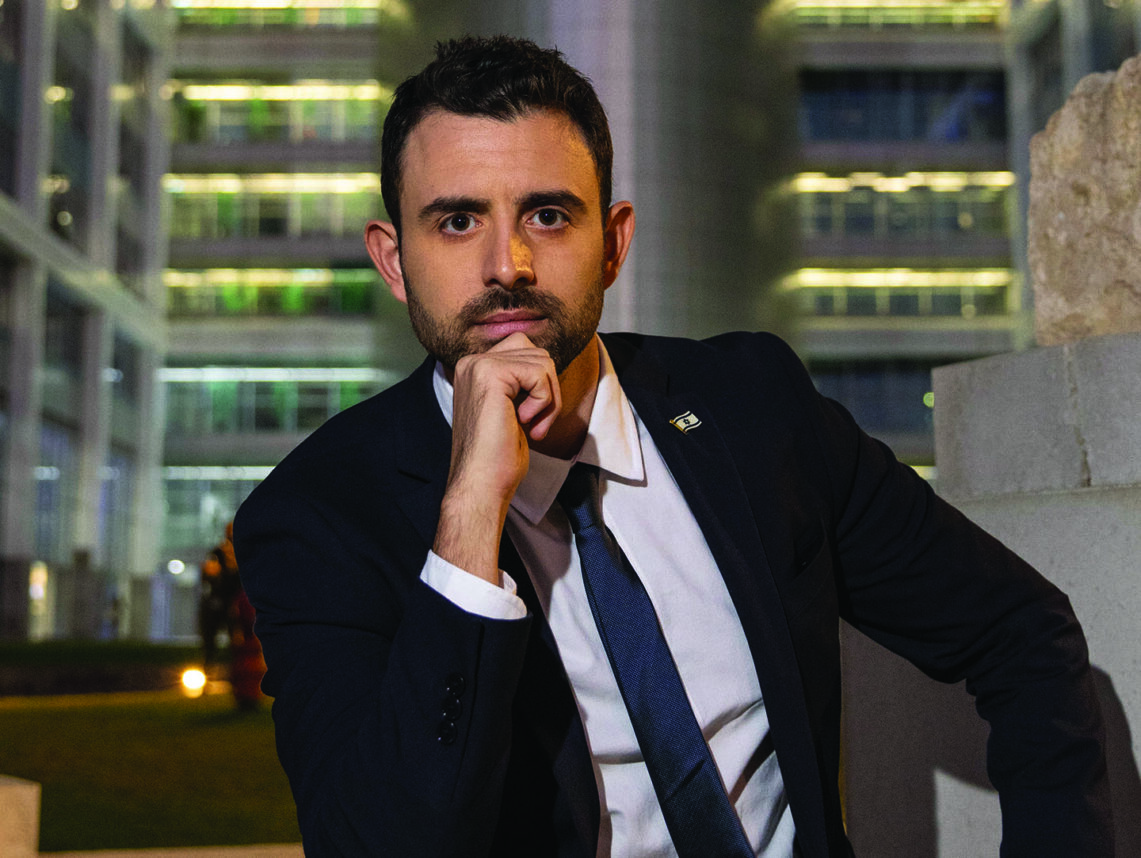
Nachman Shai
Today’s Jerusalem Post reports these observations by Knesset member Nachman Shai (Kadima), head of the legislature’s Conversion Caucus:
“There are over 300,000 Israelis [mostly from the former Soviet Union] here who are Jewish in heart, in feeling and by their presence here, and we must take note of this. These immigrants are Israelis, but not Jews, and we need to find solutions to let them live here equally with others. They are entitled to die for the State of Israel, but not to be buried here,” he said in reference to non-Jewish soldiers, who couldn’t be buried in Jewish cemeteries.
“Children are born, and most of the aliya from the FSU is currently non-Jewish. We are facing the creation of another community here of Israelis who are neither Muslims nor Christians, but who aren’t Jewish, either.”
In terms of Israeli law, Jewishness is a religious identity. The only available way to recognize these immigrants’ Jewish identity officially is through conversion, specifically Orthodox conversion. As MK Shai adds, “I don’t just side with the Orthodox attitude. But I think we have a certain framework, and we need from within it to seek other mechanisms, other rabbis, who can spread the system all around the country, enabling more people to convert.”
In America, without such a central framework, Jewish identity can be defined in a lot of ways, including what people do and how they think of themselves. Along those lines, the Jewish volunteer and service organization Repair the World issued a report last week on how young Jewish adults connect community service to being Jewish. Among its findings:
● Only a small portion of Jewish young adults, 10%, indicated that their primary volunteer commitment was organized by Jewish organizations.
● Only 18% said that they prefer to volunteer with Jewish organizations or synagogues over other non-profit organizations.
● The vast majority, 78%, said it doesn’t matter if the organization with which they are engaged in service is Jewish or non-Jewish.
● Only 27% of respondents agreed that they consider their volunteer actions to be based on Jewish values and only 10% strongly endorsed this statement.
● Jewish young adults with the highest levels of Jewish religious involvement, including but not restricted to Orthodox young adults, are the most likely to engage in volunteering, to do so regularly, and to volunteer under Jewish auspices.
Volunteering apparently is not an effective way of reinforcing Jewish identity, since the great majority do not see it as based on Jewish values. Yet the Jews who are likeliest to volunteer are those who are involved with religion, suggesting that the strongest impulse to enact Jewish values comes from a religious framework.
Americans and Israelis might learn from each other about what it can mean to be Jewish.
Bob Goldfarb, the president of the Center for Jewish Culture and Creativity in Los Angeles and Jerusalem, also blogs regularly for eJewishPhilanthropy.com.

8.28.11 at 12:46 am | A protest movement is being shaped by members of. . .

8.6.11 at 1:24 pm | On Amos Oz and the nostalgic past

8.2.11 at 10:19 am | Creative teens are recognized alongside athletes. . .

7.22.11 at 7:56 am | The Russell Tribunal goes to South Africa to pass. . .

7.4.11 at 1:56 am | Joseph Cedar's new film shows what can happen. . .

7.1.11 at 1:36 am | A historic synagogue near Tel Aviv's beach. . .
8.6.10 at 10:32 am | Evgenia Citkowitz: daughter of a Brooklyn. . . (8)

6.22.11 at 1:29 pm | In an era when human rights are paramount, Jews. . . (3)

7.27.10 at 9:41 am | Many American Jews are uneasy about the support. . . (2)


June 28, 2011 | 1:15 am
Posted by Bob Goldfarb
Following the legalization of gay marriage in New York State, Maariv columnist Shmuel Rosner reflected yesterday on the prospects for such a thing in Israel. He refers (in Hebrew) to a seemingly obscure ruling by the Israeli Supreme Court two weeks ago that directed the Interior Ministry to recognize a proxy marriage considered valid in El Salvador. As Rosner sees it, this may open the door to the legal validity in Israel for thousands of marriages performed outside the authority of the Rabbinate. He thinks a secular coalition in the Knesset, bolstered by a shift in public opinion, could extend this to gay couples in a few years.
Today comes a report in Haaretz that suggests it may not be so easy. The non-Jewish partner in gay couple from Baltimore was denied immigrant rights despite their Canadian marriage. Some details:
The Law of Return stipulates: “A Jew’s rights and an immigrant’s rights ... are also imparted to the child, grandchild and partner of a Jew, except in the case of a Jew who willingly converted to another religion.” Attorney Nicky Maor, director of the Legal Aid Center for Olim, says if the couple were a man and woman, there is no doubt they would both have received Israeli citizenship. “The only reason the Interior Ministry doesn’t know how to handle it is that they’re gay,” Maor said. “The Law of Return says ‘partner,’ not husband and wife. There is no definition preventing recognition of same-sex partners.”
Attorney Dan Yakir, of the Association for Civil Rights in Israel, believes the High Court will grant Alvarez citizenship if asked to rule on the issue. “It’s a question the courts haven’t dealt with yet,” he says, “whether ‘partner’ in the Law of Return also applies to a same-sex partner. In view of the court rulings that have equalized the rights of same-sex couples and in view of the constitutional right for equality, it is obvious that the Law of Return must be interpreted as applying to same-sex couples, and that means an immigrant’s partner must be given citizenship.”
Given the impenetrable administration of Israel’s Interior Ministry, this flap may say more about bureaucratic caution than about Israeli policy towards gays. Time will tell.
Bob Goldfarb, the president of the Center for Jewish Culture and Creativity in Los Angeles and Jerusalem, also blogs regularly for eJewishPhilanthropy.com.
June 26, 2011 | 10:18 am
Posted by Bob Goldfarb
Stuart EizenstatA flash of anger abruptly erupted during an otherwise sober discussion at the Third Israeli President’s Conference last week. “That is an offensive statement!” bristled Stuart Eizenstat, who served in the Carter and Clinton administrations, in response to Eyal Gabai, Director-General of the Israel Prime Minister’s office. Gabai had sat listening to various proposals for Israel/Diaspora relations and flatly observed, “80 to 90% of this is irrelevant to Israelis.” He singled out Eizenstat’s proposal for a Jewish Peace Corps that would send young Jews to Africa to do grassroots community service. (Gabai spoke as an individual, not on behalf of the Israeli government.)
Eizenstat took the remark personally. “That is an offensive statement to those of us who work every day to fight delegitimization,” he thundered. It was a microcosm of the emotions surging beneath the calls for a “partnership” and “collaboration” on both sides of the Jewish divide. Here was an American Jew, deeply devoted to Israel, who felt his good intentions were spurned by an Israeli. And here was an Israeli who felt that Diaspora Jews just don’t get it. They speak different languages in more ways than one.
There was another, less visible sort of tension. Pierre Besnainou, former president of the European Jewish Congress summed up an enormous change over the past 60 years in ten words: the Diaspora has become weak as Israel has become stronger. Eizenstat similarly sees a “new paradigm” where Israel has to take responsibility for strengthening the Diaspora so there will be more Jews who support Israel. His solution? Israel should issue a “Diaspora Impact Statement” on every policy – as if American Jews’ identification with Israel ought to be predicated not on a shared Jewish heritage and destiny but on the politics of the moment. It’s a paradox: as Israel becomes less dependent upon the Diaspora, Eizenstat thinks the opinions of Diaspora Jews should be treated as more important than ever. Normally it is the stronger party, not the weaker one, that has the greater leverage.
Jews in the United States may not be cognizant of this shift. Yet as Federations gradually redirect funding from Israel to their own communities, American Jews will hold still less sway, even as they want a greater voice on issues like conversions and the status of women at holy sites, not to mention the conflict with the Palestinians. Of course the views of the American Jewish community will continue to carry a lot of weight for some time, but not as much as Americans might imagine. That’s one reason the frustration and mutual incomprehension between Israelis and American Jews isn’t going away any time soon.
Bob Goldfarb, the president of the Center for Jewish Culture and Creativity in Los Angeles and Jerusalem, also blogs regularly for eJewishPhilanthropy.com.
June 22, 2011 | 1:29 pm
Posted by Bob Goldfarb
Chief Rabbi Lord Jonathan SacksThe new anti-Semitism, in the view of Chief Rabbi Lord Jonathan Sacks, is not a resurgence of the centuries-old hatred of Jews. For one thing, it is not aimed at individual Jews, but rather against Jews living as a nation in their own land: it is anti-Zionism. For another, it draws its authority not from Christian teachings or the findings of science (or pseudo-science), as in previous centuries. It flows from a concept of human rights that is vested strictly in individuals rather than by way of communities. And it is no longer propagated as a national ideology, but rather through new media. The Chief Rabbi of the United Kingdom spoke at the opening session at the second day of the Israeli Presidential Conference.
One thing this new phenomenon has in common with the anti-Semitism of the past, says Dr. Sacks, is that it grows out of the politics of grievance and humiliation. He points to the history of Christianity; Germany after the First World War; and now the Islamic world, mourning its lost glory. Against expectations it unites radical Islamists with human-rights NGOs—the right wing and the left wing—against a common enemy, the State of Israel.
Speaking after his public comments, Lord Sacks traced the current brief against Israel to the first Durban Conference in August, 2001, in which Israel was accused of five cardinal offenses against human rights: racism, apartheid, ethnic cleansing, crimes against humanity, and genocide. Two years later, in a live BBC interview, he was asked his reaction to a boycott of Holocaust Memorial Day by the British Muslim community “because of the ongoing genocide against Palestinians.” His response was to deplore the debasing of discourse through the casual use of that term.
A contributing factor to European anti-Semitism, he believes, is the failure of multiculturalism and the consequent deëmphasis of the rights of minority communities. The Netherlands, the first country to embrace multiculturalism, was also the first to reject it, with the result that many voters are now willing to abridge the rights of the Muslim community—and the Jewish community. Rabbi Sacks spoke recently in The Hague against the proposal to ban sh’chitah (kosher slaughter) in the Netherlands, which he believes may pass—followed in all likelihood by a ban of brit milah (circumcision). [A ban on ritual circumcision is also being considered in San Francisco.]
The Chief Rabbi pointed with pride to the fact that Britain is the first country where the fight against anti-Semitism is led by non-Jews. He held out the hope that coalitions of Jews and non-Jews throughout the world can work together to reverse the gains of the new anti-Semites.
The Israeli Presidential Conference enters its third and final day tomorrow.
Bob Goldfarb, the president of the Center for Jewish Culture and Creativity in Los Angeles and Jerusalem, also blogs regularly for eJewishPhilanthropy.com.
June 22, 2011 | 12:25 pm
Posted by Bob Goldfarb
Niall FergusonSpeaking on the second day of this year’s Israeli Presidential Conference, the brilliant historian Niall Ferguson demurred from the widespread embrace of the “Arab Spring.” For one thing, he believes its name is a misnomer. It is patterned after the “Prague Spring” and the eventual fall of Communism in 1989, but the Harvard professor thinks that’s a bad analogy. Today’s revolutions grow out of high unemployment, high food prices, a high proportion of young people in the population, corruption, and connectivity, which is very different from the failure of the Communist economies.
The West assumes the uprisings in the Arab world to be inherently progressive, which Ferguson terms “a profound error.” The use of social media is not necessarily democratic because “the medium is not the message.” Conflating them was “one of the great errors of the 1960s,” in Ferguson’s view. Social media can convey views both democratic and undemocratic, and the outcomes in the Arab world may well be undemocratic. History teaches that the potential for democracy is linked to the strength of civil society, a quality which is largely lacking in the Middle East.
Ferguson’s view is that all great revolutions are characterized by four phases. First comes euphoria, as in Tahrir Square and the world’s reaction to it. Then, according to this eminent historian of economics and business, capital flees the country, unemployment consequently rises, and there is an economic crisis. Radical elements then seize the initiative, blaming “enemies without and enemies within,” which in turn leads to civil war, external war, or both.
For Israel, this means that new Arab regimes could redouble their efforts to delegitimize Israel. The violence from these power shifts in the region could cause economic harm. “Would-be hegemons” like Iran and Turkey might seize on these crises and use them for their own ends. And world opinion might turn more severely against Israel if the uprisings are misread.
All this is unfolding in a time when, as Prof. Ferguson put it, Western ascendancy is ending after 500 years, Europe is gradually disintegrating, and the United States is retreating from its imperial role because of its fiscal crisis. Amid the optimistic faith in social media and the spirit of democracy, this sobering analysis comes as a useful corrective.
Bob Goldfarb, the president of the Center for Jewish Culture and Creativity in Los Angeles and Jerusalem, also blogs regularly for eJewishPhilanthropy.com.
June 21, 2011 | 4:04 pm
Posted by Bob Goldfarb
Sarah SilvermanThe kickoff session at the Third Israeli Presidential Conference may have surprised even its organizers. Sarah Silverman, irreverence personified, stole the show with her unexpectedly serious and specific ideas about current issues. Her spontaneous “Recipe for a Better Tomorrow,” as the title put it, was to “look inward, not define yourself by outside forces.” What matters more, she asked, “the acreage of where we live, or the values of how we live?”
When asked how she would deal with the conflict in the Middle East, her Hollywood-style solution was the “buddy-movie formula – you take two enemies, they’re forced to work together on a common goal, and they realize they’re not that different.” What common goal? “How about solar power? Take us off gasoline, coal, nuclear power plants. The sun can be harvested and make the whole world a better place.” She should know: her sister’s husband is Yosef I. Abramowitz, whose Arava Power Company recently announced its first commercial solar field. Silverman also struck a blow for gay marriage, saying “I don’t want to get married when there’s no marriage equality.”
The singer and education advocate Shakira reflected that her native country, Colombia, “has undergone decades of conflict. Access to universal education is one of the few options as an antidote to violence and poverty. Investing in education is the best strategy for global peace.” This needs to begin with “early childhood nutrition and health care to develop the physical means to learn.” A first-time visitor to Israel, she added, “I believe this the perfect place to talk about how urgent it is to make education a priority; it is a melting pot. We are all inheritors of an Abrahamic culture, therefore we are all Israel.”
The other three participants struck a different tone. Sir Martin Sorrell, one of the world’s leading executives in advertising, marketing, and branding, quoted facts and figures pointing to a need for newer and more efficient urban infrastructures. With 70% of the world population likely to be living in cities by 2050, he says, the management of traffic, energy, public transport, water, health, education, and social services becomes more urgent than ever. Wikipedia creator Jimmy Wales spoke mostly about Wikipedia, adding that “moving society forward takes a lot of dialogue and debate.” Israel native Dan Ariely, an expert on economics and irrational behavior, anecdotally explained why people do things in the short term that are harmful in the long term even when they know the consequences.
Later in the day, former British Prime Minister Tony Blair cautioned against simplistic oppositions: moral versus pragmatic, values versus self-interest, idealism versus realism. In an interdependent world, he said, values can represent interests. “Supporting freedom goes with the grain of human progress,” he declared. “The future will belong to the open-minded.”
The French intellectual Bernard-Henri Lévy made the case that Israel has little to fear from the “Arab spring.” Citing Montesquieu and Tocqueville he argued that democracies never make war against democracies. As for stable dictatorships, he argued that there is no such thing: “they are always overthrown.”
The politically engaged novelist Amos Oz, long an advocate of reconciliation between Israel and the Palestinians, articulated what he called a categorical commandment: “thou shalt not inflict pain.” He urged moving past simple questions of right or wrong, because in effect both sides are right and both sides are wrong. Observing that “some of the worst conflicts are between two victims of the same oppressor,” he sees both Israelis and Palestinians as victims of Europe—Israelis see Palestinians as Nazis, and Palestinians see Israelis as colonialists. As with victims in an automobile accident, said Oz, the important question is not who was at fault; it’s how to help the victims.
The Israeli Presidential Conference continues on Wednesday and Thursday. Sessions are streamed live at http://www.presidentconf.org.il/en/minisite2011_en.asp and available afterwards through the Video on Demand feature.
Bob Goldfarb, the president of the Center for Jewish Culture and Creativity in Los Angeles and Jerusalem, also blogs regularly for eJewishPhilanthropy.com.
June 20, 2011 | 12:01 am
Posted by Bob Goldfarb
Israeli President Shimon PeresJerusalem’s International Convention Center, Binyanei HaUmma, will be packed this week for the Third Israeli Presidential Conference. Two years ago Israel’s president, Shimon Peres, convened leading figures in science, politics, technology, religion, economics, culture, philosophy and society—among them Jimmy Wales, the founder of Wikipedia, the French intellectual Bernard-Henri Lévy, and former UK Prime Minister Tony Blair—to talk about “tomorrow.” It’s become a regular event, and this year’s Conference begins Tuesday night.
The opening session brings back Jimmy Wales, along with psychologist/economist Dan Ariely and marketing expert Sir Martin Sorrell, to talk about “My Recipe for a Better Tomorrow.” They’ll share the stage with Sarah Silverman of Comedy Central fame and the singer/songwriter Shakira. Most events will be streamed live and will be available for later viewing on demand.
Sessions over the next two days will range from the philosophical to the practical. The politically engaged novelist Amos Oz and philosopher/journalist Bernard-Henri Lévy will talk with Simon Peres and Tony Blair about justice and moral considerations in international relations. JStreet’s Jeremy Ben-Ami and outgoing Reform leader Eric Yoffie join French and Israeli panelists in a discussion of criticism and loyalty in Israel-Diaspora Relations. Malcolm Hoenlein of the Conference of Presidents, the Palestine-Israel Journal’s Ziad Abu Zayyad, and three Israelis are to offer their visions of Jerusalem.
I’ll be blogging from Jerusalem throughout the Conference. Stay tuned!
Bob Goldfarb, the president of the Center for Jewish Culture and Creativity in Los Angeles and Jerusalem, also blogs regularly for eJewishPhilanthropy.com.
August 2011
July 2011
June 2011
March 2011
December 2010
September 2010
August 2010
July 2010
June 2010
May 2010
April 2010
| |||||||||